Are Downlights Still Fashionable? The Definitive Guide for 2025
In the ever-evolving world of interior design and architectural lighting, trends come and go. What was once a staple can quickly become dated. This leads many architects, designers, builders, and procurement managers to ask a critical question: Are downlights still fashionable?
The short answer is a resounding yes. But they are no longer the simple, utilitarian "cans" of the past. The evolution of LED technology and design philosophy has transformed downlights from a basic lighting solution into a sophisticated, versatile, and essential element of modern interior design. Their fashionability now lies not in their mere presence, but in how they are designed, integrated, and applied.
This article explores why downlights remain a dominant force in the global lighting market, backed by data and emerging trends that every industry professional should know for 2025.
The Data Doesn't Lie: A Market in Growth
Before discussing aesthetics, let's look at the numbers. Market research consistently demonstrates the robust health and growth of the downlight sector, particularly as it transitions to LED technology.
Market Size and Growth: According to a comprehensive report by Grand View Research, the global recessed lighting market size was valued at USD 6.21 billion in 2021 and is expected to expand at a compound annual growth rate (CAGR) of 6.6% from 2022 to 2030. Downlights constitute the largest segment within this market. This growth is fuelled by continuous construction activities, rising renovation projects, and the relentless shift toward energy-efficient lighting solutions (Grand View Research, 2022).
The LED Revolution: The U.S. Department of Energy highlights that LED lighting now represents the majority of lighting sales, with penetration rates exceeding 80% in some markets. LEDs' inherent advantages, such as their compact size, directional light, and high efficiency, make them an ideal partner for modern downlights. This synergy has propelled the category forward, making old-fashioned, incandescent-based downlights truly obsolete (U.S. Department of Energy, 2023).
This data confirms that from a commercial and technological standpoint, downlights are not just fashionable; they are a fundamental and growing component of the global lighting industry.
The Evolution of Fashion: Why Today's Downlights Are Different
Downlights' enduring appeal stems from their significant evolution. Downlights have successfully adapted to the dominant design trends of the mid-2020s.
1. The "Slimline" or "Wafer" Revolution
The most significant design leap has been the advent of ultra-thin LED wafer downlights. These fixtures are mere centimeters thick, allowing for installation in spaces with minimal ceiling void. Their sleek, seamless appearance when off aligns perfectly with the minimalist and "invisible design" trends. They eliminate the bulky, "hole-in-the-ceiling" look of older models, offering a highly desirable clean and sophisticated finish in contemporary interiors.
2. Minimalism and Seamless Integration
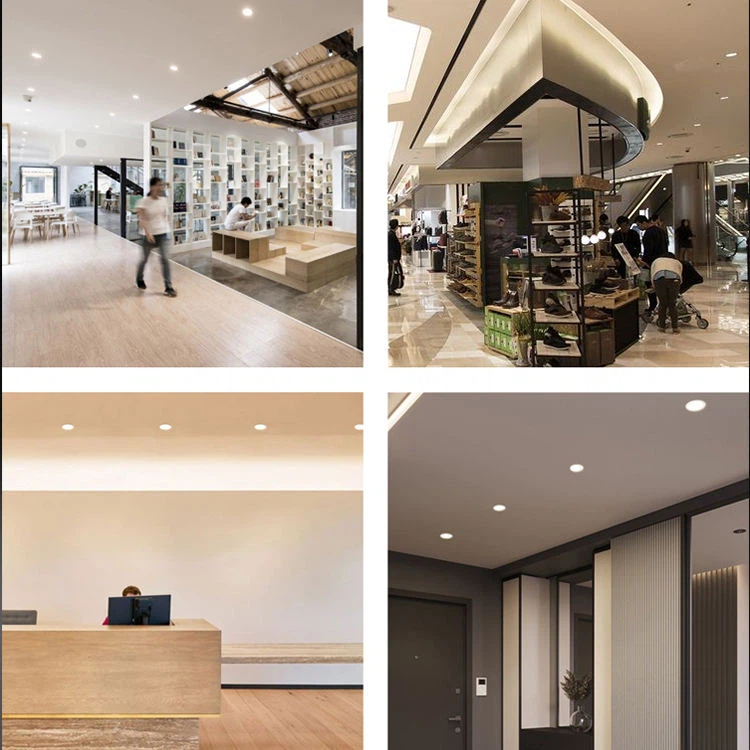
Modern architecture and interior design champion clean lines, uncluttered spaces, and a streamlined aesthetic. Recessed downlights are the natural lighting choice for this philosophy. They provide illumination without visual intrusion, allowing other design elements-such as furniture, art, and architectural features-to take center stage. As noted by the American Institute of Architects, minimalist design principles continue to dominate commercial and high-end residential projects, ensuring a permanent place for discreet lighting solutions (AIA, 2024).
3. Color Tuning and Human-Centric Lighting
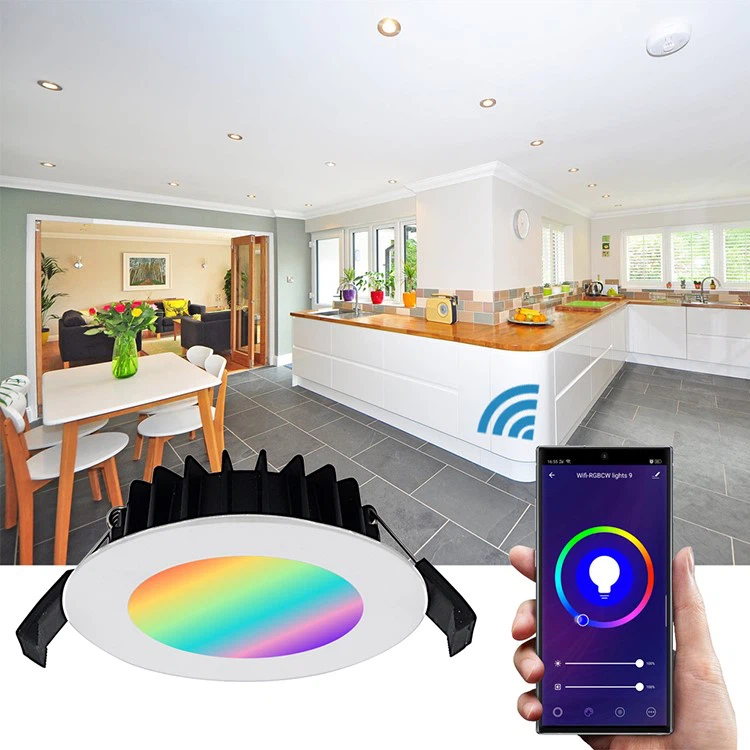
Fashionable lighting is now intelligent lighting. The ability to control a downlight's color temperature-from warm white (2700K) to cool white (5000K)-is a game-changer. This allows a single space to transition from a relaxing, warm ambiance in the evening to a focused, cool light for work during the day. Known as Human-Centric Lighting (HCL), this trend aligns artificial light with our natural circadian rhythms. Modern smart downlights can be programmed to adjust automatically, a feature increasingly specified in hotels, offices, and luxury homes for 2025.
4. The Shift from "General" to "Layered" Lighting
The outdated practice of spacing identical downlights evenly across a ceiling is no longer considered fashionable. Today, the focus is on layered lighting: a combination of ambient, task, and accent lighting. Downlights have found a new, more sophisticated role within this framework:
Ambient Layer: Using wide-beam downlights with dimmable capabilities to provide a soft, general glow.
Task Layer: Employing focused downlights over kitchen islands, office desks, and bathroom vanities.
Accent Layer: Utilizing adjustable gimbals or eyeball trims within a downlight housing to highlight artwork, textured walls, or architectural details.
This strategic application demonstrates a higher level of design intent and is a hallmark of a professionally lit space.
Application Spotlight: Where Fashionable Downlights Shine in 2025

To understand their current relevance, consider their application in the most trend-forward spaces:
Residential Kitchens: Used with adjustable trims to graze shaker-style cabinet fronts or with focused beams over islands, often in a black or metallic trim for a contemporary contrast.
Commercial Retail: Critical for highlighting products. Adjustable downlights with a high color rendering index (CRI >90) are used to make merchandise appear vibrant and true-to-color.
Hospitality (Hotels & Restaurants): Essential for creating ambience. Dimmable, warm-white downlights are used over dining tables, while wall-washer variants make lobbies feel more spacious and inviting.
Corporate Offices: Integrated with smart systems for human-centric lighting, promoting employee well-being and productivity while also providing efficient general illumination.
The 2025 Outlook: Smart, Sustainable, and Integrated
The trajectory for downlights points toward greater integration and intelligence. Fashionable downlights inextricably link to the following:
IoT and Connectivity: Downlights will increasingly act as nodes in a building's Internet of Things (IoT) ecosystem, integrating with sensors for occupancy, daylight harvesting, and data collection.
Sustainability: As the world pays more attention to environmental, social, and governance (ESG) standards, LED downlights are a smart choice because they use less energy and last a long time. Their compatibility with green building standards like LEED and BREEAM is a significant competitive advantage for 2025 and beyond.
Conclusion: Timeless, Not Trendy
So, are downlights still fashionable? The evidence is clear: they are more fashionable than ever. They have successfully shed their outdated image and reinvented themselves as sleek, smart, and versatile tools for the modern designer. Their fashionability is no longer about being a trend in and of itself but about being the perfect, adaptable canvas upon which current and future lighting trends can be realized.
For wholesalers, distributors, and procurement professionals, the message is clear. The demand is shifting from basic downlights to feature-rich, design-oriented, and intelligent LED downlights. Stocking and promoting these advanced products is key to capturing the growing and profitable premium segment of the market as we move through 2025.
Ready to source the next generation of fashionable downlights? Contact us today to explore our curated collection of ultra-thin, smart, and high-CRI downlights designed to meet the demands of the global market.
References:
Grand View Research. (2022). Recessed Lighting Market Size, Share & Trends Analysis Report. Retrieved from [Grand View Research website].
U.S. Department of Energy. (2023). LED Lighting. Retrieved from [energy.gov].
American Institute of Architects (AIA). (2024). AIA Consensus Construction Forecast. Retrieved from [AIA website].
Design Council (2023). The Value of Design in the Built Environment. Highlights the economic and well-being benefits of good design, including lighting.
FAQ:
Q: Can we get a LED downlight sample for reference ?
A: We are glad to send samples for your inspection, Standard samples can be free, but you may need pay the express fees.
Q: How to confirm the LED spotlight quality with us before starting to produce?
A: 1) We can provide samples and you can choose one or more, and hten we make the quality according to that.
2) Send us your samples, and we will make it according to your quality .
Q: How to solve the quality problems about LED down light after sales?
A: Take photos of the problems and send to us after we confirm the problems , within three days, we will make a satisfired
solution for you .
Q: What is the lead time of recessed downlight?
A: 20-25 days after sample confirmation.
Q: Can you print our brand on the flush mounted downlight?
A: Yes , Of course , It can make customers brand logo.
https://www.benweilight.com/lighting-tube-bulb/25w-recessed-downlight.html
Shenzhen Benwei Lighting Technology Co.,Ltd
Telephone: +86 0755 27186329
Mobile(+86)18673599565
Whatsapp :19113306783
Email:bwzm15@benweilighting.com
Skype: benweilight88
Web: www.benweilight.com