Downlights vs. Recessed Lights: A Comprehensive Guide for Lighting Professionals
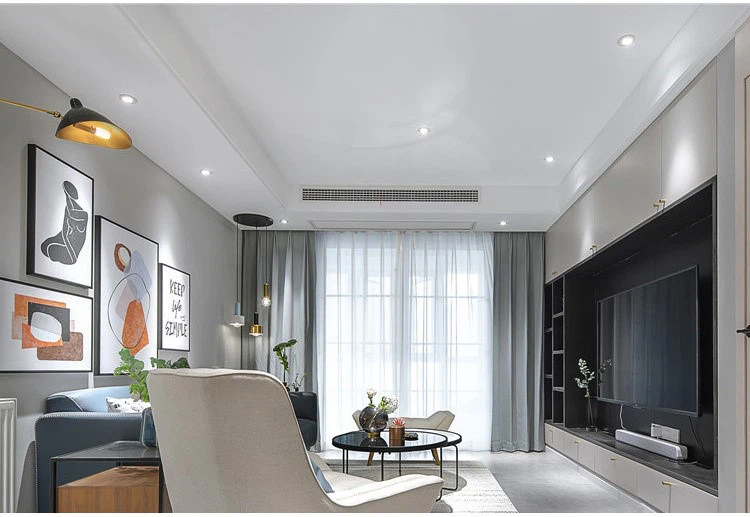
In the world of modern architectural and residential lighting, precision in terminology is not just academic-it drives purchasing decisions, project specifications, and ultimately, customer satisfaction. Two terms that are often used interchangeably, causing significant confusion, are "downlights" and "recessed lights." Are they the same thing? If not, what sets them apart?
For architects, interior designers, lighting distributors, and contractors, understanding this distinction is crucial for selecting the right product for the right application. This article will demystify these terms, explore their key differences, and provide data-driven insights to guide your next lighting project or procurement decision.
Executive Summary: The Core Difference
In simple terms, all downlights are recessed lights, but not all recessed lights are downlights.
Recessed Light is a broad architectural category describing any light fixture installed into a hollow opening in a ceiling, creating a seamless, flush appearance.
Downlight is a specific type of recessed light characterized by its light distribution pattern, which is directed downwards in a concentrated beam.
The confusion arises because the most common type of recessed light found in homes and offices is, in fact, a downlight. However, the recessed category is far more diverse.
1. Deconstructing the Terminology: Beyond Interchangeable Labels
To understand the market, we must first clarify the definitions.
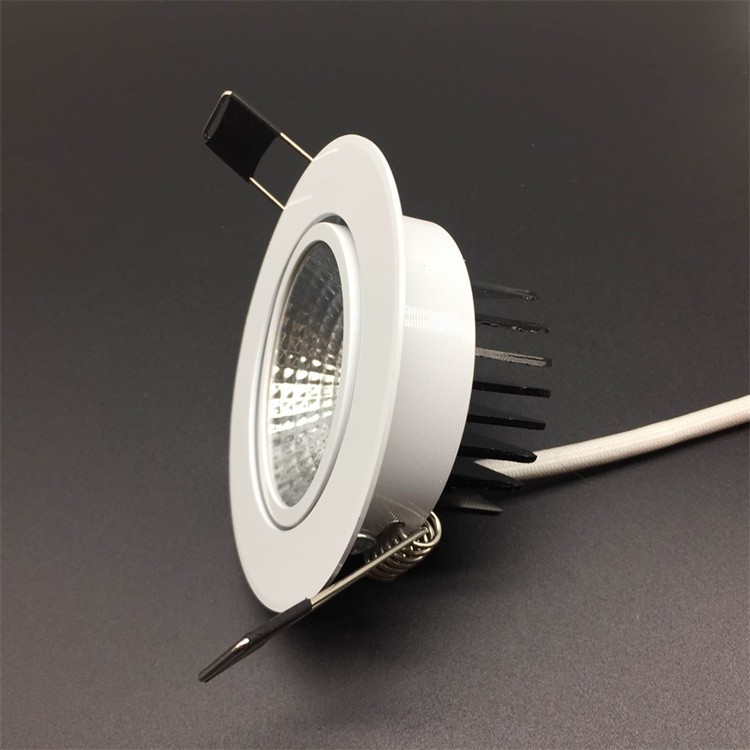
1.1 What is a Recessed Light?
A recessed light, often called a "can light" or "pot light" in North America, is a light fixture that is fully embedded within a surface, most commonly a ceiling. The visible part from the room is just the trim, while the main housing (the "can") is hidden above the ceiling line.
Key Components:
Housing: The enclosure installed inside the ceiling that contains the electrical components and provides structural support.
Trim: The visible part that covers the hole in the ceiling and can influence the style and light direction.
Light Source: Traditionally a halogen or incandescent bulb, but now overwhelmingly LED modules integrated for higher efficiency and longer life.
The primary advantage of recessed lighting is its minimalist and unobtrusive design. It saves space, makes rooms feel larger, and provides a clean, modern aesthetic. A report by Grand View Research valued the global recessed lighting market at USD 6.21 billion in 2021 and projects a compound annual growth rate (CAGR) of 6.6% from 2022 to 2030, driven by construction booms and the shift to LED technology (Grand View Research, 2022).
1.2 What is a Downlight?
A downlight is defined by its function. It is a recessed light designed to emit a downward-directed beam of light. It is the workhorse of general and task lighting, used to illuminate floors, countertops, and workspaces directly below it.
Key Characteristics:
Fixed Direction: The light source is fixed to point straight down or in a very narrow, focused cone.
Beam Angle: Typically has a medium to narrow beam angle (e.g., 25° to 45°) for focused illumination, though wider "wall wash" options exist.
Application: Ideal for general ambient lighting in corridors, kitchens, offices, and for highlighting specific areas like a dining table or a kitchen island.
Downlights are the most prevalent form of recessed lighting. Their popularity is linked to the efficiency of LED technology. According to the International Energy Agency (IEA), LEDs accounted for over 50% of global lighting sales in 2022, and their high efficacy (lumens per watt) makes them perfect for the focused, efficient output of downlights (IEA, 2023).
2. The Critical Distinctions: A Comparative Analysis
The following table and analysis break down the key differences between downlights and the broader category of recessed lights.
|
Feature |
Downlight (a subtype of Recessed Light) |
Recessed Light (the broader category) |
|---|---|---|
|
Light Direction |
Primarily downward |
Downward, adjustable, wall-washing, or multidirectional |
|
Beam Control |
Fixed, focused beam |
Highly variable based on trim and housing type |
|
Flexibility |
Low; purpose-built for one direction |
High; multiple trim options change the function |
|
Primary Use |
General & Task Ambient Lighting |
Ambient, Task, Accent, and Wall Washing |
|
Common Trim Types |
Baffle, Reflector, Gimbal (slightly adjustable) |
Baffle, Eyeball, Pinhole, Wall Wash, Shower |
|
Market Share |
Dominant subtype within the category |
Encompasses the entire product category |
2.1 The Flexibility of Recessed Lighting: It's All in the Trim
The most significant practical difference lies in flexibility. While a standard downlight is fixed, the broader world of recessed lighting offers versatile solutions through interchangeable trims:
Eyeball / Gimbal Trims: These trims allow the light source to be swiveled within the housing (typically 15° to 35°). This turns a simple recessed light into an accent light, perfect for highlighting artwork, architectural features, or retail displays.
Wall Wash Trims: These have a shielded aperture that directs light sideways to graze a wall, evenly illuminating vertical surfaces. This is essential in galleries, museums, and homes to make rooms feel brighter and more spacious. It is functionally distinct from a downward-facing downlight.
Pinhole / Snoot Trims: These create a very narrow, highly concentrated beam of light, producing a dramatic spotlight effect.
A study on commercial lighting preferences found that over 68% of architects and designers specified adjustable or specialized recessed trims for projects requiring both ambient and accent lighting, underscoring the demand for this versatility beyond simple downlighting (Lighting Design Lab, 2021).
3. Application Scenarios: Choosing the Right Tool for the Job
Selecting between a standard downlight and a more specialized recessed light depends entirely on the lighting goal.
3.1 When to Choose a Standard Downlight
General Room Illumination: Providing even, shadow-reduced light across a hallway, office space, or classroom.
Task Lighting: In kitchens above countertops and sinks, or in bathrooms (with appropriate IP ratings) for shaving and makeup application.
Space with Low Ceilings: Where adjustable lights might not have enough clearance to be effective and a clean, flush look is desired.
3.2 When to Choose a Specialized Recessed Light
Accent Lighting: Use an eyeball trim to draw attention to a sculpture, a fireplace, or a feature wall.
Wall Washing: Use a wall wash trim to make a narrow room feel wider or to illuminate a bookshelf or textured wall evenly without creating scallops of light.
Dramatic Effect: Use a pinhole trim in a restaurant, hotel lobby, or home theater to create pools of light on a table or pathway.
Wet/Damp Locations: Use a shower trim with a sealed gasket in bathrooms or covered outdoor areas.
4. The LED Revolution and Market Trends
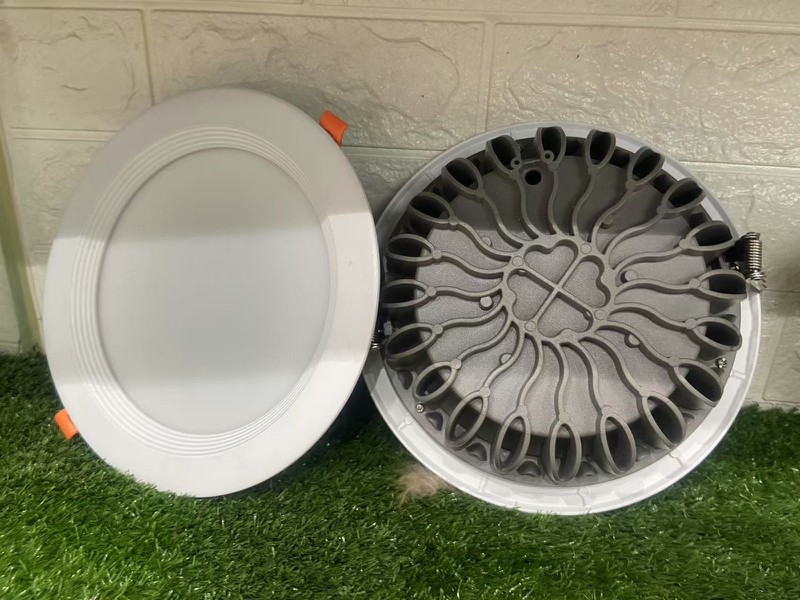
The shift to LED technology has blurred the lines further while expanding capabilities. Integrated LED recessed fixtures, often called "LED Recessed Lights" or "LED Downlights," combine the light source, heat sink, and driver into a single unit.
Key Impacts of LED Technology:
Energy Efficiency: LED downlights consume up to 85% less energy than equivalent incandescent alternatives (U.S. Department of Energy, 2022).
Longevity: With lifespans of 25,000 to 50,000 hours, maintenance and replacement costs are drastically reduced.
Design Integration: The compact nature of LEDs allows for thinner profiles ("slim" or "wafer" downlights) that can be installed in ceilings with minimal plenum space.
Smart Lighting: Many modern recessed lights and downlights now feature integrated smart controls, allowing for color temperature tuning (CCT Tunable) and dimming via apps or voice commands, a feature highly sought after in the high-end residential market.
The global smart lighting market, which heavily features advanced recessed solutions, is expected to grow at a CAGR of over 20% from 2023 to 2030, indicating a strong future for intelligent, multi-functional recessed lighting systems (Market Research Future, 2023).
Conclusion: Clarity Drives Success
In summary, while "downlight" and "recessed light" are often used casually to mean the same thing, a clear technical distinction exists. A downlight is a specific, downward-facing type of recessed light, prized for its efficiency in general illumination. Recessed lighting is the overarching category that includes downlights alongside a suite of more flexible, adjustable fixtures capable of accent, wall-wash, and spotlighting effects.
For professionals in the lighting and construction industry, using these terms correctly is not just about semantics-it's about precision in design, accuracy in specification, and effectiveness in procurement. By understanding the difference, you can better navigate the global market, source the correct products from manufacturers, and deliver superior lighting solutions that meet the exact needs of your clients.
Ready to source high-quality, precision-engineered recessed lights and downlights? Contact us today to explore our certified, energy-efficient product catalog designed for the global market.
References:
Grand View Research. (2022). Recessed Lighting Market Size, Share & Trends Analysis Report. Retrieved from [Grand View Research website].
International Energy Agency (IEA). (2023). Lighting. Retrieved from [IEA website].
Lighting Design Lab. (2021). Commercial Lighting Specification Trends Survey. Retrieved from [Lighting Design Lab website].
U.S. Department of Energy. (2022). LED Lighting. Retrieved from [energy.gov].
Market Research Future. (2023). Smart Lighting Market Research Report. Retrieved from [Market Research Future website].
FAQ:
Q: Can we get a LED downlight sample for reference ?
A: We are glad to send samples for your inspection, Standard samples can be free, but you may need pay the express fees.
Q: How to confirm the LED spotlight quality with us before starting to produce?
A: 1) We can provide samples and you can choose one or more, and hten we make the quality according to that.
2) Send us your samples, and we will make it according to your quality .
Q: How to solve the quality problems about LED down light after sales?
A: Take photos of the problems and send to us after we confirm the problems , within three days, we will make a satisfired
solution for you .
Q: What is the lead time of recessed downlight?
A: 20-25 days after sample confirmation.
Q: Can you print our brand on the flush mounted downlight?
A: Yes , Of course , It can make customers brand logo.
Shenzhen Benwei Lighting Technology Co.,Ltd
Telephone: +86 0755 27186329
Mobile(+86)18673599565
Whatsapp :19113306783
Email:bwzm15@benweilighting.com
Skype: benweilight88
Web: www.benweilight.com