Why Do Interior Designers "Hate" Downlights? Debunking the Myth and Finding the Right Fit
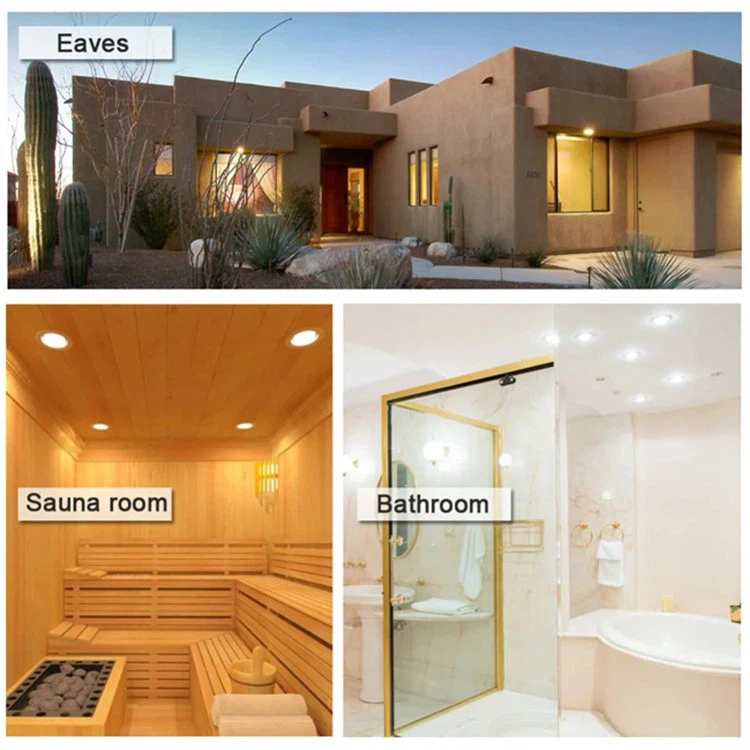
A common sentiment echoes through design studios and renovation sites: interior designers have a strong aversion to downlights. But is this a blanket hatred, or is it a misunderstanding of design principles? The truth is more nuanced. Professional designers don't inherently hate the fixture itself; they despise its misapplication.
The evolution of LED technology has made downlights more efficient and versatile than ever, yet their misuse can ruin a carefully crafted interior. For manufacturers, suppliers, and exporters in the lighting industry, understanding this distinction is key to providing the products and guidance that designers actually want.
This article dismantles the myth and explores the legitimate reasons behind designers' frustration, turning their critiques into a blueprint for what the market truly needs.
The Core Issue: It's a Tool, Not a Strategy
At its heart, the conflict arises from a fundamental difference in approach. Many builders and homeowners see downlights as a one-size-fits-all, cheap solution for general illumination. Designers, however, view lighting as a layered, strategic tool to create emotion, highlight architecture, and flatter inhabitants.
A survey by the American Society of Interior Designers (ASID) found that over 90% of designers believe lighting is the most critical element in defining a space's ambiance, even more so than color or furniture. When downlights are used as the sole source of light, they fail in this primary mission (ASID, 2023).
The Top 5 Reasons for Designer Frustration (And How to Solve Them)
The "hatred" stems from specific, repeatable problems that occur when downlights are poorly specified and planned. Here are the primary critiques.
1. The "Swiss Cheese" Ceiling Effect
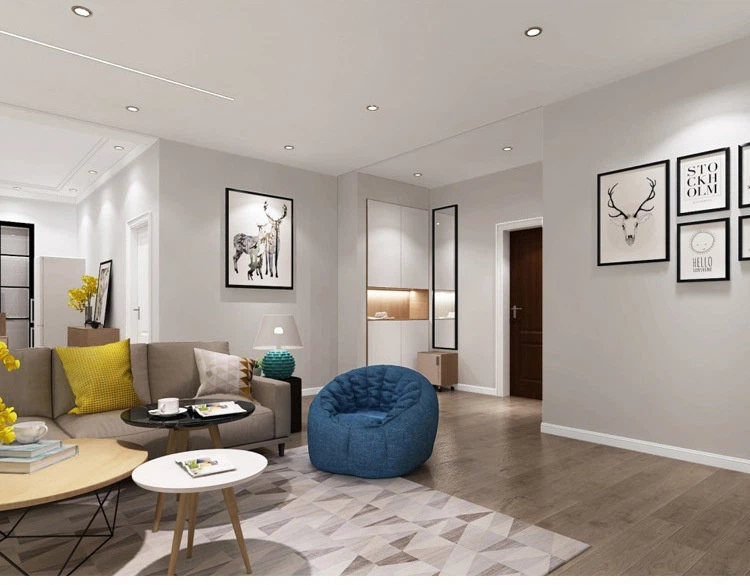
This is perhaps the most common complaint. This condition occurs when an electrician or builder installs a grid of identical downlights across the entire ceiling with no thought to the room's layout below.
The Problem: The ceiling becomes punctuated with a chaotic pattern of black holes, drawing the eye upward and making the space feel clinical and uninviting, like a commercial office or hospital hallway.
The Designer's Perspective: This approach entirely ignores the principles of visual weight and composition. It creates harsh, overhead shadows on people's faces and does nothing to enhance the room's architecture.
The Solution: Strategic Placement. Designers use downlights for a purpose-to wash a wall, graze a texture, or illuminate a specific task area like a kitchen island or reading nook. They avoid random spacing in favor of intentional placement that complements the room's footprint.
2. Harsh and Unflattering Light
The quality of light is as important as the quantity. Cheap, poorly designed downlights with low Color Rendering Index (CRI) and inappropriate beam angles are a major culprit.
The Problem: Glare from exposed bulbs, low CRI values that make colors look dull and washed out, and overly narrow beams that create "spotlight" effects.
The Data: A study published in the LEUKOS journal of the Illuminating Engineering Society found that lighting with a CRI below 80 can significantly distort perceived colors, impacting the aesthetic and mood of a space. Designers consistently specify downlights with a CRI of 90 or higher to ensure true color representation (LEUKOS, 2022).
The Solution: High-CRI & Adjustable Trims. Supply and promote downlights with a CRI >90 and a range of trim options (baffle, specular, and gimbal) to control glare and direction. This allows for light to be tailored to its specific task.
3. The Death of Ambiance: Over-illumination and Lack of Drama
Great design plays with contrast between light and shadow to create intimacy and drama. An over-reliance on downlights flattens everything.
The Problem: Uniform, flat lighting from an array of downlights eliminates all shadows, making a room feel sterile and one-dimensional. It destroys any sense of cosiness or sophistication.
The Designer's Perspective: Lighting should be layered. Ambient light (general fill) should be soft and diffuse. A task light should be focused. Accent light should be dramatic. When downlights are forced to perform all three roles, they fail at all of them.
The Solution: Encourage Layering. Frame your downlights as part of a larger system. Promote them as ideal for task and accent lighting while recommending other forms like pendant lights, sconces, and floor lamps for ambient and decorative layers.

4. Ignoring the Human Scale and Vertical Surfaces
Light that comes only from directly above is deeply unflattering to people and fails to make a room feel warm and enclosed.
The Problem: Downlights create sharp, vertical shadows under eyes, noses, and chins. They also leave walls in darkness, making a room feel cavernous and disconnected.
The Solution: Wall-Washing and Wall-Grazing. This is where designers use specific downlights (with asymmetric lenses or adjustable heads) to "wash" a wall with even light. This makes the room feel larger, brighter, and more inviting. Highlighting this application demonstrates a sophisticated understanding of spatial design.
5. The Inflexibility of Fixed Fixtures
Once installed, a standard fixed downlight cannot be moved. This locks the room's lighting scheme into a permanent state that may not suit future furniture rearrangements or design updates.
The Problem: A downlight installed to highlight a painting is useless if the owner later moves the art to another wall.
The Solution: Adjustable and Gimbal Downlights. For accent lighting, fixed downlights are the designer's best friend. They offer the seamless look of a recessed light with the flexibility to aim the beam precisely where it's needed, when it's needed.
The Path Forward: The Downlights Designers Will Actually Love
The narrative isn't that designers hate downlights; they hate inadequate lighting plans. The modern lighting market must pivot to meet the demands of this discerning audience. The future lies in providing:
Smart, Tunable White Downlights: These allow designers and homeowners to adjust the color temperature from warm white (2700K) for evening relaxation to cool white (4000K) for daytime focus, all from a single fixture.
Ultra-Thin, Minimalist Designs: "Slim" or "wafer" downlights offer a nearly invisible profile when off, avoiding the "black hole" effect and maintaining a clean ceiling line.
High-CRI as Standard: Make a CRI of 90+ a standard feature, not a premium upgrade. This is a non-negotiable for design professionals.
Integrated Systems: High-end projects increasingly specify downlights that seamlessly integrate with smart home systems (like DALI, Zigbee, or Matter) for scene-setting and automation.
Conclusion: From Foe to Friend
The question is not, "Why do interior designers hate downlights?" but rather, "How can we provide downlights that interior designers will love?" The answer lies in moving beyond the concept of a downlight as a simple hole-in-the-ceiling bulb holder.
By recognizing and tackling the main complaints-like teaching about proper placement, highlighting quality features (such as high CRI), and providing adaptable, smart options-manufacturers and suppliers can change how downlights are viewed, making them a valuable and stylish resource for designers. The goal is not to eliminate downlights but to elevate their use, transforming them from an object of frustration into a foundation for beautiful, functional, and human-centric lighting.
Are you a distributor or project specifier looking for downlights that meet the exacting standards of modern interior designers? Explore our curated collection of high-CRI, adjustable, and ultra-slim downlights engineered for design-led applications.
References:
American Society of Interior Designers (ASID). (2023). Impact of Design Survey. Retrieved from [ASID website].
LEUKOS, The Journal of the Illuminating Engineering Society. (2022). The Effects of Color Rendering Index on Visual Perception in Residential Interiors. Retrieved from [Taylor & Francis Online].
Grand View Research. (2023). Smart Lighting Market Analysis. (Highlights the growth of tunable and connected lighting systems). Retrieved from [Grand View Research website].
Illuminating Engineering Society (IES). (2020). The Lighting Handbook, 11th Edition. (The standard reference for principles of quality lighting design.)
FAQ
Any question or wanna send an inquiry!
Q1. How soon is the lead time?
A: For sample order, 7-17 days if no stock. For bulk order, 15-30 days.
Q2. Can your products' label, packaging, design be customized?
A: Yes, we offer customization service on these.
Q3. How can we guarantee quality?
A: Always a pre-production sample before mass production; Always final Inspection before shipment.
Q4. How do you ship the goods and how long does it take to arrive?
A: We usually ship by DHL, UPS, FedEx or TNT. It usually takes 3-5 days to arrive. Airline and sea shipping also optional.
Q5. What is your payment way?
A: Paypal / Visa / Western Union / online transfer / apply pay / T/T all works for us for payment.
https://www.benweilight.com/lighting-tube-bulb/18w-mini-downlights.html
Shenzhen Benwei Lighting Technology Co.,Ltd
Telephone: +86 0755 27186329
Mobile(+86)18673599565
Whatsapp :19113306783
Email:bwzm15@benweilighting.com
Skype: benweilight88
Web: www.benweilight.com