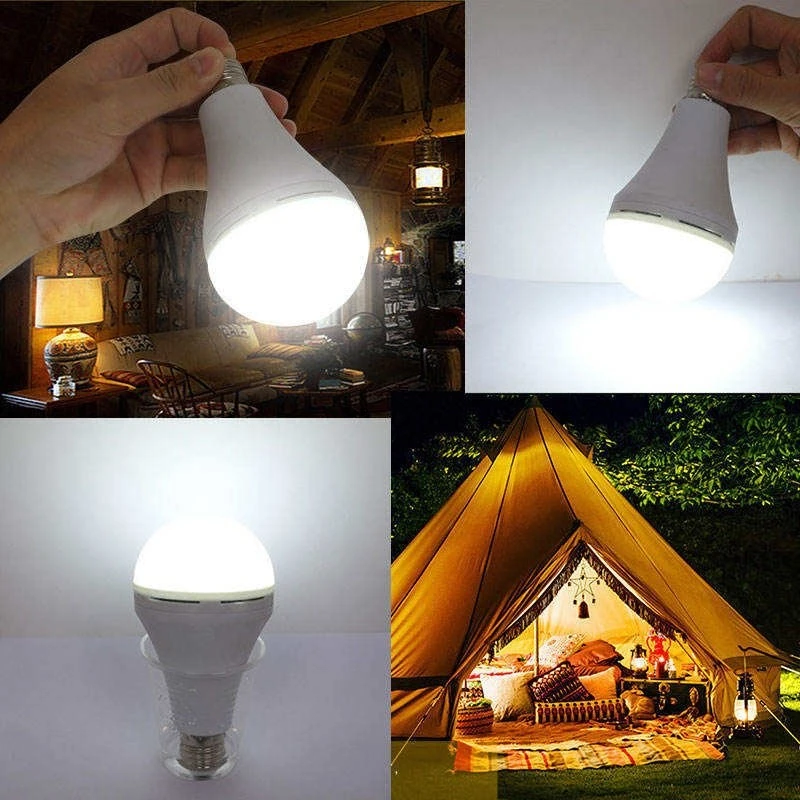
When the power goes out, most people's first instinct is to fumble around in the dark for their phones or search through drawers for a flashlight. Wouldn't it be much more convenient if your light bulbs could simply turn on by themselves, sparing you all that hassle? This is the selling point of rechargeable emergency LED bulbs: they function as regular light bulbs during normal operation, but automatically switch to an internal battery when the power cuts out. Are they actually worth buying? This article breaks down how they work, their pros and cons, ideal use cases, and key factors to consider when making a purchase, helping you decide for yourself.
What are rechargeable emergency LED bulbs, and how do they work?
They look much like standard LED bulbs and use the same types of bases (common ones include E26, E27, and B22), allowing them to be screwed directly into existing light fixtures. The difference is that they contain an internal rechargeable battery and a control circuit.
When powered by the mains: The bulb lights up normally while simultaneously charging the internal battery.
During a power outage: The circuit detects the loss of mains power and automatically switches to battery power, keeping the light on.
When power is restored: The bulb automatically switches back to mains power and begins recharging the battery.
The entire process requires no manual intervention-you simply leave the light switch in the "on" position.
Four reasons why they are worth buying
① Seamless transition during power outages. Navigating in the dark during a blackout can be daunting, especially if you have elderly family members or children at home. With these bulbs, the light comes on automatically, eliminating the need to scramble for a flashlight or other light source.
② No extra space required. Unlike standalone emergency lights or flashlights-which you have to store somewhere and then remember where you put them-these emergency bulbs are installed directly into your existing light fixtures, so they are always exactly where you need them.
③ Simple installation. There's no need for new wiring or electrical modifications; you just screw them in. They are even a great option for those living in rental properties.
④ No impact on daily use. In everyday operation, they function just like standard, energy-efficient, low-heat LED bulbs; the emergency feature is simply an added benefit.
Three limitations to keep in mind
① Limited emergency runtime. Due to size constraints, the internal battery capacity is limited. Emergency lighting typically lasts only a few hours, depending on the specific battery capacity and the brightness level used during the emergency mode. If your area frequently experiences long-duration power outages, these bulbs should be viewed only as a supplementary measure; they cannot fully replace a high-capacity backup power system.
② Emergency brightness is typically lower than standard operating brightness. To extend battery life, many products reduce their power output when running on battery power. While sufficient for moving around or locating items, they are not suitable for tasks requiring precision.
③ Batteries degrade over time. Like all rechargeable batteries, the built-in battery has a finite cycle life. You may notice a gradual decline in runtime after a year or two of use. Since these batteries are generally not designed to be replaced individually, a significant drop in performance often necessitates replacing the entire unit.
Ideal Household Locations
Stairs, hallways, and entryways: These areas pose the highest risk of accidental bumps or falls during a power outage; an emergency bulb can help mitigate these risks.
Bedrooms and children's rooms: These ensure you don't have to navigate in total darkness if the power goes out at night.
Bathrooms: Given the confined space and potentially slippery floors, having a light source makes these areas safer.
Basements or storage rooms: These spaces often lack windows, meaning they become pitch-black during a power outage.
Rooms occupied by the elderly or individuals with limited mobility: These areas require immediate and reliable illumination.
In regions where power outages are frequent and long-lasting, it is better to use a dedicated backup power system or a high-capacity emergency light.
Tips for Use and Maintenance
After installing a new bulb, ensure it is fully charged before relying on it for emergency use.
Avoid installing these bulbs in enclosed fixtures or environments subject to high temperatures.
Every few months, try turning off the main power supply to verify that the emergency function is still working correctly.
If the emergency runtime becomes noticeably shorter, the battery has likely degraded; it is recommended to replace the unit.
Summary
The value of rechargeable emergency LED bulbs lies in their convenience and safety: they are space-efficient, easy to install, and turn on automatically during a power outage. However, they have clear limitations, including limited runtime, reduced brightness, and battery degradation.
For most households, installing these bulbs in key areas-such as stairwells, bedrooms, and bathrooms-offers a cost-effective safety enhancement. If you need to prepare for prolonged power outages, you should consider additional backup power solutions. When purchasing, focus on the base type, emergency runtime, battery chemistry, and safety certifications to ensure a reliable choice. If you are looking for a supplier of rechargeable emergency LED bulbs, or are interested in customization, wholesale, or OEM/ODM services, please feel free to contact us. We can provide various base types, brightness levels, battery options, and certification solutions tailored to your target market, and we also offer samples for testing.