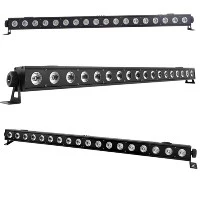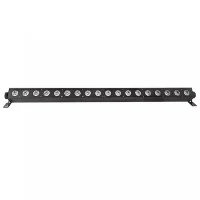

Introduction: The Fixture That Dies in Year Two
The Cost of Cosmetic Failure
What Weather Actually Does to a Light Bar
An outdoor light bar lives a harder life than its datasheet admits. It is installed on a wall that faces the afternoon sun and reaches sixty degrees Celsius in July. It is hit by rain at an angle that no gasket test reproduces. It is cleaned with a cloth that has grit in it, adjusted by a technician with a screwdriver in his pocket, and brushed past by scaffolding, ladders and delivery trucks. Over two or three years, the finish chalks, the black anodising goes grey, the corners pick up scratches, and the seals take a set that they never recover from.
None of this affects the LED. All of it affects whether the client still believes the installation was worth the money. That is the strange economics of outdoor lighting: the part that fails first is usually cosmetic, and the part that costs the most is the client's confidence.
Why Buyers Only Notice Construction Later
Nobody evaluates a housing in a showroom, because in a showroom every bar looks new. Construction is a deferred specification: it is invisible at purchase and unmissable at year three. This is why so many projects end up with fixtures that were specified on colour and price, and why the maintenance budget quietly absorbs the difference.
This article is the answer to that asymmetry. It explains, layer by layer, what a scratch-resistant and heat-proof bar is actually made of, why each layer exists, and what the design decisions mean for the person who has to keep the installation looking good long after the invoice is paid.
The Engineering Brief
Scratch-Resistant
A bar is not scratched by design intent; it is scratched by handling. The most common causes are transport contact, tool slips during mounting, abrasive cleaning, and grit carried by wind against a horizontal surface. "Scratch-resistant" therefore does not mean indestructible. It means the surface has been engineered so that ordinary abrasion damages a sacrificial outer layer rather than the structural body underneath, and so that the marks it does take are shallow enough to disappear at normal viewing distance.
Heat-Proof
Heat is the quiet killer of LED fixtures. A bar can be perfectly waterproof and still fail, because the LEDs and the driver generate heat in a volume far smaller than the surface area available to dissipate it. "Heat-proof" is shorthand for a thermal design that keeps junction temperature within a safe band at maximum ambient temperature and maximum drive, which in turn preserves lumen output, colour stability and driver life.
A Housing That Is Also the Heatsink
The central insight behind this product is that the housing is not a box that contains a light. It is the thermal path. Every material decision in the wall of the bar either helps heat leave the LEDs or obstructs it. The three-layer system described in the next chapter exists because those two jobs, protecting the surface and conducting heat away, pull in opposite directions.
The Anatomy of the Three-Layer Housing
Cast Aluminium as the Structural Backbone
Die-Cast Rather Than Extruded
Aluminium bar housings are usually either extruded or die-cast. Extrusion is cheap and gives a constant cross-section, but it cannot produce internal ribs, integrated bracket bosses or a genuinely flat sealing face. Die-casting fills a mould, which allows the wall thickness to be varied where heat and structure demand it, allows mounting bosses and cable entries to be part of the casting, and produces a body rigid enough that a long bar does not flex when a technician leans on it.
Rigidity matters more than it sounds. A bar that flexes under its own span will not hold a uniform wash line, and it will slowly work its seals loose at the ends where the load is highest.
What the Casting Itself Must Get Right
A casting is judged on three things: alloy quality, porosity and dimensional accuracy. Poor alloy gives a body that cracks at the mounting points. Porosity creates internal voids that interrupt heat conduction and trap moisture, which is how a sealed fixture ends up with condensation inside the optics. Dimensional accuracy decides whether the lens frame, gaskets and end caps compress correctly.
These are factory decisions, invisible in the finished product, and they are exactly the decisions that separate a bar which survives five seasons from one that does not. When you evaluate any outdoor fixture, ask what the body is cast from and how porosity is controlled. The answer tells you most of what you need to know.
Layer One: The PVC Outer Skin
The outermost layer is a PVC skin. Its job is to take the abuse so the aluminium does not have to. PVC brings four properties that matter outdoors: chemical resistance against cleaning agents and environmental acids, electrical insulation across the body, colour retention under UV, and mechanical cushioning that absorbs impact instead of transmitting it to the coating beneath.
The surface texture is part of the engineering, not a styling choice. A matte, slightly textured finish hides the fine scratches that gloss surfaces advertise, and it reduces glare when the fixture sits at eye level on a retail frontage. On a bar mounted at two metres, a glossy black housing reflects the street and reads as plastic. A matte skin reads as a machined component, which is the impression a premium installation needs.
Layer Two: The Imported Alloy Oxide Layer
Anodising and the Corrosion Question
Beneath the skin sits an oxide layer formed on the aluminium alloy itself, created through an anodising process using imported alloy material. This layer is the corrosion barrier. Aluminium naturally forms a thin oxide film, but a controlled anodised layer is far thicker, far harder and far more uniform, and it is what prevents the pitting that turns a coastal installation into a dotted mess within two winters.
Salt is the specific enemy here. Chloride ions attack aluminium wherever the natural oxide film is broken, and once pitting starts it progresses inward. A properly sealed anodised layer removes the breaks, and it does so while remaining electrically insulating enough to avoid galvanic interaction with the stainless hardware used at the brackets.
Why Adhesion Decides Everything
An oxide layer is only useful if it stays attached. Adhesion depends on pre-treatment: degreasing, etching and desmutting before anodising, and a sealing step afterwards. Skip the pre-treatment and the layer looks perfect on the day of packing and lifts in flakes after a season of thermal cycling, because the oxide and the substrate expand at different rates.
This is a process discipline issue rather than a materials issue, and it is one of the reasons why "imported alloy" is stated as a material claim rather than a marketing flourish. The layer either bonds or it does not, and the difference shows up as peeling, not as a slightly different shade of black.
Layer Three: The Advanced Heat-Resistant Layer
The Thermal Barrier Problem
The innermost of the three is the advanced heat-resistant layer. Its position is deliberate: it sits between the thermal mass of the casting and the decorative layers outside it. The LEDs are bonded to the inside of the body, so the wall of the bar is simultaneously the heatsink and the visible surface. That means the outside of the bar runs hot, and any coating applied directly to a hot aluminium surface will degrade faster than the metal it protects.
The heat-resistant layer absorbs that thermal load. It stabilises the interface so that the outer layers see a moderated temperature rather than the full junction-driven rise, which is what keeps the finish from chalking, yellowing or blistering after long summer duty.
Coating Stability Over Time
Coating failure is rarely dramatic. It starts as a slight loss of gloss on the top surface, then a chalky film that collects dust, then colour drift where the black turns charcoal grey. Each stage makes the installation look older than it is, and each stage is accelerated by heat.
A heat-resistant intermediate layer buys time on all three. It also protects the anodised layer from the thermal cycling that would otherwise stress the oxide-to-substrate bond, so the three layers reinforce one another rather than each fighting the same problem separately.
How the Three Layers Work as a System
Read from outside in, the layers answer three different threats in the order the threats arrive. The PVC skin handles mechanical damage and chemistry. The anodised alloy oxide handles corrosion and hardness. The heat-resistant layer handles temperature. Behind all three, the casting handles structure and conduction.
Read from inside out, the same system is a thermal stack: junction, solder, board, casting, heat-resistant layer, oxide, skin, air. Each interface adds a small thermal resistance and each material adds robustness. The design is sound precisely because the layer that must survive the most heat is placed closest to the heat, and the layer that must survive the most abrasion is placed on the outside where abrasion happens.
Thermal Engineering: Why "Heat-Proof" Is a Claim About Lumens
Where the Heat Comes From
In a modern LED fixture, roughly half of the electrical energy entering the emitter leaves as heat rather than light, and the driver contributes its own losses. In a linear bar those losses are concentrated along a narrow strip, which is the worst possible geometry for dissipation: a long, thin heat source inside a long, thin body.
Ambient temperature makes it harder. A bar at twenty degrees ambient can shed heat into the air comfortably. The same bar at fifty degrees ambient, in still air against a warm wall, is fighting for every degree. Thermal design is therefore specified at the worst case, not the laboratory case.
The Conduction Path
Heat leaves the LED through a short but critical chain: the die, the solder joint, the metal-core board, the thermal interface material, the casting, and finally the outer surface into the air. Every link in that chain must be thin, flat and well bonded. A void in the thermal interface, a board that is not properly clamped, or a casting with internal porosity all add resistance exactly where resistance is most expensive.
The direction of the path also matters. Heat rises, so a bar mounted flat with its LED face upward fights convection, while the same bar mounted at an angle gains a natural chimney effect along the body. This is one reason the bracket allows steep tilts: mounting geometry is part of the thermal design, not simply an aesthetic choice.
This is why the housing material matters as much as the housing shape. Aluminium conducts heat well and has enough thermal mass to smooth out peaks, so a short burst of full output does not spike the junction temperature. The three-layer wall does not obstruct that path, because the heat-resistant layer is formulated to conduct rather than insulate.
Junction Temperature and Lumen Maintenance
LED output falls as junction temperature rises, and the fall is permanent over time as well as temporary within a session. Manufacturers describe this with lumen maintenance figures such as L70 or L90, meaning the point at which output has dropped to seventy or ninety percent of initial value. Those figures are measured at a specified ambient temperature, and they collapse if the fixture runs hotter than the test condition.
So "heat-proof" is not a comfort claim. It is the mechanism that keeps the published lumen maintenance honest in a real installation, and it is the reason two bars with identical LEDs can have visibly different brightness after three summers.
How the Claim Is Verified
A serious factory verifies thermal performance rather than asserting it: thermal imaging of the bar at full output to find hot spots, chamber testing at elevated ambient temperature, long-duration burn-in with periodic photometric measurement, and inspection of the coating after thermal cycling. The evidence that matters to a buyer is not a graph in a brochure but a test report with conditions, duration and measured values.
Ask for the test conditions. A claim without conditions is a slogan.
Surface Durability in Real Installations
Scratch and Wear in the Field
Field scratches come from predictable sources: the mounting bracket teeth, a screwdriver slipping off a fastener, a cleaning cloth with grit, abrasive dust on a horizontal top surface, and transport contact between bars stacked in a van. A sacrificial PVC skin absorbs most of this. What remains is shallow enough that it reads as normal wear rather than damage.
The design intent is that the bar keeps its appearance through the handling it will genuinely receive, not through the handling described in an installation manual that nobody follows.
Ageing Under UV and Weather
UV is the second great cosmetic enemy. It drives photo-degradation in polymer surfaces, which shows as chalking, colour fade and loss of gloss. Thermal cycling adds mechanical stress, because the layers expand and contract at different rates through day and night. The combination is what makes an unprotected black bar go grey in two seasons.
The three-layer system addresses both: the outer skin is selected for UV stability, the oxide layer is inherently UV-stable because it is a ceramic-type film, and the heat-resistant layer moderates the thermal cycling that would otherwise stress the whole stack. Age resistance is thus a stack property, not a single-material property.
Oxidation, Salt and Galvanic Corrosion
Corrosion outdoors is rarely simple. Coastal sites bring chloride. Industrial sites bring sulphur compounds. Both attack aluminium at coating defects and at cut edges. Galvanic corrosion appears wherever aluminium meets a dissimilar metal in the presence of an electrolyte, typically at brackets, screws and cable entries.
The defences are layered and specific: anodised oxide on the body, sealed edges after cutting, stainless or coated hardware, and insulating washers where dissimilar metals meet. A bar that ignores any of these details develops the same white rust at the mounting points that makes an installation look neglected, even when the light itself is still working.
Sealing, Optics and Mechanical Design
The Optical Chamber
The optical chamber is the part of the fixture that cannot be compromised, because water inside the lens area ends the product's life in a single event rather than a slow decline. Each emitter sits under its own lens, sealed at the frame by a gasket that must be compressed by a defined amount, not merely touched.
Optical materials are selected for UV stability as well, since a lens that yellows changes the colour temperature of the whole bar and cannot be corrected in the control system. The combination of stable lenses and a sealed chamber is what keeps the colour the designer specified identical in year three.
Ingress Protection Done Properly
Ingress protection is a system, not a number. It depends on gasket durometer, compression ratio, surface flatness of the sealing face, cable gland torque, and the presence of a pressure-equalising element where condensation is unavoidable. A gasket that is too hard will not seal at low temperature; one that is too soft will take a permanent set and leak at the second opening.
A die-cast body helps here, because a machined sealing face can be held flat within a tolerance that an extrusion cannot match. That flatness is the difference between a gasket that seals for five years and one that starts weeping in the second winter.
Bracket, Angle and Installation Ergonomics
The bracket is where most installation complaints originate, and it is usually designed last. This bar uses a rotating end bracket with a toothed locking interface, so the fixture can be set to the required tilt on site and locked without relying on friction alone. Friction joints creep under wind load and vibration; toothed joints do not.
Practical details complete the picture: mounting slots that accept common bolt sizes, a cable route that does not fight the bracket, and end caps that can be removed for service without disturbing the seal. These are small things that decide whether a two-man crew takes ten minutes or forty per fixture, multiplied across a facade.
Manufacturing Discipline and Quality Control
Incoming Material Verification
Consistency begins before assembly. Alloy grade certificates, coating thickness measurement on incoming anodised stock, gasket hardness checks, and lens transmission sampling are the checks that prevent a batch-level failure. A factory that skips incoming verification discovers the problem in the field, at the client's expense.
Process Control in Assembly
Assembly is where good materials are either preserved or wasted. Pre-treatment before coating, controlled cure temperature rather than ambient drying, defined torque on every fastener, and a documented compression height for gaskets are all process controls rather than design features. They are also the steps most likely to be compressed when a factory is under delivery pressure, which is why they should be auditable.
Reliability Testing
The final gate is testing: thermal cycling between temperature extremes, salt-spray exposure, water spray from multiple angles, impact and vibration simulation for transport, and a burn-in period at full output before packing. Each test targets one of the failure modes described earlier, and each generates a record that a buyer can request.
A bar that has passed these tests is not merely compliant. It is predictable, and predictability is what a specification actually buys.
Total Cost of Ownership
Labour
Installation labour is the largest single cost in most outdoor lighting projects and the least visible in a quotation. A bar with a locking bracket, sensible mounting slots and clean cable routing can cut rigging time substantially across a long facade. That saving is immediate and certain, unlike a discount on unit price that is recovered in the second year through callbacks.
Failure, Downtime and Access
When a bar fails on a facade, the cost is not the replacement unit. It is the access equipment, the crew, the out-of-hours working window, and the client who has to explain a dark patch during an event. Reducing failure probability is therefore worth far more than reducing unit cost, and the thermal and sealing design described above is precisely how that probability is reduced.
Residual Value
Fixtures that still look new after four years change how a client buys the next project. They also hold resale value in the rental market, where appearance is part of the rate card. A scratched, chalked bar is discounted twice: once when it is sold and again when it is retired early.
Conclusion: Construction Is the Part You Cannot Fix Later
Colour can be reprogrammed. Brightness can be scheduled. Angle can be adjusted on a ladder. Construction is the one thing that cannot be corrected after the fixture is on the wall. The three-layer housing exists because that is where the irreversible decisions are made: the casting that carries the heat, the anodised oxide that resists corrosion, the heat-resistant layer that stabilises the finish, and the PVC skin that takes the scratches so the rest of the stack does not have to.
A scratch-resistant, heat-proof bar is not a marketing phrase. It is a specific sequence of materials, in a specific order, verified by specific tests. Choose a fixture that can show you that sequence, and the installation will still look like a decision rather than an expense when the third summer arrives.
How To Cooperate With Us?
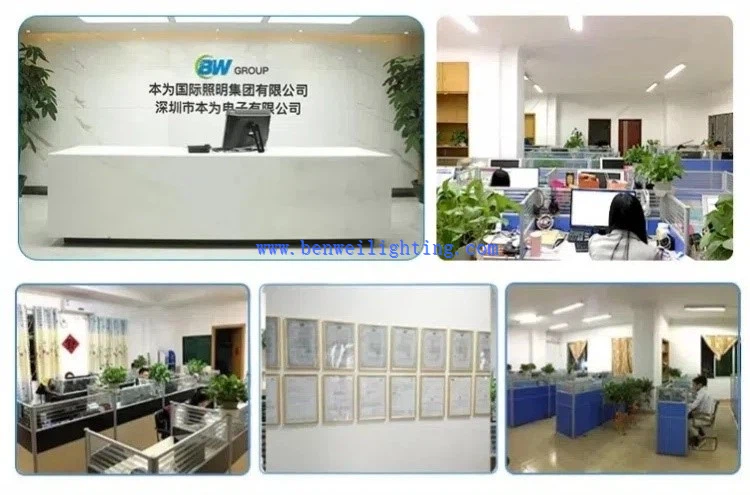
Since we have our own facilities, we are pleased to have complete control over the production process and the quality of our goods. We are committed to giving our clients the finest prices since we are manufacturers rather than just brokers. We encourage buyers to see our samples first since we are certain that the cost and calibre of our items are transparent. Our dedication to excellence and client happiness motivates us to consistently provide superior products.
Our address
3rd Floor, 5th Building, Hebei Industrial Park, Hualian Community, Longhua District, Shenzhen, China