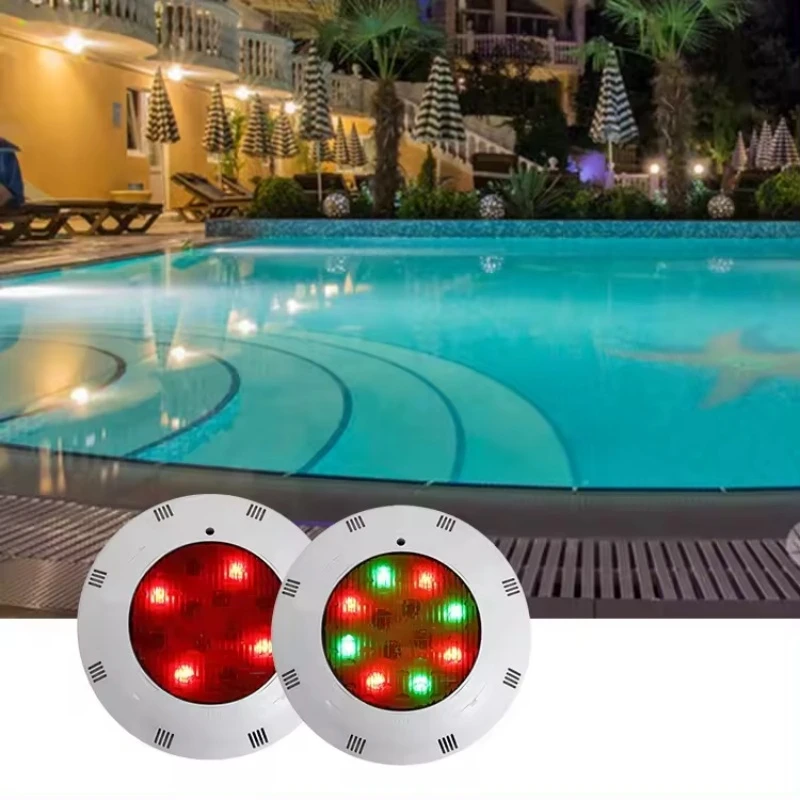
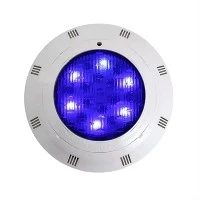
When purchasing pool lights, many pool owners and contractors focus solely on "how many colors" the lights can produce. Only after installation do they realize the issue: while the lights might look dazzling during a party, they can cause headaches when one simply wants a quiet soak in the evening-not to mention that the flashing lights make it difficult to see the steps at the bottom of the pool.
The problem usually isn't that the lights themselves are poor, but rather that the chosen lighting mode doesn't suit the specific scenario. A single RGB pool light should be set differently depending on the occasion. This article breaks down three common scenarios-parties, relaxation, and night swimming-explaining which color modes work best for each and what features to look for when selecting lights. If you are a distributor, pool contractor, or brand representative, you can also use this as a reference when presenting products to your clients.
Parties: Opt for dynamic modes with a strong rhythm
For parties, the goal is a "lively" atmosphere, making dynamic modes the primary choice.
Jump/Flash Mode: Rapid switching between highly saturated colors-such as red, green, blue, and yellow-creates a powerful visual impact, perfect for large gatherings with loud music.
Fast Fade Mode: Slightly softer than "jump" mode, this features smooth transitions between colors. It is less jarring to the eyes and well-suited for longer events.
Music Sync Mode: If the lights support sound activation or music synchronization via an app, they will pulse to the beat-offering the best overall experience. Note, however, that this feature places higher demands on the controller; when purchasing, verify whether it includes a built-in microphone or supports an external one.
Highly Saturated Solid Colors: For themed parties (e.g., bathing the entire pool in pink/purple or blue/green), locking the lights onto one or two vibrant colors creates a more intentional, well-designed look than a chaotic, constantly shifting display.
A practical tip: Party modes are best used for a "limited duration." Keeping rapidly flashing lights on for several hours can lead to visual fatigue. It is ideal to use a controller with adjustable speed settings, allowing users to slow down the rhythm as desired.
Relaxation: Opt for slow fades and soft tones
When unwinding in the water at night-perhaps with a drink or while chatting-the lighting should help create a "calm and peaceful" atmosphere, rather than stealing the show. Slow Fade: Colors transition gradually-shifting between blue, cyan, green, and purple-with a single cycle lasting tens of seconds or longer, making the transitions almost imperceptible.
Choosing Between Cool and Warm Tones: Blue, cyan, and pale green evoke a cool, tranquil feeling, perfect for summer. Warmer amber or warm-white tones create an inviting atmosphere-reminiscent of "sipping tea by lamplight"-ideal for cooler evenings.
Lowering Brightness: Many people find lights "too bright" when in relaxation mode. Fixtures with adjustable brightness settings offer a much more comfortable experience; setting the brightness to around 50% softens the light reflected off the water's surface and prevents glare from spilling over into a neighbor's property.
Avoid Large Areas of Red: Pure red appears dull and dark underwater; prolonged exposure can feel oppressive. It is better used as an accent color rather than a primary one.
Night Swimming: Safety Takes Precedence Over Atmosphere
Night swimming is the only scenario among the three that carries specific safety requirements, necessitating a completely different approach.
Prioritize Steady White or Cool-White Light: White light offers the greatest visibility, allowing swimmers to clearly see the pool floor, steps, walls, and other people in the water.
Avoid Flashing Modes: Rapidly flashing lights can distort one's perception of distance and depth-a significant hazard, especially for children and the elderly.
Use Dark Colors with Caution: Deep blues, purples, or reds absorb a significant amount of light underwater, making the entire pool appear dark and murky-which can make it difficult to gauge water depth.
Ensure Sufficient Brightness: For night swimming, the lighting should be bright enough to reveal the entire pool floor. If the pool is large or the water clarity is less than ideal, a single low-power light will not suffice; the number and wattage of the fixtures should be carefully calculated based on the pool's dimensions.
Maintain Water Clarity: Murky water causes light to scatter and dims the overall effect, rendering even the best lighting systems ineffective.
In short, for night swimming, the primary goal of the lighting should be pure illumination; save the colorful lighting effects for other types of settings.
What features should a pool light have to allow seamless switching between different scenarios?
No matter how many modes a light offers, if switching between them is cumbersome, users will likely just stick to the default setting. When selecting or recommending products, consider the following key features:
One-touch preset scenes: Ideally, the system should allow users to save settings-such as "Party," "Relaxation," or "Night Swim"-as quick-access presets, eliminating the need for manual color adjustments every time.
Multiple control options: Users have diverse preferences, so look for support via remote controls, mobile apps, wall switches, or integration with broader pool control systems.
Adjustable brightness and speed: These settings allow a single mode to be adapted to various environments and moods.
Power-off memory function: The light should resume its previous mode when powered back on, rather than reverting to a default color-a detail that significantly enhances the user experience.
Waterproof rating and power supply: Underwater lights typically require an IP68 rating. Low-voltage power (e.g., 12V) is also essential for safety; always verify these specifications before purchasing.
Conclusion
With the right control logic, a single RGB pool light can elevate a social gathering, create a tranquil atmosphere for a relaxing evening soak, or ensure safety during a night swim. The true value of a pool light lies not in the number of colors it offers, but in how well its modes align with real-world usage and how easily the user can switch between them.
Interested in learning more about RGB pool lighting solutions?
We specialize in the R&D and manufacturing of pool lights. We offer a wide range of RGB pool lights in various wattages, sizes, and mounting styles, with support for multiple control methods-including remote controls and mobile apps. We also provide OEM/ODM customization services tailored to your market needs, covering everything from mode configurations to product design and packaging.
If you would like to receive a product catalog, request samples, or obtain a quote, please leave a message or send us an email. Let us know your target market and the type of pools you serve, and we will recommend the ideal solution for you.
https://www.benweilight.com/professional-lighting/waterproof-stainless-steel-rgb-underwater-led.html