Architecture
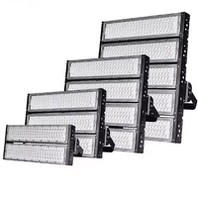
The COB LED is essentially a package that mounts a dense array of LED dies on a large, low thermal resistance substrate. It eliminates the intermediate substrate of a surface mounted device (SMD). Shortened thermal path enables effective thermal management and a significant reduction in package profile. COB LEDs have a single circuit and a single pair of anode (positive electrode) and cathode (negative electrode) for the entire package regardless of the number of diodes mounted on the substrate. To drive the high density array of semiconductor diodes, COB LEDs require a high forward voltage (of up to 72V). The electrical connection between the diodes is often a combination of series and parallel connections such that the circuit is protected against single LED open or short failures. The smaller the pitch (center- to-center spacing between LEDs), the more uniform and luminous the emission surface is. However, very small pitches can handicap horizontal heat extraction for diodes neighbor ed by other diodes in every horizontal direction. The COB LED packaging process requires both wire bonding and die bonding to provide electrical connection and thermal conduction for the LED dies. After the bonding process the die matrix is covered with a phosphor silicone mixture to produce white light and to shield the chip array from the environment.