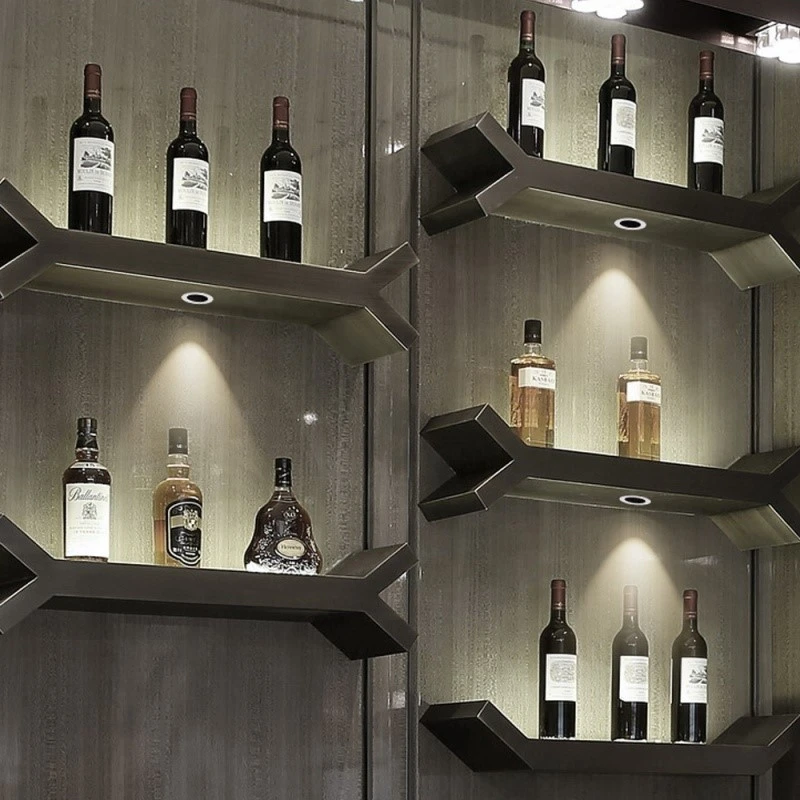
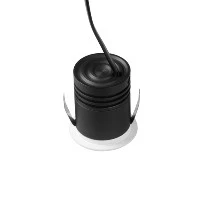
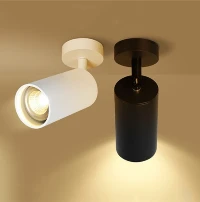
When selecting lighting for display cases, wine cabinets, wardrobes, or bookshelves, many designers and clients often ask the same question: Can these compact, 3W mini spotlights be installed directly into thin panels, glass, or cabinet surfaces?
The answer is: In most cases, yes-provided you first verify the panel's thickness, material, and the specific mounting method. Being able to install a light is one thing; ensuring it is secure and durable is quite another. Let's look at this through the lens of practical installation scenarios.
Understanding the Light: Key Characteristics of 3W Mini Spotlights
Whether a light can be installed depends first on the fixture itself. With a low power output of 3W, these spotlights generate minimal heat and typically weigh only a few dozen grams-which is precisely why they are well-suited for thin panels.
Most mini spotlights require a cutout diameter between Φ25mm and Φ55mm, with an installation depth (recess depth) ranging from 15mm to 40mm. These dimensions vary by model, so always consult the product specification sheet rather than relying solely on the fixture's appearance.
Installation on Thin Wooden Panels
"Thin wooden panels" generally refer to boards between 8mm and 18mm thick, such as shelving, back panels, or decorative panels in display cabinets.
Recessed Installation: This involves cutting a hole in the panel and securing the spotlight using its built-in spring clips. The critical factor here is ensuring the panel thickness falls within the clip's clamping range; if the panel is too thin, the clips won't hold, and if it's too thick, the clips won't seat properly.
Surface-Mount Installation: If a panel is too thin to accommodate a cutout, consider surface-mount or ceiling-mount fixtures, which can be secured using screws or heavy-duty double-sided tape.
Material Considerations: Different materials-such as solid wood, plywood, or medium-density fiberboard (MDF)-offer varying levels of "grip." MDF, being relatively soft, may cause spring clips to loosen over time; in such cases, it is advisable to reinforce the area or opt for screw-based mounting instead.
Before cutting into your actual material, it is highly recommended to test the fit on a scrap piece. If the hole is too large, the light will wobble; if it's too small, the light won't fit at all.
Installation on Glass Panels
It is possible, but drilling holes directly into glass is not recommended-unless you are using tempered glass that was pre-drilled by the manufacturer.
Clamp-on mounting: Use a clamp to attach the spotlight to the edge of a glass shelf. This method does not damage the glass and is ideal for glass display cabinets.
Adhesive mounting: Use an optical-grade or high-strength transparent adhesive to bond the light base to the glass surface. Be mindful of the adhesive's load-bearing capacity; while a 3W light is lightweight and generally fine, the glass surface must be thoroughly cleaned before application.
Light direction: When mounting lights on glass, consider whether the light should pass through the glass or reflect off it; otherwise, you may end up with unwanted glare or shadows.
Since tempered glass cannot be modified once it has been tempered, any requirements for holes must be specified when ordering the glass.
Installation on Cabinet Panels
Cabinet panels generally fall into two categories: internal components (shelves or top panels) and cabinet doors.
Top panels or undersides of shelves: This is the most common placement. Lights can be recessed or surface-mounted to provide downward illumination-ideal for wine cabinets, kitchen wall cabinets, or wardrobes.
Side panels: Suitable for scenarios where items need to be illuminated at an angle; adjustable-angle fixtures are recommended here.
Cabinet doors: Mounting lights on doors is generally discouraged, as opening and closing the doors can strain the wiring and increase the risk of malfunction.
If you are working with pre-fabricated cabinetry, check whether the panels have a hollow structure or a honeycomb core. If you drill into such panels, the edges must be sealed; otherwise, the mounting clips will lack a secure surface to grip.
Don't Overlook Heat Dissipation
Although a 3W light generates relatively little heat, it can still accumulate if the light remains on for long periods within an enclosed space.
When recessing lights into wood panels, ensure there is a gap of a few millimeters behind the fixture. Avoid letting the light be completely encased by materials like cotton fabric, cardboard, or insulation.
Glass and metal panels conduct heat well, which can actually aid in heat dissipation; however, ensure that the light fixture is not in direct contact with any flammable decorative materials. Opt for spotlights with aluminum housings; they offer more stable heat dissipation compared to those with purely plastic casings.
Managing Wiring and Power Supplies
Many people focus solely on how to mount the lights, while overlooking how the wiring will be routed.
Mini spotlights typically operate on low voltage (commonly 12V or 24V) and require a compatible driver or transformer. When installing them on thin panels, it is advisable to incorporate wiring channels on the back of the panel, or to use flat cables and concealed cable clips. Ensure the driver is placed in an accessible location for maintenance; do not seal it inside a cabinet, as any future issues would otherwise necessitate dismantling the cabinetry.
When connecting multiple lights in a series, calculate the total power consumption and ensure the driver's rated capacity includes a safety margin of approximately 20%.
Conclusion
Due to their compact size, light weight, and low heat output, 3W mini spotlights offer great installation flexibility-whether on thin wooden panels, glass, or cabinet surfaces. For thin wood, consider the panel thickness and material strength; for glass, opt for clamping or adhesive mounting; for cabinetry, choose between recessed or surface-mounted options based on the specific location. Regardless of the surface, adequate space for heat dissipation and careful wiring planning are essential.
With the right installation method, these small spotlights can be both aesthetically pleasing and highly durable.
If you are selecting mini spotlights for display cases, wine cabinets, wardrobes, or other projects, please feel free to contact us. Simply provide details such as the panel material and thickness, your preferred color temperature, and the required quantity. We will recommend the most suitable models and installation methods for your specific needs. We also offer sample testing and OEM/ODM customization services. We look forward to your inquiry.