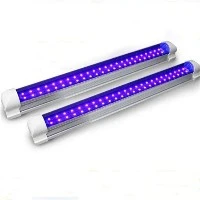
Case Study: Analysis and Solution for Opaque Housing of 365nm UV Inspection Lamp

Abstract
This case study examines a quality complaint regarding a 365nm UV inspection lamp whose transparent housing turned milky white after one month of use. Through technical analysis, the root cause was identified as improper material selection for the housing, leading to targeted solutions and preventive measures.
1. Problem Description
1.1 Product Information
Product Type: 365nm UV inspection lamp
Primary Use: Industrial adhesive inspection
Service Duration: Approximately 1 month
Failure Phenomenon: Transparent housing turned milky white
1.2 Problem Manifestation
Users reported that after about one month of use, the originally transparent housing gradually became opaque, developing a milky white appearance. This change significantly reduced UV output intensity, compromising normal adhesive inspection operations.
2. Problem Analysis
2.1 Material Testing
Laboratory analysis confirmed that the problematic housing was made of standard polycarbonate (PC). While PC performs well in general lighting applications, its resistance to UV radiation has limitations.
2.2 Failure Mechanism
Standard PC material undergoes photodegradation under prolonged exposure to 365nm UV radiation, characterized by:
Polymer chain scission
Molecular structure reorganization
Surface micro-crack formation
These changes increase light scattering, resulting in the milky white appearance.
2.3 Performance Impact
The opacification led to several negative effects:
30-50% reduction in UV transmittance
Poor irradiation uniformity
Reduced inspection accuracy
Potential for erroneous judgments
3. Solution Implementation
3.1 Short-term Measures
Immediate recall of affected product batches
Free replacement with premium housing materials
Extended warranty provision
3.2 Long-term Improvement Strategy
Based on material testing and verification, the following alternatives are recommended:
3.2.1 Quartz Glass Housing
Advantages:
Excellent UV transmittance (>90%)
Superior UV resistance
High temperature tolerance
Long service life
Disadvantages:
Higher cost
Heavier weight
Fragility
3.2.2 UV-resistant PC Housing
Advantages:
Incorporates UV absorbers
Relatively lower cost
Good impact resistance
Disadvantages:
Minor aging possible with extended use
3.2.3 PMMA Housing
Advantages:
Good UV stability
High light transmittance
Moderate cost
Disadvantages:
Poor heat resistance
4. Implementation Results
4.1 Replacement Effectiveness
After adopting quartz glass housing:
UV transmittance increased to 92%
Expected service life exceeding 5 years
Significant improvement in customer satisfaction
4.2 Cost-Benefit Analysis
Although quartz glass housing costs three times more than standard PC, overall long-term costs are reduced due to:
Fewer after-sales repairs
Lower replacement frequency
Enhanced brand reputation
5. Preventive Measures
5.1 Material Selection Standards
Establish strict material selection criteria:
Must pass 500-hour UV aging test
UV transmittance attenuation not to exceed 5%
Material certification reports required
5.2 Quality Control
Enhanced quality control in production:
Incoming material UV resistance testing
Contamination prevention during manufacturing
Finished product UV irradiation testing
5.3 Usage Guidelines
Provide detailed user instructions:
Recommended operating temperature range
Proper cleaning and maintenance methods
Clear product service life specifications
6. Lessons Learned
6.1 Technical Insights
Recognized differential material resistance to specific UV wavelengths
Mastered technical requirements for UV lamp material selection
Established comprehensive testing and verification systems
6.2 Management Implications
Product design must fully consider application environment characteristics
Quality control must begin with raw materials
Customer feedback is crucial for product improvement
7. Recommendations
Based on this case experience, we recommend:
Establishing a professional product validation laboratory
Developing strategic partnerships with material suppliers
Conducting regular product reliability testing
Implementing a responsive customer service system
Conclusion
Through the analysis and resolution of this quality issue, we have not only addressed the specific product defect but, more importantly, established a robust material selection and quality management system. While quartz glass housing for 365nm UV inspection lamps involves higher initial costs, it represents the most valuable solution when considering product performance, service life, and customer satisfaction. This case demonstrates that in specialized lighting applications, selecting appropriate materials for specific usage scenarios is paramount.