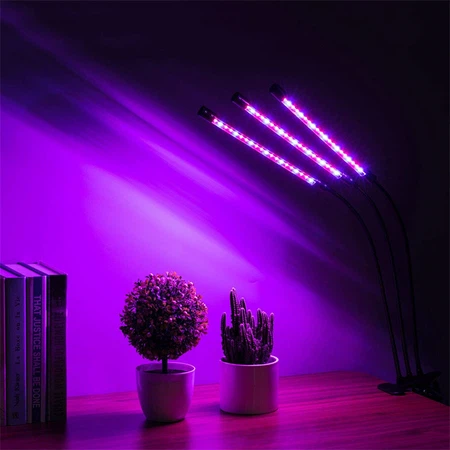
Far-Red Horticulture Lighting: Enhancing Indoor Cultivation

For indoor farming operations, horticultural lighting serves as a fundamental pillar of success. The quality of your grow lights directly influences crop development cycles and ultimately determines your annual profitability. While most growers recognize the superiority of full-spectrum LED technology for accelerating growth and maximizing yields, many remain unfamiliar with the technical terminology used to describe lighting performance. Understanding these concepts will empower you to make informed decisions when upgrading your cultivation system.
Recent research has revealed exciting developments in far-red spectrum technology, demonstrating how this previously overlooked wavelength can significantly enhance plant development when integrated into full-spectrum lighting regimens.
Essential Lighting Metrics
Watts: Measuring Energy Consumption
Watts quantify the electrical power consumed by a lighting system. Modern LED horticulture fixtures deliver substantially improved energy efficiency compared to traditional incandescent or metal halide alternatives. This means lower-wattage LED systems can achieve better results while consuming less energy and offering extended operational lifespans.
Lux: Quantifying Light Intensity
Lux (lx) represents a standardized unit for measuring illumination intensity at surface level. This measurement helps indoor farmers evaluate their lighting configuration's effectiveness. Different plant species have distinct lux requirements:
Low-light plants (500-3,000 lx): ZZ plants, cast-iron plants, Chinese evergreens
Medium-light plants (3,000-8,000 lx): Ficus, pilea, peperomia varieties
High-light plants (10,000+ lx): Succulents, cacti, and other light-demanding species
Optimal Fixture Placement
Proper hanging distance significantly impacts plant development. The ideal positioning depends on multiple variables including plant species, specific intensity requirements, fixture wattage, and ambient light conditions in the growing environment.
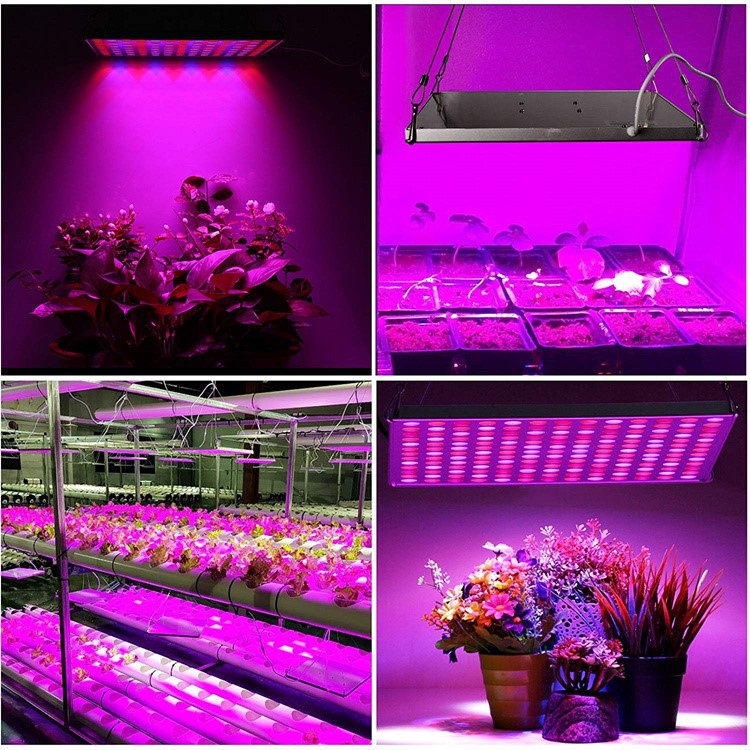
Comprehensive Spectrum Technology
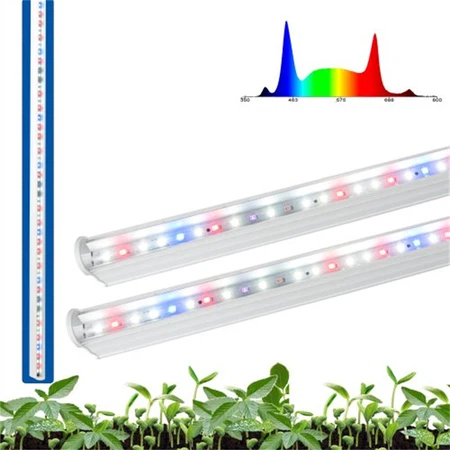
Indoor cultivation environments rely heavily on artificial lighting to provide essential energy for plant processes. Contemporary LED horticulture lighting employs full-spectrum technology that closely replicates natural sunlight, emitting wavelengths across the entire visible light spectrum (400-700 nanometers). Specific colors within this spectrum differentially influence critical growth aspects:
Red light (600-700 nm): Drives robust photosynthesis and biomass accumulation while promoting flowering and bud development
Blue light (400-500 nm): Ensures compact, healthy development by controlling stem elongation and strengthening plant structure
Green light (500-600 nm): Supports photosynthesis and enables visual health monitoring without disrupting growth processes
The Far-Red Advantage
Historically, horticulturists disregarded far-red light (wavelengths beyond 700 nm) believing plants couldn't utilize these spectra. Current research demonstrates that plants actually respond to wavelengths up to 780 nm, revealing significant benefits when far-red is incorporated into full-spectrum lighting programs.
Growth Stimulation
Plants exhibit a unique shade-avoidance response when detecting far-red photons, interpreting this signal as competition from neighboring vegetation. This triggers physiological adaptations including increased stem elongation and leaf expansion as plants attempt to capture more available light.
Enhanced Photosynthetic Performance
Scientific investigations reveal remarkable synergies when far-red wavelengths combine with shorter spectra. These interactions significantly boost photosynthetic efficiency, potentially accelerating development rates and increasing final biomass production.
Operational Benefits
Integrating supplemental far-red illumination with standard wavelengths can increase overall crop yields while reducing production timelines. For commercial indoor farming enterprises, this translates to improved profitability and enhanced return on investment.
Benwei Horticulture Lighting with Far-Red Technology
Benwei's research-driven horticulture lighting systems deliver accelerated growth rates and superior yields compared to conventional industry options. Our fixtures incorporate a comprehensive growth spectrum containing essential blue, green, and red wavelengths, now enhanced with optional far-red cycling capabilities.
The advanced Benwei far-red grow light represents the latest innovation in LED horticulture illumination, featuring:
Quick-connect daisy chain installation system
Instant activation without warm-up period
Extended 50,000-hour operational lifespan
Durable, lightweight aluminum housing
IP66 rating for wash-down environments
By incorporating far-red technology into your cultivation strategy, you can unlock new levels of productivity and efficiency in your indoor farming operation.