Circular Ceiling Lights for Indoor Spaces: Merging Function and Style
Circular ceiling lights have become an indispensable component of contemporary interior design. They are highly regarded for their capacity to combine practicality with aesthetic appeal, while also providing illumination to indoor areas in a manner that is both efficient and elegant. Due to their circular design, which is a classic option that compliments a variety of architectural styles, ranging from minimalist to traditional, they are adaptable enough to blend smoothly into living rooms, bedrooms, kitchens, corridors, and even commercial settings such as offices or retail stores. Circular ceiling lights evoke a sense of gentleness and harmony, so boosting the flow of a room and bringing the eye upward without dominating the area. This is in contrast to angular fixtures, which can produce hard visual edges. In addition to providing lighting, these lights function as design components that may be used to define the atmosphere and personality of a room. They can be recessed into the ceiling, surface-mounted, or suspended as a semi-flush fixture.
Circular ceiling lights have the capacity to spread light uniformly throughout an area, which is one of the most significant advantages of these illumination fixtures. The circular form guarantees that light radiates outward in a way that encompasses the whole room, so reducing shadows and producing a balanced glow that encompasses every nook and cranny of the space under consideration. This uniform distribution is especially helpful in locations where constant lighting is important, such as kitchens, where operations such as cooking or food preparation require clear sight, or in living rooms, where family gatherings and everyday activities require a well-lit atmosphere. Both of these spaces are examples of regions where this even distribution is particularly advantageous. Circular ceiling lights, in contrast to pendant lights or chandeliers, which may concentrate light downward in a narrow beam, emit a broad, diffused glow that removes dark areas. This makes them excellent for open-concept spaces or rooms with high ceilings, such as those in which it is difficult to create uniform illumination.
Circular ceiling lights are exceptionally popular for a number of reasons, one of which is the adaptability of its form. Larger versions that span 24 inches or more can serve as the main point in a big living room or dining area. They are available in a broad variety of sizes, from little fixtures that measure only a few inches in diameter, which are ideal for cramped corridors or powder rooms, to larger models that reach 24 inches or more. Materials also vary, which enables homeowners and interior designers to adapt the light to their interior style. For example, sleek metal frames in chrome, brass, or matte black provide a contemporary touch, while glass or acrylic diffusers in clear, frosted, or colored finishes can soften the light or introduce subtle visual appeal. There are other variants that include elaborate embellishments, such as patterned glass or woven metal shades, which offer texture to the fixture without abandoning its clean, circular form. As a result of this versatility, there is a circle ceiling light that may suit the design of a space, regardless of whether it tends toward industrial chic, Scandinavian simplicity, or bohemian warmth.
When it comes to the amount of light that is produced, circular ceiling lights are very configurable, offering a variety of alternatives to accommodate a variety of brightness requirements and ambiance specifications. The advancement of LED technology, which is currently the norm in the majority of contemporary fixtures, has changed their efficiency by providing strong illumination while consuming a small amount of energy. The power output of a typical circle LED ceiling light may range anywhere from 10 to 50 watts, and it could produce anywhere from 800 to 5,000 lumens. This is sufficient to illuminate a modest bedroom or a big living space with an open floor plan. The availability of dimmable versions is widespread, and they let users to change the brightness to correspond with the activity or the time of day. For example, lower settings are ideal for a relaxing evening in the living room, higher settings are ideal for concentrated work in a home office, and medium levels are ideal for an informal eating experience in the kitchen. This adaptability guarantees that the light can adjust to the shifting requirements of the area, which improves both the room's functioning and its level of comfort.
Color temperature is yet another essential component that plays a significant role in determining the function of circular ceiling lights in interior environments. It is measured in Kelvin (K), and it plays a key part in determining the mood of the space. It may range from warm yellowish tones to chilly blue whites, and it is responsible for determining the color of the light in the room. The color warm white, which ranges from 2700K to 3000K, is a popular option for bedrooms and living rooms because it produces an environment that is warm and inviting, which encourages relaxation and is perfect for unwinding after a long day. As a result of its ability to achieve a balance between warmth and clarity, neutral white (3500K–4000K) is an excellent choice for areas such as kitchens, home offices, or corridors, where visibility is essential but a harsh glare is undesirable. As a result of its bright, daylight-like nature, cool white (5000K–6500K) is frequently utilized in utility areas such as garages or laundry rooms, which are considered to be places where tasks that require sharp focus are performed. There are now a lot of circular ceiling lights that provide changeable color temperature. This gives consumers the ability to move between various alternatives to suit different events, which adds a layer of adaptability that traditional fixtures do not have.
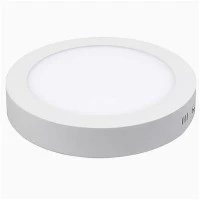
When it comes to incorporating circular ceiling lights into indoor spaces, installation and placement are two main factors to take into account. In order to provide a streamlined appearance that is suitable for minimalist or contemporary homes, recessed circular lights, which are also commonly referred to as "can lights," are inserted into hollow apertures in the ceiling. Due to the fact that they do not protrude and have a clean and uncluttered appearance, they are especially useful in areas that have low ceilings. Surface-mounted circle lights, on the other hand, are attached directly to the surface of the ceiling. This makes them simpler to install in areas where recessed lighting is not practicable, such as rooms with concrete ceilings or attics with restricted access. It is common for these fixtures to have a somewhat wider profile, which can contribute to the overall visual weight and also function as a decorative element. In order to bridge the gap between recessed and surface-mounted designs, semi-flush circular ceiling lights are hung a few inches from the ceiling by a short stem or chain. These lights create depth without hanging too low, which makes them acceptable for spaces with conventional ceiling heights.
In order to get the best possible lighting and optical equilibrium, the measurement of the circular ceiling light need to be appropriate to the size of the space. A light fixture with a diameter of 12–18 inches is often appropriate for a small bedroom or corridor. This type of fixture is able to provide sufficient illumination without taking up an excessive amount of space. Larger spaces, such as living rooms or great rooms with an open floor plan, may require fixtures with a diameter ranging from 20 to 36 inches, or even numerous smaller circle lights organized in a cluster or grid to ensure that light is distributed equally across the space. As an illustration, a circle lamp measuring 16 inches is adequate for a bedroom measuring 10 by 12 feet, however a model measuring 24 inches is more suitable for a living room of 15 by 20 feet. It is possible to prevent the light from seeming to be too tiny (which would result in uneven lighting) or too huge (which would create a crowded and overwhelming appearance) by matching the size of the fixture with the proportions of the room.
Circular ceiling lights are an excellent option for usage inside since, in addition to their size and visual appeal, they also provide a number of functional benefits. LED-based versions, in particular, are energy-efficient. They consume up to 80 percent less electricity than conventional incandescent bulbs and have a lifespan of between 25 and 50 thousand hours, which is much longer than their incandescent or fluorescent counterparts. As a result of its endurance, there is less of a need for regular replacements, particularly in ceiling places that are difficult to access, which results in cheaper maintenance expenses over time. In addition, LED circle lights produce extremely little heat, which makes them safer to use in areas with low ceilings or in close proximity to heat-sensitive materials such as wallpaper or cloth. Additionally, they do not exhibit the flickering that is typical of fluorescent lights, which may lead to eye strain. As a result, they are an excellent choice for areas where people spend lengthy amounts of time, such as bedrooms or home offices.
A further enhancement of the usefulness of circular ceiling lights has been made possible by smart technology, which has also integrated these lights into the expanding ecosystem of connected home products. Numerous contemporary versions are capable of being controlled through the use of smartphone applications, which enable users to remotely adjust the brightness, alter the color temperature, or create routines. Convenience is added by voice control compatibility with virtual assistants like as Amazon Alexa, Google Assistant, or Apple HomeKit. This allows for hands-free operation, which is beneficial when entering a dark room with full arms or while modifying settings from the comfort of a couch. There are also some smart circular ceiling lights that can sync with other smart home equipment, such as motion sensors or security systems. This allows them to switch on automatically when someone enters a room or modify themselves to simulate occupancy when the homeowners are not there. These features not only make the product more user-friendly, but they also help save money on energy costs by ensuring that the lights are only turned on when they are required.
As far as design trends are concerned, circular ceiling lights are continuously developing. Manufacturers are experimenting with different materials, finishes, and designs in order to respond to a wide range of preferences. The use of matte black lights, for example, has become increasingly fashionable in contemporary interiors. These fixtures provide a sleek and contemporary contrast to ceilings or walls that exhibit lighter colors. On the other hand, finishes made of brushed brass or gold add a sense of warmth and elegance, making them an excellent compliment to traditional or bohemian interior design. Clear glass or acrylic alternatives emphasize the fixture's internal components, such as LED strips or ornamental filaments, providing a touch of industrial beauty. Frosted glass diffusers continue to be a traditional choice for gentle, diffused light. Frosted glass diffusers are also a classic choice. Some designers are even putting organic components into circular ceiling lights, such as wood accents or woven rattan shades. This allows them to create a pleasant and earthy atmosphere by merging natural textures with modern shapes.
Taking into consideration the principal purpose of the room is an essential step in the process of picking a circle ceiling light for a particular indoor area. In the kitchen, where activities such as slicing vegetables or reading recipes demand strong, concentrated light, a circular ceiling lamp with a neutral white (3500K) temperature and a transparent diffuser offers vision without glare. Both of these features are essential for achieving the desired effect. It is possible to create layered illumination by combining it with under-cabinet lighting, which improves both the functioning and the atmosphere of the space. In a bedroom, a warm white (2700K) circle light with a frosted diffuser and dimming options creates an atmosphere that is conducive to relaxation. Additionally, a smaller 12-inch bulb placed above the bed prevents harsh shadows from being created during activities such as reading in the evening. Hallways, which are often narrow and dim, can be improved by installing many tiny circular lights with a diameter of eight to ten inches that are uniformly distributed along the ceiling. This will ensure that the brightness is consistent without producing dark areas.
Circular ceiling lights are equally adaptable when used in commercial or institutional environments. Offices, which place a premium on productivity, frequently make use of circle lamps that are neutral white (4000K) and have a high lumen output. This helps to maintain a bright working environment and reduces eye strain. For the purpose of highlighting products, retail businesses may use dimmable versions that have adjustable color temperatures. Warmer tones may be used for apparel or home décor, while cooler tones may be used for electrical devices. The usage of circular ceiling lights in restaurants and cafes helps to create intimate eating spaces. These lights are equipped with warm white (3000K) bulbs and frosted glass diffusers, which project a light that is flattering and gentle over the tables.
In conclusion, circular ceiling lights for indoor spaces are more than simply lighting fixtures; they are design elements that strike a balance between form and function, so boosting the beauty of a place as well as its functionality. The rounded design of these objects brings about a sense of harmony and gentleness, while their capacity to equally spread light ensures that they provide effective illumination. These lights are able to accommodate a wide variety of requirements and preferences in terms of design from recessed to surface-mounted solutions, as well as features such as programmable color temperatures, intelligent controllers, and LEDs that are efficient in terms of energy consumption. A circle ceiling light that is carefully picked has the ability to completely alter a room, making it brighter, more inviting, and visually unified. This is true regardless of whether the light is intended for a modern workplace, a bustling kitchen, or a comfortable bedroom. Circular ceiling lights continue to be an option that is both timeless and adaptable, demonstrating that effective lighting is as much about aesthetics as it is about usefulness. This is being demonstrated by the fact that interior design continues to value both beauty and sustainability.
circle ceiling light: https://www.benweilight.com/industrial-lighting/led-stadium-light/20w-22w-24w-circular-ceiling-light-for.html