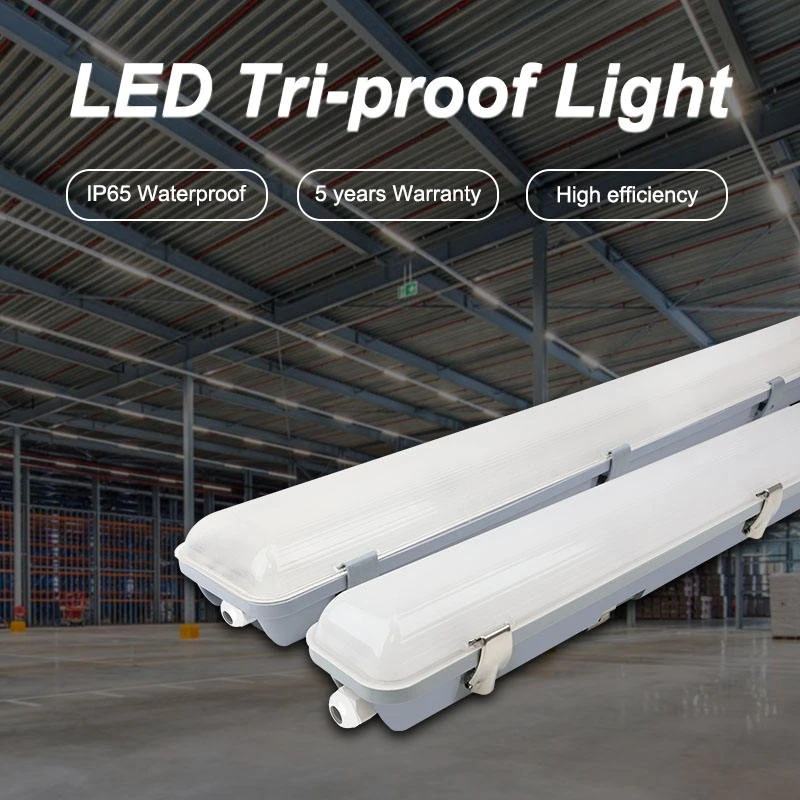
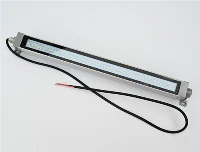
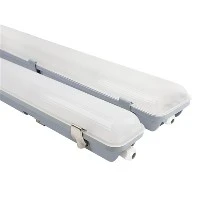
When you walk into a garage in the winter and flip the switch, the light might flicker a few times before turning on, or it may glow quite dimly. Many people's first thought is, "Is the light broken?" In reality, the issue often lies in whether the lighting fixture itself is suitable for low-temperature environments. "Tri-proof" lights-designed to be waterproof, dustproof, and corrosion-resistant-are built for harsh conditions. But how reliable are they in freezing garages or unheated tool sheds? This article breaks down the practical challenges posed by low-temperature environments, helping you choose the right lighting and avoid common pitfalls.
Are LEDs themselves sensitive to cold?
Not at all-in fact, they actually "prefer" the cold. Since LEDs are semiconductor-based light sources, lower temperatures make heat dissipation easier, which can slightly improve luminous efficiency and help ensure a longer lifespan.
Therefore, in settings like garages or sheds, the LED light source itself is rarely the problem. The real concern lies with the surrounding components, which we will explore in the following sections.
The real "weak link": The LED driver
While the LED chips themselves are cold-resistant, the driver (the power supply module) may not be. The electrolytic capacitors inside the driver can suffer from reduced performance in low temperatures, leading to startup delays, flickering, or a need for a few extra seconds before the light stabilizes.
When selecting a light, check if the operating temperature range is specified for the driver. Standard, reliable products are typically rated for ranges like -20°C to 40°C, while higher-quality models can handle -30°C or even lower. If your region frequently experiences temperatures below -20°C in the winter, be sure to verify this specification-don't just look at wattage and lumen output.
Why are tri-proof lights better suited for cold environments than standard fluorescent tubes?
Traditional fluorescent tubes struggle to start in the cold, and their brightness often drops significantly-a common reason why people have a love-hate relationship with their garage lighting during the winter. LED tri-proof lights don't suffer from this; they turn on almost instantly without any need for a warm-up period.
Furthermore, tri-proof lights feature a more enclosed design-incorporating seals, secure latches, and an integrated housing-which effectively blocks out the dust and moisture often present in cold air. In a shed, you don't need to worry too much about occasional water splashes, dust, or exposure to steam.
Condensation issues caused by temperature fluctuations
This is the most overlooked factor in low-temperature environments. During the day, the sun warms the shed; at night, the temperature drops sharply, causing the air inside the light fixture to contract. This often leads to moisture condensing on the inside of the lens, forming water droplets.
High-quality "tri-proof" (waterproof, dustproof, and corrosion-proof) lights feature structural solutions to address this-such as using a breathable, waterproof valve to balance internal and external air pressure, or employing a fully sealed, integrated design. When purchasing, ask the supplier: "Does the fixture have a pressure-balancing design?" This question is far more useful than simply asking, "What is its IP (ingress protection) rating?"
Performance of lens and housing materials in low temperatures
The materials used determine whether the fixture will become brittle in winter. Common lens materials include PC (polycarbonate) and PMMA (acrylic). PC offers superior impact resistance and is less prone to cracking in cold temperatures. Acrylic, while providing high light transmission, becomes brittle in extreme cold and may crack upon the slightest impact.
If your shed contains items like tools, ladders, or wooden boards that might bump into the lights, opt for a PC lens and check the product's impact resistance rating (IK rating).
Key specifications to look for when buying
Don't get overwhelmed by a long list of technical specs; for a low-temperature environment, focus on these:
Operating temperature range: Ensure it covers the lowest winter temperatures in your area, with a reasonable safety margin.
Ingress protection (IP) rating: IP65 is a standard starting point; consider a higher rating if the shed is subject to wash-downs or high humidity.
Driver/power supply specifications: Verify the unit's ability to start in low temperatures; ask for test documentation if necessary.
Lens material: PC is the more reliable choice.
Luminous flux and color temperature: Since winter light can feel "cold," a 4000K to 5000K white light is ideal for clear visibility while working. If you prefer a warmer atmosphere, you might opt for around 3000K.
A Few Details on Installation and Wiring
Once you've purchased the right lights, there are a few minor points to keep in mind during installation.
First, electrical wires can become stiff and brittle in extreme cold; avoid pulling them too taut or bending them repeatedly. Second, ensure that all wiring connections are properly waterproofed-do not leave joints exposed to moisture. Finally, if the lights are to be connected in a series, verify that the total power load does not exceed the capacity of the wiring or the connectors.
These may seem like trivial details, but they are often the root cause when a light stops working.
Conclusion
Returning to the initial question: Can "tri-proof" (ruggedized/protected) lights be used in cold garages or unheated sheds? The answer is yes-in fact, they are often better suited for these environments than most conventional lighting.
LED light sources are inherently resistant to low temperatures. The key factors to consider are the operating temperature range of the LED driver, the material of the light housing, how condensation is managed, and the specifics of the wiring installation. If these aspects are handled correctly, a high-quality tri-proof light can provide reliable service in a cold garage for many years.
Need tri-proof lights designed for low-temperature environments? Get in touch with us.
If you are selecting lighting for a garage, warehouse, agricultural shed, or any other cold-weather space and aren't sure which model offers the right operating temperature range and protection rating, simply let us know about your specific environment.
We will recommend the most suitable specifications for your needs and can provide samples and price quotes. Please leave a message or send an inquiry, and we will get back to you promptly.