light at wavelengths of 660 nm (red light) and 850 nm (near-infrared light) has been shown to be a very effective, non-invasive treatment for certain types of pain. This method, known as photobiomodulation (PBM), works by stimulating cellular repair and reducing inflammation in the body's tissues.
🔬 How It Works: The Biology Behind the Light
At a biological level, these specific wavelengths of light are absorbed by the mitochondria, the "power plants" inside your cells. This absorption triggers a series of events that lead to pain relief:
Increased Cellular Energy (ATP): It boosts the production of adenosine triphosphate (ATP), the primary fuel for cellular repair and regeneration.
Reduced Oxidative Stress: It helps lower harmful reactive oxygen species (ROS) and supports the body's natural antioxidant defenses.
Modulated Inflammation: It reduces levels of key pro-inflammatory markers, helping to calm inflammation in damaged tissues.
✨ The Different Roles of 660 nm and 850 nm Light
Although they are often used together, the 660 nm (visible red) and 850 nm (invisible near-infrared) wavelengths have distinct advantages:
| Wavelength | Primary Target | Mechanism of Action | Main Benefits for Pain & Healing |
|---|---|---|---|
| 660 nm (Red Light) | Skin & Surface Tissue (penetrates 2–4 mm) | Reduces surface inflammation; stimulates collagen production & wound healing. | Ideal for treating surface-level inflammation, promoting wound healing, and improving localized blood flow. |
| 850 nm (NIR Light) | Muscles, Joints & Nerves (penetrates 3–5 cm) | Boosts ATP production in deeper tissues; reduces deep inflammation & muscle soreness. | Most effective for deep-seated chronic pain (e.g., arthritis), speeding up muscle recovery, and easing nerve pain. |
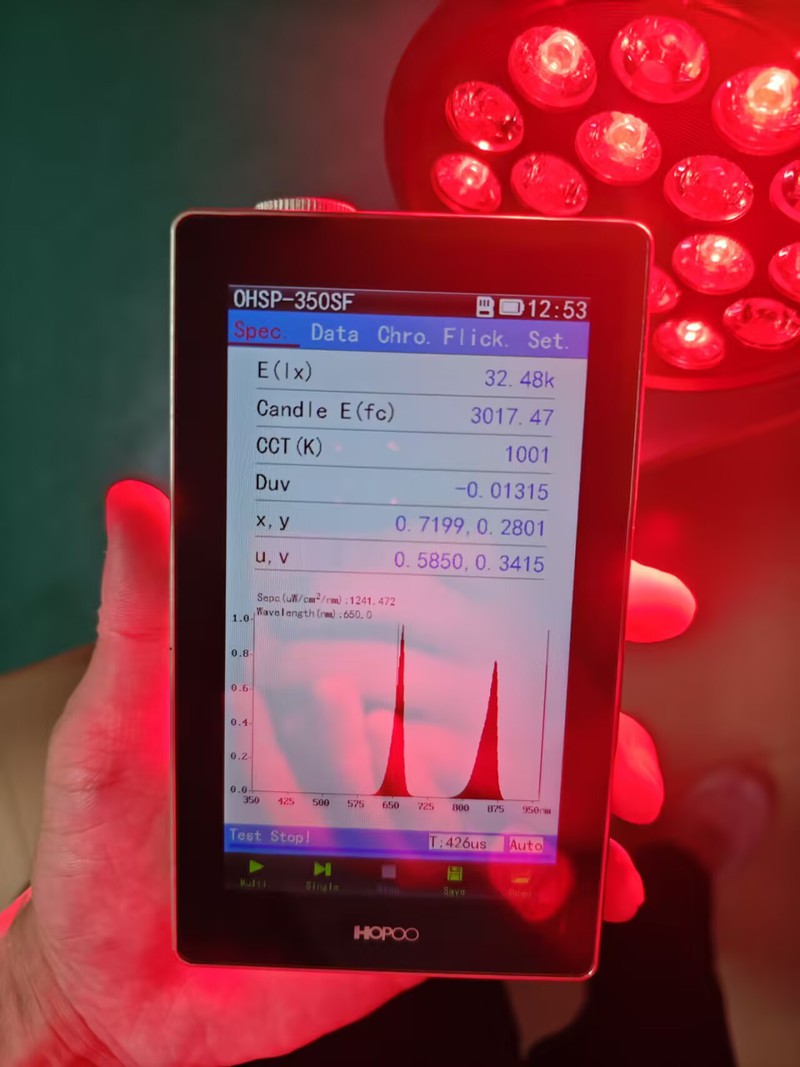
Combined therapy that uses both 660 nm and 850 nm light is often considered the "clinical standard" because it provides a synergistic effect, treating both surface and deep tissues simultaneously , you can see our test report below ( 660nm +850nm )
📊 What the Scientific Evidence Shows
The effectiveness of 660 nm and 850 nm light for pain relief is supported by a significant and growing body of scientific research:
Post-Exercise Muscle Soreness (DOMS): A randomized trial using 850 nm light showed a 30–40% reduction in pain scores compared to a placebo. A systematic review in the Cochrane Database has also confirmed its meaningful clinical benefits for this type of pain.
Knee Osteoarthritis: A meta-analysis of 10 studies with 542 participants found that PBM significantly reduced pain at rest compared to a placebo, with a moderate effect size.
Fibromyalgia & Neuropathy: A systematic review published in Frontiers in Integrative Neuroscience (2026) concluded that PBM has significant analgesic potential, particularly for fibromyalgia and peripheral neuropathies.
Complex Regional Pain Syndrome (CRPS): A 2020 study on an animal model of CRPS found that both 660 nm and 830 nm light significantly reduced pain, with 660 nm being significantly more effective.
🏛️ Regulatory and Safety Profile
The safety of this technology is well-established.
FDA Clearance: Many over-the-counter devices using dual 660 nm and 850 nm wavelengths have received FDA 510(k) clearance as Class II medical devices. Their official intended use includes "the temporary relief of minor muscle and joint pain, arthritis and muscle spasm" and increasing local blood circulation.
Safety and Side Effects: In clinical studies, the incidence of adverse events from PBM is very low, reinforcing it as a safe method for pain management. However, proper eye protection is always recommended to avoid potential retinal damage.
💎 How It Compares
Red/NIR light therapy is a complementary treatment, not a replacement for standard medical care. It offers several advantages:
Benefits: Non-invasive, very safe with minimal side effects, can reduce reliance on pain medications, and provides a lasting biological effect.
Limitations: Results are not immediate (often takes 4-6 weeks of consistent use). The level of relief (e.g., reducing pain by 30-40%) may not be sufficient for severe, acute pain.
the evidence strongly supports the use of 660 nm and 850 nm light therapy for certain types of pain, particularly chronic, inflammatory conditions and post-exercise muscle soreness. Its biological mechanism is well understood, and it is considered a safe and effective option for many people.
If you are considering this therapy, remember that device quality (power output) and consistent use are key to seeing results. It's always best to discuss it with a healthcare provider to see if it's a good fit for your specific situation. you can see more information on http://www.benweilight.com