Does Your Herd Need a "Light Formula"?
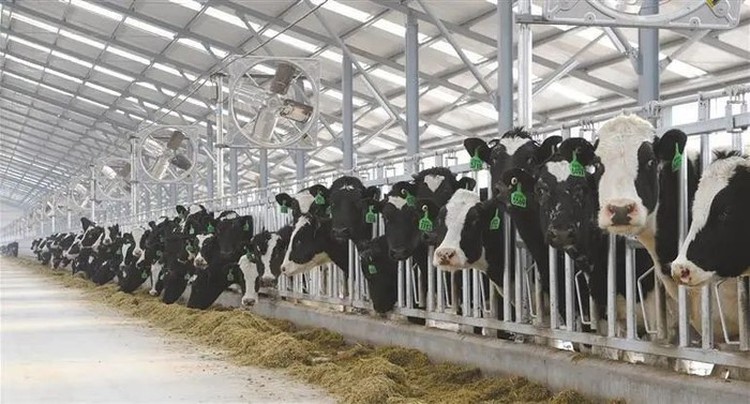
In modern ranch management, lighting is no longer just about "visibility"-it is a critical production input. Scientific lighting management can significantly increase milk yield in dairy cows (by 8%–15%) and improve the growth efficiency of beef cattle. However, the environment inside a cattle barn is extremely harsh, and ordinary industrial lights often "don't survive a single year."
How do you choose the right LED fixtures for your herd? What practical difficulties will you face during the selection process? This article provides a comprehensive guide to the industry knowledge of cattle lighting.
1. The Core Challenge: Why is a Cattle Barn a "Slaughterhouse" for Fixtures?
Before selecting a fixture, it is crucial to recognize the extreme tests the cattle barn environment poses to electronic equipment:
- High Ammonia ($NH_3$) Corrosion: The decomposition of cattle urine and manure produces high concentrations of ammonia, which is extremely corrosive. Standard aluminum housings will oxidize and become brittle within months, leading to circuit failure.
- High Humidity and Pressure Washing: Daily cleaning of barns involves high-pressure water hoses. Fixtures must possess an exceptionally high waterproof rating.
- Biological Stress: The visual structure of cattle differs from humans; they are extremely sensitive to flicker. Unstable light sources can cause the herd to panic, leading to stress and decreased appetite.
2. Key Parameters to Consider for Cattle LED Lights
To ensure production efficiency and equipment longevity, refer to these industry-standard data points when selecting lights:
| Performance Metric | Recommended Standard | Industry Rationale / Purpose |
| Ingress Protection (IP) | IP66 / IP69K | IP69K allows the fixture to withstand high-pressure, high-temperature washdowns. |
| Corrosion Resistance | WF2 Grade | Must pass ammonia corrosion tests to protect the cooling structure and internal components. |
| Long Day Photoperiod (LDP) | 16h Light / 8h Dark | Simulating long summer days stimulates the secretion of lactation-promoting hormones. |
| Light Intensity (Lux) | 200 - 300 Lux | Feeding areas need this brightness to stimulate intake; rest areas can drop to 50 Lux. |
| Color Rendering Index (CRI) | Ra > 80 | Helps staff observe mucous membrane color and manure consistency to detect sick cows early. |
| Flicker Percentage | < 1% (Flicker-Free) | Reduces visual stress on cattle and maintains herd emotional stability. |
3. Expert Recommendations: Core Considerations for Selection
-
A. Material is the Lifeline
Do not rely on standard die-cast aluminum housings. In a barn environment, it is recommended to choose Anti-corrosive Engineering Plastics (PC/ABS) with integrated encapsulation or Aviation Aluminum with specialized coatings. Silicone gaskets should be used at all connection points to prevent ammonia from seeping into the chip area through physical gaps.
-
B. Intelligent "Light Formulas"
Barn lighting should not be a constant "all or nothing" affair.
Simulating Dawn and Dusk: Sudden switching of lights can startle cattle. LED lights with 0-10V dimming capabilities allow for smooth transitions.
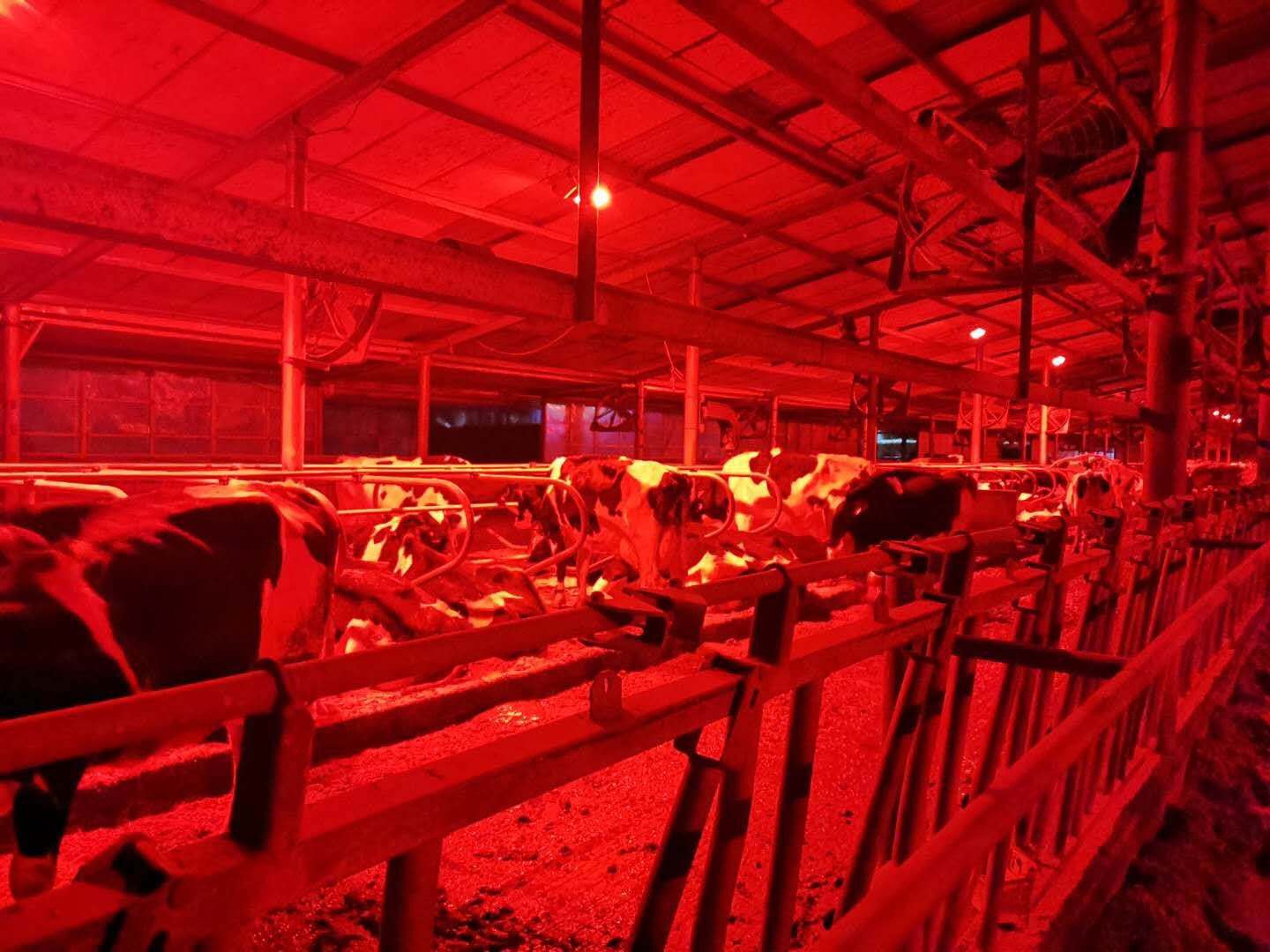
Nighttime Red Light Mode: Cattle are insensitive to red light. Using dim red light for nighttime inspections allows staff to see while ensuring the herd's sleep cycle remains undisturbed.
-
C. Uniformity Over Brightness
Cattle have poor depth perception. Shadows (dark spots) on the ground are often mistaken for holes, causing them to stop or refuse to move.
Buying Tip: Choose fixtures with a wide beam angle (120° or more) or those equipped with milky white diffusers to ensure light is spread evenly across the feeding alley, avoiding harsh contrasts.
4. Avoiding Pitfalls: Common Installation Difficulties
- Voltage Drop: Cattle barns are often 100–200 meters long. When using low-voltage DC24V systems, fixtures at the end of the line may appear dim. It is recommended to use wide-voltage (AC100-277V) fixtures or increase the cable gauge.
- Mounting Height and Maintenance: Lights mounted too high result in insufficient lux levels; those mounted too low risk being hit by cleaning machinery. A mounting height of 4–6 meters is recommended, and fixtures must be equipped with stainless steel safety chains.
Summary
Choosing lights for cattle is essentially a search for the balance between "extreme corrosion resistance" and "biological friendliness." A qualified cattle barn LED light must not only survive in an environment filled with ammonia and water mist but also utilize scientific spectral output to keep the herd "happy," leading to higher milk production and faster growth.