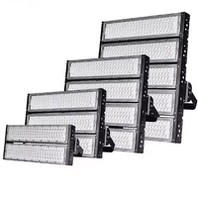
Doubt: What photography light should I choose?
As we all know, photography is the art of light and shadow. Since you are playing with light, lights are indispensable. Recently, a student asked what kind of lights to buy in the studio, thinking about writing an official account for everyone.
Searching for photography lights on the Internet, you will see a wide variety of lights and packages of different brands, with varying prices. In fact, if you look closely, you will find that these lights are mainly divided into two types. One is a flashlight, and the other is a constant light (also called a sun light). Don't worry about which one to buy. First, let everyone know the difference between flash and constant light.
The difference between flash and constant light
The biggest difference is: the difference in luminous time and luminous intensity.
1. Luminous time
The light is always on, as the name implies, it will stay on as long as it is powered on.
The flash discharges instantaneously and has a recycling time. The top flash is almost 10fps (not at 1/1 power, the greater the flash power, the longer the recycling time). Many novice photographers don’t understand the structure of a flash
There are two bulbs in the lamp holder of the flash, one is the modeling lamp and the other is the flash. The modeling light is always on when not shooting. The modeling light is automatically turned off immediately before the flash. The modeling light is used to simulate the illumination effect of lighting and to illuminate the subject to facilitate the camera's viewfinder and focus.
When the photographer presses the shutter, the flash fires up instantly, and the light intensity of the flash is used for shooting exposure.
2. Luminous intensity
The brightness of the flash is much stronger than that of a constant light.
Features of flash and constant light
1. What you see is what you get;
The biggest advantage of lighting with constant light is "what you see is what you get". You can directly see the effect of lighting. Under the premise of accurate exposure, the image is basically the same as the light effect and color seen on the spot. For novice photographers, getting started is easy, lighting can be faster and more accurate, and focusing is easier and more efficient when the ambient light is dim.
2. Convenient for continuous shooting;
It can give full play to the camera's high-speed continuous shooting function, which can not be done by the flash. If you are used for live broadcasting or need to shoot videos and specialize in shooting children, then the constant light is your first choice.
3. The light is softer;
Compared with the flash, the light of the always-on lamp is generally scattered and soft, and the color temperature is low (yellow) and it feels warm.
4. It is easier to obtain the effect of shallow depth of field;
When using a flash, if you want to use a large aperture to obtain a shallow depth of field, you need to reduce the flash intensity to avoid overexposure due to the enlarged aperture. When shooting with the always-on light, you don’t need to adjust the intensity of the light anymore. You can control the depth of field by directly adjusting the shutter.
Seeing this, you may have questions: I think it’s good to keep the lights on. Why do you need a flash if there are so many advantages?
Don't worry, let me introduce the characteristics of flash. After the comparison, see which one is more suitable for your shooting needs.
1. High luminous intensity;
The flash has different powers to choose from. For ordinary photographers, a flash from 250w to 600w can meet the daily needs of portrait and scenery shooting creation. Of course, there are also single lamp holders with a power of up to 1200 watts per second on the market. The higher the power, the more expensive the price. This is also the reason why professional flash can use F16 or even smaller aperture to shoot, so as to obtain a deeper depth of field and affect sharpness.
2. Low energy consumption;
Everyone knows that the flash light emits instantaneously, and the power consumption of the flash light is much smaller than that of the constant light of the same luminous intensity. According to data, the power consumption of a 1000W high-power flash is roughly equivalent to the power consumption of a 250-watt bulb, and the intensity of the emitted light exceeds the intensity of a 10,000-watt tungsten film lamp.
3. Color temperature standard;
The color temperature of the flash is usually 5500K±200, which is the average value of the color temperature of natural light. Using flash photography can easily restore the original color of the subject.
4. More lighting accessories;
Lamp accessories can change the direction, texture, intensity, irradiation area and color of the light, such as soft box, reflector umbrella, soft umbrella, radome, honeycomb four leaves, color film, beam tube and so on.
5. The texture of the object shot by the flash is better
Regarding this point, I will share it in detail next time.
Many students often ask for recommendations, and some even ask for the same money. In fact, no matter what brand or model, the most suitable is the best. I hope you can buy it according to your needs. Finally, I would like to share with you the points from which to choose a studio flash:
1. Flash tube
It is not an exaggeration to say that the flash tube is the most critical component of the flash, because the number of guide numbers that the flash can produce in an instant is basically determined by the flash tube it uses. There are many types of flash tubes, and the most outstanding one is the coated flash tube.
2. Output power
The higher the guide number, it can produce enough brightness in an instant, whether it is portrait shooting or still life shooting, it can effectively highlight details and make photos more visually impactful.
3. Recycle time
The length of the recycling time is an important indicator of the flash. The fast recycling speed can adapt to high-intensity work in full light, which is more conducive to snap shots.
4. Thermal performance
The flash will generate heat when it is working. In order to ensure the normal use and service life of the flash, heat dissipation is particularly important.
That's it for today's sharing. Focus on Circled Photography to share more photography-related knowledge with you.