Explosion-Proof LED Tube: Design, Materials, Performance & Hazardous Environment Applications

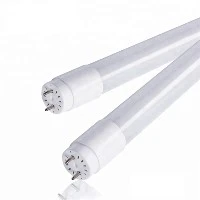
As industrial safety requirements escalate, the explosion-proof LED tube has emerged as a pivotal lighting solution for high-risk environments, combining energy efficiency, long lifespan, and explosion protection. Unlike regular fluorescent tubes, it has the same size as IEC T8, so it can be easily replaced Widely used in oil extraction, petrochemical plants, marine platforms, and military facilities, this product addresses critical safety needs in Zone 1/2 hazardous areas with IIA, IIB, and IIC explosive gas classifications. This article adheres to the EEAT principle, integrating authoritative test data, certification standards, and technical design insights to explore the structural design, material selection, performance validation, and application advantages of explosion-proof LED tubes. It acts as a complete resource for safety engineers, facility managers, and purchasing professionals, including information on corrosion-resistant explosion-proof LED tubes, high-lumen explosion-proof LED tubes, and other special types.
What Are the Core Structural and Material Design Requirements for Explosion-Proof LED Tubes?
The safety and reliability of explosion-proof LED tubes depend on rigorous structural design and high-performance material selection, aligned with global explosion-proof standards (GB/T 3836.1-2021, GB/T 3836.2-2021, GB/T 3836.3-2021).
Composite Explosion-Proof Structure
The product adopts an Ex d eb II C Gb composite explosion-proof structure, integrating flameproof (Ex d) and increased safety (Ex e) designs:
Flameproof Chamber: The LED light source cavity is designed as flameproof, with precision-engineered joints and encapsulation to contain internal explosions. All gaps are minimized to prevent flame propagation to external explosive atmospheres.
Increased Safety Terminals: The lamp pins and wiring connections are classified as increased safety, eliminating arcing and sparking risks during normal operation.
Sealing and Encapsulation: Silicone gaskets ensure an airtight seal between the tube body and connectors, with adhesive bonding length ≥10 mm. Epoxy resin encapsulation (length ≥20 mm) is applied to wiring holes and screw sockets to enhance explosion-proof integrity.
The explosion-proof LED tube comprises key components: a tube body, connectors, an LED substrate, an aluminum heat sink, a constant current driver, gaskets, and lamp pins. The integrated aluminum profile within the tube serves as the primary heat dissipation medium, addressing the thermal management challenge in sealed explosion-proof designs.

High-Performance Material Selection
Material selection prioritizes explosion protection, durability, and optical performance:
|
Component |
Material |
Key Properties |
Performance Metrics |
|---|---|---|---|
|
Tube Body |
BPA-based PC (Polycarbonate) |
High impact resistance, flame retardancy, thermal stability |
Density: 1.18-1.22 g/cm³; Operating temperature: -45°C to 135°C; Impact strength: 600-900 J/m |
|
Light-Transmitting Section |
Light-diffusing PC |
Uniform light distribution, anti-glare |
Transmittance ≥85%; Reduces glare via diffuse reflection |
|
Non-Transmitting Section |
Opaque PC (with titanium dioxide) |
Light shielding, structural support |
Minimizes luminous flux loss; Enhances mechanical strength |
|
Connectors |
Extruded aluminum alloy |
High strength, heat dissipation |
Facilitates heat transfer from the aluminum heat sink; Easy machining |
|
Gaskets |
Silicone rubber |
Sealing, temperature resistance |
Maintains airtightness in extreme environments and is compatible with PC and aluminum. |
Table 1: Material Selection and Performance Metrics
PC material is preferred for the tube body due to its exceptional properties: it withstands 2 MPa water pressure for ≥10 s without leakage or deformation, has a brittle temperature of -100°C, and eliminates 80% of internal stress. Its impact resistance is 250-300 times that of ordinary glass and 2-20 times that of tempered glass, while being half the weight and non-toxic when burned-critical for hazardous environment safety.
Design of the LED light source and driver
LED Light Source: High-quality chips (e.g., Hongli, CREE, Lumileds) are selected, with operating power ≤70% of the rated chip power to ensure longevity. Key parameters include color temperature 5700K±300K (customizable 3500K-6500K), junction temperature (Tj) ≥120°C, color rendering index (Ra) ≥80, luminous efficacy ≥120 lm/W, and antistatic capacity ≥2000V. The aluminum substrate has a thermal conductivity ≥1.5 W/(m·K) to enhance heat transfer.
Constant Current Driver: The main requirements are that the output voltage stays stable within ±10% of the input voltage, the conversion efficiency is at least 85%, and the device meets UL 1310 (Class 2), UL 60950, and UL 1012 standards. It features 2.5 kV L-N surge protection, overcurrent/short-circuit/open-circuit/overtemperature protection, and soft start/soft shutdown to avoid LED damage from inrush current. Total harmonic distortion (THD) ≤15% ensures grid compatibility.

How to Ensure Thermal Management and Performance Validation of Explosion-Proof LED Tubes?
Thermal management is critical for explosion-proof LED tubes, as excessive heat can compromise safety and lifespan. Rigorous performance validation ensures compliance with industry standards.
Thermal Management System
In sealed explosion-proof enclosures, heat transfer primarily occurs through conduction. The thermal management system follows three key paths:
Heat Generation: LED chips produce heat during operation, which is transferred to the aluminum substrate via conduction.
Heat Dissipation: The aluminum substrate transfers heat to the integrated aluminum profile within the tube, then to the external environment via natural convection.
Optimization Measures: Designers minimize the radial length between the LED substrate and aluminum profile, increase the cross-sectional area in the heat flow direction, and select high-thermal-conductivity materials to reduce thermal resistance.
Temperature tests were conducted on 12 explosion-proof LED tubes (6 fixtures, 2×18W per fixture) with 253V input for 6 hours (temperature change ≤1K/h). The results confirm that all components operate below their maximum rated temperatures (e.g., constant current driver Tc ≤ 85°C) even at 45°C ambient temperature.
Table 2 presents the data from the temperature rise test:
|
Lamp No. |
Connector Surface (°C) |
Constant Current Driver Tc (°C) |
Reflector Surface (°C) |
Ambient Temperature (°C) |
|---|---|---|---|---|
|
1# (2×18W) |
36.6 |
48.5 |
32.1 |
28 |
|
2# (2×18W) |
36.4 |
48.3 |
31.5 |
28 |
|
3# (2×18W) |
37.2 |
46.8 |
30.2 |
28 |
|
4# (2×18W) |
38.2 |
46.9 |
32.5 |
28 |
|
5# (2×18W) |
36.8 |
44.3 |
32.0 |
28 |
|
6# (2×18W) |
37.4 |
46.7 |
31.7 |
28 |
Table 2: Temperature Rise Test Results
Comprehensive Performance Validation
Ten 18W prototype explosion-proof LED tubes underwent rigorous testing to verify reliability, with all results meeting standards:
|
Test Item |
Requirements |
Test Equipment |
Result |
|---|---|---|---|
|
Photoelectric Parameters |
Measure luminous flux, efficacy, color temperature, Ra, power, power factor |
Integrating Sphere Test System |
Pass |
|
EMI Detection |
Comply with GB/T 17743-2021; Total harmonic distortion ≤10% (GB 17625.1-2022) |
EMI Test Receiver |
Pass |
|
Conversion Efficiency |
≥85% |
Photoelectric Parameter Tester |
Pass |
|
Surge Protection |
L-N 2.5 kV |
Surge Test Bench |
Pass |
|
Abnormal Protection |
Short-circuit/open-circuit protection; Recovery after 1-hour test |
Photoelectric Parameter Tester |
Pass |
|
High-Temperature Resistance |
75°C, 75% RH for h; Normal operation after cooling |
Constant Temperature and Humidity Chamber |
Pass |
|
Temperature Cycle Shock |
-40°C (1h) ↔ +85°C (1h), 5 cycles; Normal power switching |
High-Low Temperature Chamber |
Pass |
|
Insulation Resistance |
≥2MΩ |
Insulation Resistance Tester |
Pass |
|
Power Frequency Withstand Voltage |
AC 1500V, min.; Leakage current < 5 mA |
Withstand Voltage Tester |
Pass |
Table 3: Performance Validation Results
What Are the Application Advantages and Energy-Saving Benefits of Explosion-Proof LED Tubes?
Explosion-proof LED tubes offer distinct advantages over traditional fluorescent lamps, particularly in energy efficiency and lifecycle cost.
Direct Retrofit and Versatile Application
The product matches the size of standard T8 fluorescent tubes, allowing it to be swapped out for regular fluorescent tubes without changing the current fixtures or adding ballasts. It works with explosion-proof lights (like HRY91-Q all-plastic LED fixtures) that have safety switches (which turn off the power when the cover is opened) and vents to equalize pressure inside and outside, stopping moisture from building up. Suitable for Zone 1/2 hazardous areas, it is widely used in oil refineries, petrochemical plants, marine platforms, military facilities, and fuel depots.
Energy-Saving and Long-Lifespan Benefits
A performance comparison between explosion-proof LED tubes and traditional T8 fluorescent lamps confirms significant energy savings:
|
Product |
Light Source |
Rated Power |
Operating Current (220V) |
Power Factor |
Effective Luminous Flux (lm) |
Lifespan (Hours) |
|---|---|---|---|---|---|---|
|
Traditional Fluorescent Fixture |
36W×2 T8 Fluorescent Tubes |
72W |
0.33A |
0.95 |
3000 |
10,000 |
|
Explosion-Proof LED Fixture |
18W×2 Explosion-Proof LED Tubes |
36W |
0.18A |
0.95 |
3100 |
50,000 |
Table 4: Energy-Saving Comparison
With similar luminous flux, the explosion-proof LED tube reduces power consumption by 50% and achieves 55% energy savings. Its 50,000-hour lifespan (5x that of fluorescent tubes) minimizes maintenance frequency and costs-critical for hazardous environments where equipment access is challenging.
Common Industry Issues and Solutions for Explosion-Proof LED Tubes
Common Issues
Improper sealing or encapsulation can reduce the explosion-proof performance of LED tubes.
Overheating caused by blocked heat dissipation or inadequate thermal design.
Surge voltage, or inrush current, can lead to LED failure.
There may be incompatibility issues with hazardous zone classifications or gas groups.
Solutions
To ensure proper sealing, use silicone gaskets with sufficient compression and verify adhesive/encapsulation lengths (≥10 mm/20 mm); inspect seals quarterly for wear. For overheating, keep heat dissipation surfaces clean, avoid installing in enclosed spaces, and ensure the aluminum substrate is tightly bonded to the heat sink. Protect against surges by selecting drivers with 2.5 kV+ surge protection and installing additional surge arresters in unstable power grids. Prevent inrush current damage by confirming drivers have soft start functionality. To avoid incompatibility, verify the explosion-proof mark (Ex d eb II C Gb) and ensure compliance with target zone (1/2) and gas group (IIA/IIB/IIC) requirements. Always use certified products with valid explosion-proof certificates and follow "no cover opening under power" guidelines. For corrosion-prone environments, select aluminum connectors with anti-corrosion coatings and PC materials resistant to chemicals.
Authoritative References
The Standardization Administration of the People's Republic of China published this standard in 2021. GB/T 3836.1-2021: Explosive Atmospheres-Part 1 outlines the general requirements for equipment. https://openstd.samr.gov.cn/bzgk/gb/newGbInfo?hcno=5072E6644446540225644456E656E496E666F
Standardization Administration of the People's Republic of China. (2021). GB/T 3836.2-2021: Explosive Atmospheres – Part 2: Equipment Protected by Flameproof Enclosures "d." https://openstd.samr.gov.cn/bzgk/gb/newGbInfo?hcno=5072E6644446540225644456E656E496E666F
This document was published by the Standardization Administration of the People's Republic of China in 2021. GB/T 3836.3-2021: Explosive Atmospheres – Part 3: Equipment Protected by Increased Safety "e." https://openstd.samr.gov.cn/bzgk/gb/newGbInfo?hcno=5072E6644446540225644456E656E496E666F
Underwriters Laboratories (UL). (2022). UL 1310: Standard for Safety of Power Units Apart from Class 8. https://standardscatalog.ul.com/standards/en/standard_1310_0
Underwriters Laboratories (UL). (2021). UL 60950-1: Standard for Safety of Information Technology Equipment. https://standardscatalog.ul.com/standards/en/standard_60950_1_0
Wang, L. (2012). Market Analysis of Polycarbonate. Chemical Industry, 30(8), 33-37.
Li, P. (2008). Thermal Analysis and Heat Dissipation Design of LED Luminaires. China Lighting Electrical Appliances, 12, 17-19.
Notes
Explosion-Proof LED Tube: A lighting device designed for hazardous environments to prevent ignition of flammable gases, dust, or vapors through specialized structural and material designs.
The Composite Explosion-Proof Structure (Ex d eb II C Gb) combines two types of safety features, flameproof (Ex d) and increased safety (Ex e), making it suitable for areas with
PC (Polycarbonate): A high-performance polymer with excellent impact resistance, thermal stability, and optical properties, widely used in explosion-proof lighting enclosures.
Constant Current Driver: An electronic component that maintains stable current output for LEDs, critical for consistent performance and lifespan in harsh environments.
Thermal Conductivity: A material property measuring heat transfer efficiency, with higher values (e.g., ≥1.5 W/(m·K) for aluminum substrates) enhancing heat dissipation.
THD (Total Harmonic Distortion): A measure of current waveform distortion, with ≤15% ensuring compatibility with power grids and minimal interference.
Zone Classification: Defines the frequency of explosive atmosphere presence (Zone 1: continuous/frequent; Zone 2: occasional) per IEC/GB standards.
Would you like me to generate a hazardous zone-specific product selection checklist for explosion-proof LED tubes or create a 10-year lifecycle cost analysis comparing them with traditional explosion-proof fluorescent lamps?
Shenzhen Benwei Lighting Technology Co., Ltd.
Email: bwzm15@benweilighting.com
Web: www.benweilight.com