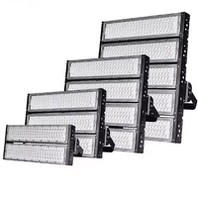
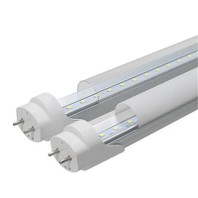
Factory lighting not only needs to meet the illumination needs of different industrial sectors, but also guarantees long-lifetime and durability of luminaires, while saving energy. The most important thing is to ensure the efficiency of employees. Appropriate lighting effects not only help to motivate employees, but also prevent the fatigue of employees, maintain the health of employees and prevent work-related accidents. Appropriate lighting effects need to be comprehensively evaluated in terms of visual execution, visual comfort and visual atmosphere.
Assessment Content | Lighting Factors | Impact On Industrial Production |
Visual execution | Illuminance and glare | Operating sensitivity and accuracy |
Visual comfort | Light Uniformity and CRI | Employees' work comfort, mental concentration and work efficiency |
Visual ambience | The direction of the light, the layout of the luminaire and the color temperature | Employees’ mood, attention and safety |
In the industrial filed, the ergonomic quality of the workplace is critically dependent on the ease with which various visual tasks can be performed. Good lighting can have a positive impact on other productivity determinants (implementation, mistakes, accidents). In a pleasant indoor environment, a good line of sight and a comfortable feeling can better motivate employees, make them more focused and efficient. In this way, the quality of the work will increase and the number of errors will be significantly reduced. The risk of accidents is also reduced.
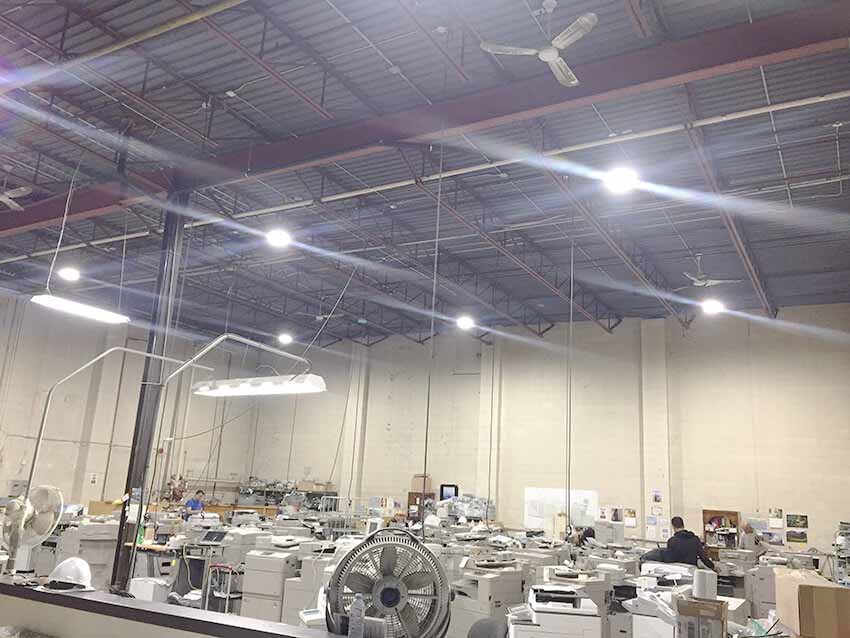
Good lighting can lead to higher job satisfaction and thus a positive impact on health: the prevalence is greatly reduced. Good lighting can also produce more fruitful results, not just to maintain health, but also actively promote long-term good attitudes.
On the other hand, factory lighting will vary depending on the operating department and the content of the work. Lighting methods can be divided into: general lighting, local lighting, hybrid lighting and accent lighting.
Lighting method | Definition |
General lighting | Uniform illumination set to illuminate the entire location. |
Local lighting | Designing a different illuminance for a particular area, such as the place where the work is done, to illuminate the general illumination of the area. |
Hybrid lighting | Illumination for a particular visual work to illuminate a part. |
Accent lighting | Illumination consisting of general lighting and local lighting. |
Corresponding lighting arrangements for different needs can greatly improve work efficiency and safety while effectively saving energy.
In order to use natural light more efficiently and maximize energy savings at specific times and unmanned states, factory lighting can also be combined with intelligent control modules to control illumination by sensing the illumination of the surrounding environment and the activities of people.

Due to different industries and production environments, the illuminance standards of the factory are also different, and there are different requirements for luminaires.
The general industrial environment is 100~500 lux, and the precision manufacturing environment is generally 500~1000 lux. In the electrical engineering industry, inspection and measurement operations require 1500 lux illumination to ensure safe and accurate operation.
Heavy industry generally requires luminaires with high protection level (IP65 and above), explosion-proof and high temperature resistance and corrosion resistance.
The printing industry requires CRI>90.
The food processing industry requires CRI>80 and ISF certification.
Plastic processing, wood products manufacturing, chemical industry are required to have explosion-proof characteristics.

For factory lighting, only the illuminance standard value is not perfect, and vertical illumination, illuminance uniformity and brightness balance should be fully considered according to the characteristics of the actual operation.