Introduction: The Thermal Imperative in Modern LED Lighting
The Double-Edged Sword of LED Efficiency
The global lighting industry has universally adopted Light Emitting Diode (LED) technology due to its unprecedented energy efficiency and longevity compared to incandescent and fluorescent sources. However, this efficiency comes with a hidden thermodynamic challenge. Unlike traditional bulbs that radiate heat outward as infrared energy, LEDs generate heat at the semiconductor junction level-a microscopic area within the chip itself. Approximately 70% of the electrical energy supplied to an LED is converted into heat, not light.
The Illusion of "Maintenance-Free" Lighting
Many manufacturers market LED fixtures as "maintenance-free" with a 50,000-hour lifespan. In reality, this is only achievable if the thermal management system is meticulously engineered. If heat is not extracted rapidly, the LED undergoes rapid degradation. This results in lumen depreciation (the light dims significantly over time) and catastrophic color shift (the light turns blue, green, or sickly yellow).
The Thesis: The Die-Cast Aluminum Radiator
To deliver on the promise of high-performance lighting, the physical housing must act as an advanced thermal engine. Our high-performance downlights feature a heavy-duty, Die-Cast Aluminum Radiator. This paper will dissect the engineering and materials science behind this component, demonstrating why it is the definitive solution for fast heat dissipation and long-term commercial reliability.
The Physics of LED Degradation: Why Heat is the Enemy
To appreciate the value of an advanced heat sink, one must first understand the thermodynamic realities of LED technology.
Understanding Junction Temperature (Tj)
The 10°C Rule
The Junction Temperature (Tj) is the temperature at the actual light-emitting semiconductor junction inside the LED package. For every 10°C increase in Tj above the optimal operating temperature, the expected lifespan of the LED is typically halved. In a high-wattage COB (Chip-on-Board) downlight, the concentrated light output generates intense localized heat. Without a highly conductive pathway to dissipate this heat, the Tj will spike within minutes of operation.
Thermal Runaway
When heat accumulates, it creates a vicious cycle known as thermal runaway. As the temperature rises, the LED's internal resistance decreases, causing more current to flow, which in turn generates even more heat. This rapid accumulation leads to the degradation of the silicone encapsulant and the phosphor coating that converts blue LED light into white light.
Lumen Depreciation and Color Shift
The Destruction of High CRI
Our downlights feature a premium CRI≥90 COB chip. This high color rendering is achieved through a specific phosphor blend that mimics natural sunlight, providing flawless color fidelity. However, this phosphor layer is extremely sensitive to heat. Prolonged exposure to high junction temperatures causes the phosphor to degrade, leading to a visible color shift and the loss of the high-CRI performance that interior designers rely on.
The Fading Light
As the heat persists, the light output slowly fades. A fixture rated for 1000 lumens might drop to 700 lumens after a few years if the thermal management is inadequate. This not only ruins the lighting design but also wastes the energy efficiency of the LED itself.
Material Science: The Metallurgical Advantages of Die-Cast Aluminum
Why do we utilize die-casting aluminum for our heat sinks, and why is it vastly superior to the plastic or stamped-steel housings found in budget fixtures?
The Thermal Conductivity of Aluminum
Conductivity Ratings
Aluminum is the gold standard for LED thermal management. It possesses a thermal conductivity of approximately 170-200 W/m·K. This means it can rapidly absorb heat away from the PCB substrate. Compared to steel (which conducts heat poorly) or plastics (which are thermal insulators), aluminum transfers heat at a massively accelerated rate, preventing the heat from ever reaching a critical threshold at the source.
Heat Spreading
The high conductivity allows the heat to spread rapidly across the entire base of the heat sink before moving into the fins. This prevents localized "hot spots" that could cause premature failure of individual LED chips.
Die-Casting vs. Extrusion: The Structural Superiority
Complex Geometry
Die-casting involves injecting molten aluminum into a precision steel mold under high pressure. This allows for the creation of intricate, three-dimensional fin arrays and internal thermal bridges that cannot be achieved with extrusion.
Monolithic Construction
Unlike assembled fixtures that use thermal paste or screws to attach a heat sink (which introduce thermal resistance), our die-cast radiator is a single, seamless piece of metal. This monolithic construction eliminates thermal barriers, ensuring the most direct path for heat transfer.
The Coating and Aesthetics
Our die-cast aluminum radiators receive a high-quality surface treatment (such as electrostatic powder coating). This not only provides a premium, corrosion-resistant finish (crucial for bathrooms and kitchens) but also plays a role in thermal radiation. The robust nature of the die-cast body ensures the fixture maintains its structural integrity and aesthetic appeal over decades of use.
Engineering the Heat Sink: Optimizing Convective Heat Transfer
The true power of our die-cast aluminum radiator lies in its meticulously designed geometry. It is not just a block of metal; it is a precision thermal engine.
Maximizing Surface Area
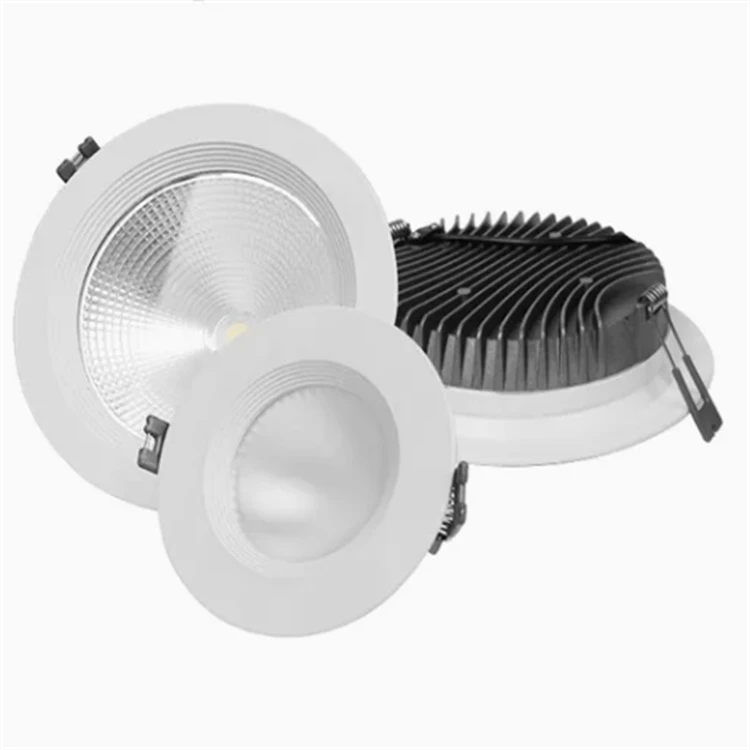
As illustrated in our product schematics, the radiator features a dense array of curved, vertical fins. This geometry maximizes the surface area exposed to the ambient air. A larger surface area means more air molecules can come into contact with the hot metal, facilitating more efficient heat exchange.
The Chimney Effect and Natural Convection
Channeling Airflow
The vertical orientation of the fins is specifically engineered to optimize natural convection. As the metal heats up, the air surrounding it warms and rises. The vertical channels between the fins act as a chimney, accelerating the upward flow of hot air and drawing cooler ambient air into the base of the fixture.
No Active Cooling Required
This passive thermal management system is highly reliable, operating silently without the need for noisy, energy-consuming fans. It requires zero maintenance, making it ideal for commercial ceilings and residential spaces where silence and reliability are paramount.
Synergy with the COB Light Source
Direct Thermal Bridging
Our high-performance downlights utilize COB (Chip-on-Board) technology, which concentrates multiple LED dies into a single, highly efficient light source. The die-cast aluminum radiator is specifically machined to sit flush against the thermal pad of the COB substrate. This direct thermal bridge ensures that the intense heat generated at the center of the chip is immediately wicked away and dispersed across the entire surface of the radiator.
Protecting the High-Transparency Lampshade
By keeping the LED chip cool, the die-cast radiator also protects the optical components. Excessive heat can cause the high-transparency lampshade to yellow or become brittle over time. The radiator acts as a thermal shield, maintaining the optical clarity and structural integrity of the entire luminaire.
The Commercial ROI: Why Fast Heat Dissipation Matters
For B2B buyers, specifiers, and facility managers, the technical superiority of the die-cast radiator translates into undeniable commercial value.
Drastically Reduced Maintenance Costs
The Cost of a Single Replacement
In a commercial setting-such as a shopping mall, hotel, or office complex-the cost of replacing a single downlight involves the cost of the replacement unit, the labor cost of an electrician, the cost of scaffolding or a scissor lift, and the potential loss of revenue due to disruption. By maximizing the lifespan of the fixture through superior heat dissipation, you reduce maintenance cycles from every few years to once a decade or more.
Sustained Energy Efficiency
As LEDs degrade, their forward voltage can increase, leading to a drop in luminous efficacy (lumens per watt). By maintaining optimal thermal conditions, the fixture operates at peak efficiency for a much longer portion of its life. The light output remains stable, ensuring that the energy savings calculated during the project planning phase are actually realized over the long term.
Preserving the Aesthetic Investment
Stable Color Rendering
For high-end retail, art galleries, and luxury residential projects, the lighting is an aesthetic investment. By keeping the COB chip cool, the CRI≥90 color rendering remains stable. There is no "color shift" that would ruin the appearance of merchandise, artwork, or architectural finishes.
Customizable Aesthetics
The robust die-cast body seamlessly integrates with our customizable lamp cups (available in various colors like white, black, or custom finishes). This allows designers to maintain a cohesive visual aesthetic without compromising on thermal performance.
Secure and Safe Installation
Strong Electroplate Springs
The structural rigidity of the die-cast aluminum housing provides a reliable anchor for the strong electroplate springs and plastic sleeves. Unlike flimsy stamped metal housings that can warp under heat, the die-cast body ensures the springs maintain a secure grip on the ceiling drywall for decades.
Installation Efficiency
The plastic sleeves on the springs protect the drywall and the installer's hands during installation, speeding up the installation process and reducing on-site injuries-a small but critical detail for large-scale contracting projects.
Factory Direct and OEM/ODM: Scaling Thermal Excellence
We understand that different commercial projects have unique thermal demands. A high-ceiling hotel lobby requires a higher wattage fixture than a low-ceiling office space.
Customizing Heat Sink Geometry
Tailored Thermal Solutions
Through our comprehensive OEM/ODM support, we work directly with lighting designers and distributors to tailor the thermal solution. We can modify the fin density, the thickness of the thermal mass, and the physical dimensions of the die-cast radiator to perfectly match the specific wattage and form factor required by your project.
Complete Product Integration
We integrate the customized radiator with your choice of COB chip (various wattages and CCTs), optical lenses, and trim colors. This provides a turnkey solution for distributors looking to build their own brand.
Competitive Pricing Without Compromising Quality
By managing the die-casting process entirely in-house, we eliminate intermediary markups. Our factory-direct model ensures that you are not paying a premium for high-end thermal management. We deliver a competitive price, good quality commercial downlight that is engineered to outlast and outperform generic market alternatives.
Conclusion: The Smart Choice for Long-Term Projects
The longevity of commercial and residential lighting is a direct function of its thermal management. While standard fixtures rely on cheap, stamped metal or inadequate plastic housings that lead to premature failure, our downlights are built around the uncompromising physics of die-cast aluminum radiators.
By rapidly dissipating heat away from the COB light source, we prevent lumen depreciation, protect the CRI≥90 color fidelity, and guarantee structural integrity. For the modern B2B buyer, this translates into lower maintenance costs, satisfied clients, and a superior return on investment.
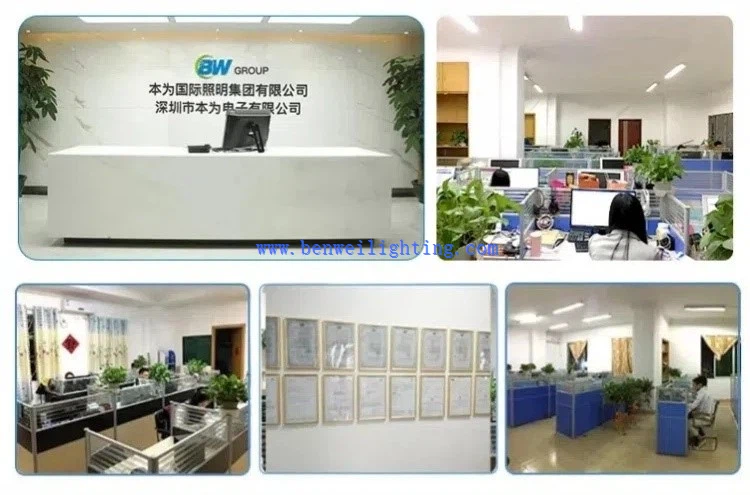
How To Cooperate With Us?
We are happy to have total control over the manufacturing process and the calibre of our products since we have our own facilities. Since we are producers rather than just brokers, we are dedicated to providing our customers with the best pricing. Since we are certain that the price and quality of our products are clear, we invite customers to see our samples first. Our commitment to quality and customer satisfaction drives us to continuously provide top-notch goods.
Our address
3rd Floor, 5th Building, Hebei Industrial Park, Hualian Community, Longhua District, Shenzhen, China