Introduction: The Silent Killer of LED Lighting
The global transition toward energy-efficient lighting has been monumental. Yet, the market is saturated with low-cost LED retrofits that promise 50,000-hour lifespans but fail within 18 months. The root cause of this systemic failure is almost always thermal mismanagement.
The Illusion of "Lifespan" in Modern LEDs
Marketing materials frequently cite the theoretical lifespan of an LED diode-often 50,000 to 100,000 hours. However, this rating is based on ideal laboratory conditions at a specific junction temperature (usually 25°C). In real-world applications, such as a high-bay warehouse or an outdoor street light, the ambient temperature is much higher. If the heat generated by the LEDs and the power supply is not continuously extracted, the actual lifespan is severely compromised.
The Physics of Heat Generation in Solid-State Lighting
While LEDs are significantly more efficient than incandescent bulbs, they are not 100% efficient. Approximately 40% to 50% of the electrical energy is still converted into thermal energy.
The Concentration of Heat
Unlike traditional bulbs that radiate heat outward in all directions, LED chips are incredibly small (the 2835 SMD chip is only 2.8mm x 3.5mm). The heat is therefore highly concentrated in a tiny area. Without a highly conductive medium to draw this heat away from the semiconductor junction, the chip will rapidly overheat and degrade.
The Role of the Driver
The power supply (driver) is also a significant source of heat. Converting AC grid power to the DC power required by LEDs involves electronic components, particularly electrolytic capacitors, which are highly sensitive to temperature.
The Paradigm Shift: From Passive Bulbs to Engineered Thermal Systems
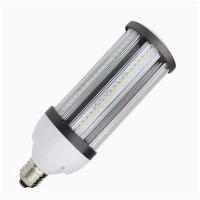
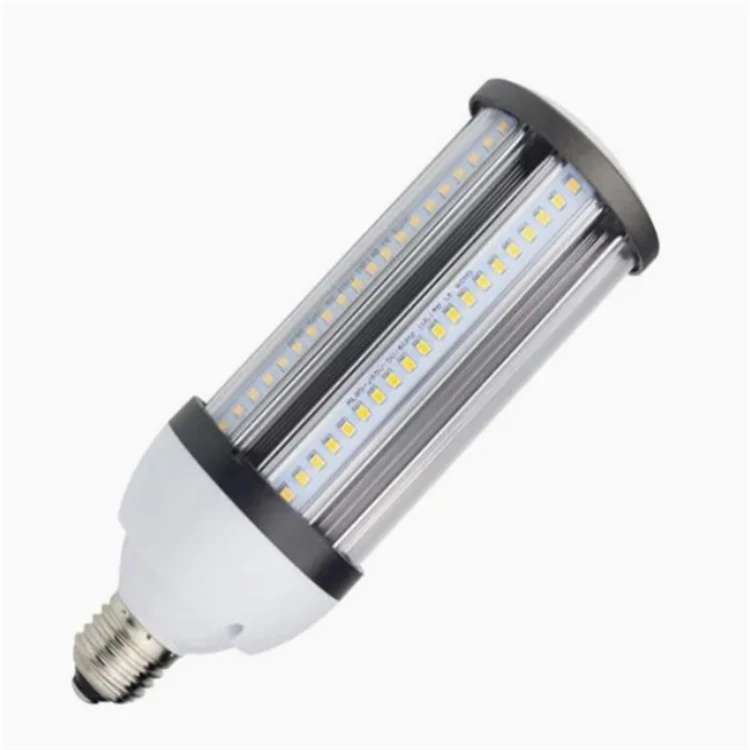
To guarantee a 135lm/W luminous efficacy and a true 50,000-hour operational lifespan, an LED Corn Light must be treated as a thermal system. The heat sink is not an accessory; it is the foundational architecture that dictates the reliability of the entire luminaire.
The Material Science: Why 6063 Aluminum?
The selection of the heat sink material is the most critical decision in the thermal engineering of an LED Corn Light. The market standard often leans toward cheap plastics or die-cast aluminum. Our engineering team, however, exclusively utilizes 6063 Aviation-Grade Aluminum.
Understanding Thermal Conductivity (W/m·K)
Thermal conductivity is the property of a material to conduct heat. It is measured in Watts per meter-Kelvin (W/m·K).
The Metric of Efficiency
A higher W/m·K value means the material transfers heat more rapidly. If a heat sink has low thermal conductivity, heat "bottlenecks" at the LED board, causing the junction temperature to spike even if the outer fins are cool to the touch.
Comparative Values
Plastic (PC/PBT): ~0.2 W/m·K
Standard Die-Cast Aluminum: ~96 to 120 W/m·K
6063 Extruded Aluminum: ~200 to 209 W/m·K
6063 Extruded Aluminum vs. Die-Cast Aluminum
The manufacturing process of the aluminum profoundly impacts its thermal and structural performance.
Thermal Efficiency Comparison
Die-casting involves injecting molten metal into a mold. While cheaper for mass production, this process introduces microscopic air pockets (porosity) into the metal. These pockets act as thermal insulators, reducing the overall conductivity. Extrusion, however, forces heated aluminum through a die, resulting in a highly dense, uniform grain structure with superior thermal transfer capabilities.
Structural Integrity and Corrosion Resistance
6063 aluminum is highly resistant to atmospheric corrosion. It naturally forms a protective oxide layer, making it ideal for the IP65 outdoor street lighting environments where rain, snow, and pollution are constant threats. Die-cast aluminum, often containing high levels of silicon and iron, is more brittle and prone to corrosion.
The Economics of Premium Materials
For procurement managers, the use of 6063 aluminum might appear to increase the initial Bill of Materials (BOM). However, this is a false economy. The massive reduction in maintenance and replacement costs over a 5-to-10-year period entirely eclipses the initial purchase premium. (This ROI will be detailed in Section 5).
Structural Engineering: The Radial Fin Design and Convection
Material is only half the equation; the geometry of the heat sink dictates how efficiently heat is transferred to the surrounding air.
Maximizing Surface Area
Heat dissipation is a surface-area phenomenon. Our 6063 aluminum heat sink features a meticulously designed radial fin architecture.
The Cylindrical Advantage
Because the LED Corn Light is a cylindrical form factor, the radial fins wrap around the entire circumference. This drastically increases the total surface area exposed to the ambient air compared to a flat, smooth cylinder.
Turbulence Generation
The specific spacing and depth of the fins are engineered to create gentle turbulence in the passing air. This prevents the formation of a "boundary layer"-a stagnant layer of hot air that clings to the metal surface and insulates it.
The "Stack Effect" in Convective Cooling
Convection is the transfer of heat through the movement of fluids (in this case, air). Our heat sink utilizes a passive stack effect (or chimney effect).
Airflow Dynamics
As the LEDs operate, the heat sink absorbs the thermal energy and warms up. The air immediately surrounding the fins is heated and rises. This creates a low-pressure zone at the bottom of the lamp, which draws in cooler ambient air. The cool air travels up through the radial channels, absorbs more heat, and exits at the top.
Passive Cooling Without Moving Parts
This continuous convective cycle requires zero energy and has no moving parts (like fans) that can fail. It is an entirely passive, maintenance-free cooling system that operates flawlessly for the life of the lamp.
Synergy with the IP65 PC Cover
Achieving an IP65 waterproof rating requires hermetically sealing the lamp with a Polycarbonate (PC) cover.
The Sealed Thermal Challenge
A sealed enclosure traps heat. If the heat sink were inefficient, the internal temperature would rapidly exceed safe limits. The 6063 aluminum heat sink acts as the bridge, conducting heat from the sealed interior to the exterior environment.
The PC Cover's Role
The PC cover itself is engineered to be thermally stable. It does not deform or yellow under the heat radiated by the internal LED boards, ensuring the optical transparency and the IP65 seal remain intact for years.
Protecting the Core Components: LEDs and Drivers
The true value of the 6063 aluminum heat sink is realized in how it protects the sensitive internal electronics.
Preserving 2835 SMD LED Efficacy (135lm/W)
Our lamp utilizes high-density 2835 SMD LEDs to achieve a staggering 135lm/W luminous efficacy.
Preventing Thermal Droop
As the junction temperature of an LED rises, its luminous output decreases. This is known as "thermal droop." The efficient extraction of heat by the 6063 heat sink ensures the LEDs operate at optimal temperatures, maintaining maximum brightness and efficacy throughout their operational life.
Maintaining Color Consistency
Excessive heat causes the phosphor coating on the LED to degrade, leading to color shifting (e.g., a white light turning blue or yellow). The thermal management system ensures the Color Rendering Index (CRI) and color temperature remain stable.
The Lifeline of the Rubycon Driver
The driver is the heart of the LED system, and electrolytic capacitors are its most heat-sensitive components.
Capacitor Degradation and the Arrhenius Equation
The lifespan of an electrolytic capacitor doubles for every 10°C reduction in its operating temperature (a principle derived from the Arrhenius equation). By utilizing the 6063 heat sink to keep the internal ambient temperature low, we exponentially extend the life of the premium Japanese Rubycon driver.
JAE Connectors and Thermal Expansion
Internal connections are subjected to thermal cycling (heating up and cooling down). Cheap plastic connectors can expand and contract at different rates than the metal contacts, eventually causing a loose connection and arcing. The aerospace-grade Japanese JAE connectors used in our lamp are engineered to withstand extreme thermal cycling, guaranteeing a perfect electrical connection for decades.
Real-World Impact: Total Cost of Ownership (TCO) and ROI
For B2B clients, the engineering excellence of the 6063 aluminum heat sink translates directly into financial performance.
Zero-Maintenance Warehousing and High-Bays
In a 24/7 logistics center or manufacturing plant, replacing a failed lamp requires scissor lifts, safety harnesses, and the halting of operations in that zone.
The Labor Cost Multiplier
The labor cost to replace a bulb at a height of 12 meters is often 10 to 15 times the cost of the bulb itself. By eliminating thermal failures, the 6063 heat sink guarantees a 50,000+ hour lifespan, effectively eliminating maintenance costs for over 5 years.
Operational Downtime
A failed lamp creates a dark zone, which is a severe safety hazard. Eliminating downtime protects worker safety and maintains productivity.
Weather-Resilient Street Lighting
Municipal street lights are subjected to extreme environmental stress.
The Corrosion Barrier
The anti-corrosive properties of 6063 aluminum ensure the lamp will not rust, even in coastal environments.
Sustained Brightness
Because the heat sink prevents thermal droop, the street light maintains its high 135lm/W output and 320° beam angle year after year, ensuring pedestrian and vehicular safety.
The Financial Calculation: Why Premium Heat Sinks Save Money
Consider a facility with 300 High-Bay fixtures operating 12 hours a day, 365 days a year, at $0.12/kWh.
Inferior LED (Die-Cast Heat Sink): Fails at 18 months due to thermal degradation of the driver. Requires replacement of 300 lamps every 1.5 years. Energy costs are high due to thermal droop.
Our Premium LED (6063 Aluminum): Achieves a 135lm/W efficacy, resulting in a 70-80% reduction in energy costs (saving ~$31,500 annually). The premium thermal system guarantees zero maintenance costs for 5+ years.
The initial cost of the 6063 heat sink is recovered within the first few months of operation through energy savings alone, while the maintenance elimination provides pure profit.
Conclusion & Call to Action
In the complex anatomy of an LED Corn Light, the heat sink is the unsung hero. It is the engineering foundation that allows the premium 2835 SMD LEDs, the Rubycon driver, and the JAE connectors to perform at their absolute peak.
By exclusively utilizing 6063 Aviation-Grade Aluminum, we have engineered a thermal management system that utilizes advanced material science and structural convection to banish heat. The result is a product that achieves a sustained 135lm/W efficacy, maintains an IP65 waterproof rating, and guarantees a 50,000+ hour lifespan.
How To Cooperate With Us?
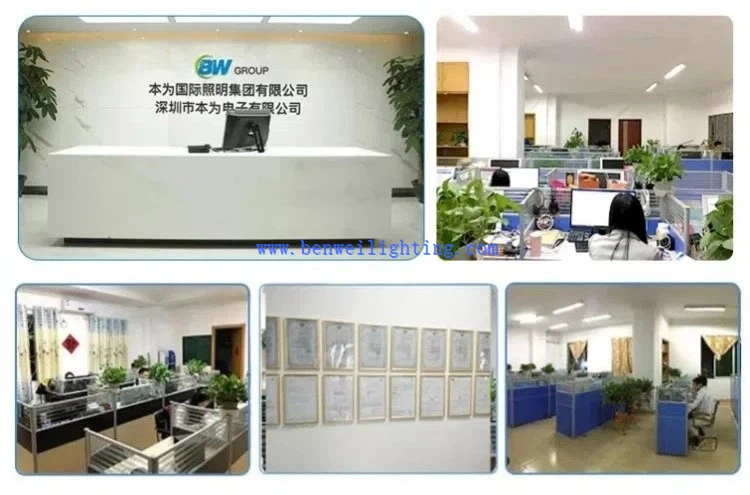
We are happy to have total control over the manufacturing process and the calibre of our products since we have our own facilities. Since we are producers rather than just brokers, we are dedicated to providing our customers with the best pricing. Since we are certain that the price and quality of our products are clear, we invite customers to see our samples first. Our commitment to quality and customer satisfaction drives us to continuously provide top-notch goods.
Our address
3rd Floor, 5th Building, Hebei Industrial Park, Hualian Community, Longhua District, Shenzhen, China