From Traditional Fluorescent to T8 LED Daylight Tubes: A Complete Guide to Achieving Brightness and Cost Wins in Workshop Lighting
In the bustling environments of manufacturing facilities, warehouses, and industrial workshops, lighting plays a role far more critical than mere visibility-it shapes productivity, safety, and operational efficiency. For decades, traditional fluorescent tubes have been the default choice for these spaces, valued for their initial affordability and widespread availability. However, as technology advances, a transformative alternative has emerged: T8 LED daylight tubes. This guide delves into why transitioning from fluorescent to T8 LED daylight tubes is not just a modernization trend but a strategic move that delivers both superior brightness and significant long-term cost savings, redefining how workshops illuminate their operations.
Traditional fluorescent tubes, despite their long-standing presence in workshops, come with a host of limitations that become increasingly problematic in high-demand industrial settings. One of the most notable issues is their inconsistent brightness and rapid lumen depreciation. A standard fluorescent tube may start with decent light output, but within the first year of use, it can lose up to 30% of its initial brightness. By the end of its second year, this depreciation often reaches 40-50%, resulting in dim, uneven lighting that creates shadows and dark spots-hazards in spaces where precision and safety are paramount. This fading forces early replacements, disrupting workflow and increasing maintenance cycles that no busy workshop can afford.
Energy inefficiency is another major drawback of fluorescent technology. A typical 4-foot T8 fluorescent tube consumes 32-40 watts of electricity, yet only 20-30% of that energy is converted into visible light; the rest is wasted as heat. In a large workshop with hundreds of fixtures operating 12- or 24-hour shifts, this inefficiency translates to exorbitant utility bills. Over time, these costs accumulate, eating into operational budgets and limiting resources for other critical investments. Additionally, the heat generated by fluorescent tubes can strain workshop cooling systems during warmer months, creating a secondary energy burden that compounds the problem.


Maintenance headaches further plague fluorescent lighting systems. With an average lifespan of just 10,000-15,000 hours, fluorescent tubes require frequent replacements-often every 12-18 months in continuous-use environments. Each replacement means downtime, labor costs, and the hassle of stocking spare tubes. Compounding this issue is the fragility of fluorescent ballasts, the components that regulate power to the tubes. Ballasts frequently fail prematurely, adding unexpected repair costs and further disrupting operations. For workshops aiming to maximize productivity, these ongoing maintenance demands are a significant drain on time and resources.
Light quality is also a critical shortfall of traditional fluorescents. Most fluorescent tubes have a low Color Rendering Index (CRI) of 60-70, meaning colors appear dull, distorted, or washed out. This is particularly problematic in workshops where precise color differentiation is essential-tasks like identifying small electronic components, inspecting paint finishes, or reading fine print on schematics suffer from poor color accuracy, leading to errors and rework. Additionally, fluorescent tubes often produce noticeable flicker and buzzing, which cause eye strain, headaches, and fatigue among workers over extended shifts, directly impacting focus and productivity.
Environmental and safety concerns add another layer of complexity to fluorescent lighting. These tubes contain mercury, a toxic heavy metal that poses risks to both human health and the environment if not disposed of properly. Compliance with hazardous waste regulations requires specialized recycling processes, adding costs and administrative burdens to end-of-life management. As sustainability becomes a core business priority for more organizations, these environmental drawbacks make fluorescent tubes an increasingly outdated choice.
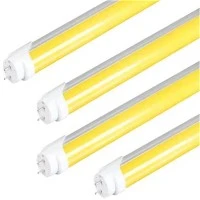
In contrast, T8 LED daylight tubes address nearly all these limitations while introducing a suite of benefits tailored to the unique needs of workshop environments. At the forefront is their superior brightness and uniform illumination. A high-quality 4-foot T8 LED daylight tube emits 2,200-2,800 lumens-significantly more light than a comparable fluorescent tube-while maintaining consistent output over its lifespan. Lumen depreciation is minimal, with LEDs retaining 70-80% of their initial brightness even after 50,000 hours of use, ensuring long-term reliability. The daylight color temperature, typically 5000K-6500K, mimics natural sunlight, creating a bright, crisp environment that eliminates shadows and dim spots, enhancing visibility across large workshop floors.
Energy efficiency is where T8 LED daylight tubes truly shine. By converting up to 95% of energy into light (compared to just 20-30% for fluorescents), these LEDs deliver exceptional performance with minimal power usage. A 4-foot T8 LED tube consumes only 18-22 watts-less than half the energy of a fluorescent equivalent-while producing more light. For a workshop with 100 fixtures operating 12 hours a day, this translates to annual energy savings of over $1,500 (based on average electricity costs). Over the 5-10 year lifespan of the LEDs, these savings compound dramatically, making them a powerful tool for reducing operational expenses.
The long lifespan of T8 LED daylight tubes is another game-changing advantage. Boasting an impressive 50,000-60,000 hours of usable life-four to five times longer than fluorescent tubes-LEDs drastically reduce replacement frequency. In a workshop operating 12 hours a day, a single LED tube could last 7-10 years before needing replacement. This longevity eliminates the constant cycle of maintenance, downtime, and labor costs associated with fluorescent tubes. Additionally, LED systems do not rely on ballasts, removing the risk of ballast failures and further reducing maintenance needs. For workshops focused on maximizing uptime, this reliability is invaluable.
Light quality takes a significant leap forward with T8 LED daylight tubes, thanks to high Color Rendering Index ratings-often 80-90+-which ensure colors appear true-to-life and vibrant. This accuracy is transformative for precision tasks: workers can easily distinguish between similar components, detect flaws in materials, and read detailed instructions with clarity, reducing errors and improving quality control. LED tubes also emit flicker-free, silent light, eliminating the eye strain and fatigue caused by fluorescent lighting. Studies have shown that improved light quality in workplaces can boost employee productivity by 10-15% by enhancing focus and reducing physical discomfort, making it a tangible contributor to operational success.
Practical advantages further solidify the case for T8 LEDs. Unlike fluorescents, which take time to warm up and perform poorly in cold temperatures-common in unheated warehouses or outdoor workshop areas-LED tubes light up instantly at full brightness, even in sub-zero conditions. This reliability ensures consistent performance regardless of environmental factors, a must for facilities in harsh or variable climates. Additionally, LEDs contain no mercury or hazardous materials, simplifying disposal and aligning with sustainability goals. Their reduced heat output also eases the burden on workshop cooling systems, creating secondary energy savings that enhance their cost-effectiveness.
While T8 LED daylight tubes have a higher upfront cost than fluorescent tubes, the long-term financial benefits make them a wise investment. A 4-foot fluorescent tube may cost \(5-10, compared to \)15-25 for an LED equivalent, but this initial difference is quickly offset by savings. For a workshop with 100 fixtures operating 12 hours daily, the energy savings alone amount to over \(1,500 annually. When factoring in reduced maintenance costs-fewer replacements, no ballast repairs-the total annual savings jump to \)2,000 or more. This means the initial investment is recouped in as little as 6-12 months, with ongoing savings continuing for the 7-10 year lifespan of the LEDs. Many governments and utilities further sweeten the deal with rebates or tax incentives for energy-efficient upgrades, covering 20-30% of LED purchase costs and accelerating the return on investment.
Transitioning from fluorescent to T8 LED daylight tubes is a straightforward process with proper planning. Start by assessing your current setup: inventory existing fixtures, note tube lengths, and identify ballast types (electronic or magnetic). This assessment determines whether you need "direct fit" LEDs (compatible with existing ballasts) or "ballast bypass" LEDs, which connect directly to mains power for maximum efficiency and longevity-ballast bypass is recommended for long-term savings, as it eliminates the risk of ballast failures.
Next, select the right specifications for your workshop. Opt for daylight color temperatures (5000K-6500K) to enhance visibility and alertness. Choose tubes with a CRI of 80+ for accurate color rendering, especially in precision work areas, and ensure lumen output (2,200+ for 4-foot models) meets or exceeds your current brightness needs. If adjustable lighting is required, select dimmable LEDs and compatible controls to tailor illumination to specific tasks.
Installation should be handled by a licensed electrician, particularly for ballast bypass setups, to ensure safety and compliance with electrical codes. For ballast bypass, the electrician will remove old ballasts and rewire fixtures to connect directly to mains power, a one-time process that eliminates future ballast-related issues. While direct-fit LEDs can be installed by simply replacing fluorescent tubes, remember that ballasts may still fail, making bypass a better long-term choice.
Investing in quality is crucial-choose LEDs from reputable brands with certifications like UL, CE, or DLC (DesignLights Consortium), which guarantee performance, safety, and eligibility for rebates. Avoid cheap, uncertified products, as they often deliver poor light quality, short lifespans, and fail to meet efficiency claims. Finally, dispose of old fluorescent tubes responsibly through approved recycling programs to avoid mercury contamination, as many hardware stores or waste management facilities offer specialized recycling services.
Real-world success stories underscore the impact of this transition. A mid-sized automotive parts manufacturer in the Midwest recently upgraded 200 fluorescent fixtures to T8 LED daylight tubes. The results were immediate: work surfaces saw a 40% increase in illumination, with uniform light eliminating shadows in assembly areas. Monthly electricity bills dropped by \(1,800-a 55% reduction in lighting energy use-while maintenance costs fell by \)3,000 annually due to reduced replacements and repairs. Employees reported less eye strain, and quality control errors decreased by 12% thanks to better color visibility. The company recouped its initial investment in just 2.5 months and projects 10-year savings of over $220,000, a testament to the transformative power of T8 LED daylight tubes.
In conclusion, the shift from traditional fluorescent to T8 LED daylight tubes represents a pivotal upgrade for workshop lighting. By delivering superior brightness, energy efficiency, and light quality while reducing maintenance costs and environmental impact, T8 LEDs offer a clear path to achieving both operational excellence and financial savings. For workshop managers seeking to enhance safety, productivity, and profitability, this transition is more than a lighting upgrade-it's a strategic decision that brightens the future of their operations. With immediate benefits and long-term returns, T8 LED daylight tubes prove that when it comes to workshop lighting, brightness and cost savings can indeed go hand in hand.