Green Light and Plant Growth: A Complete Guide to Spectral Ratios and Applications (2026)
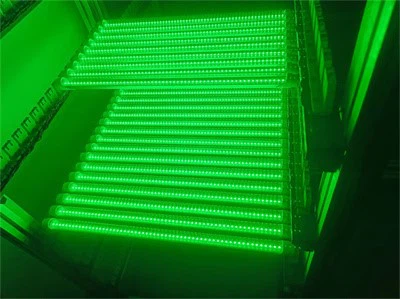
You already know that green light is by no means worthless if you have studied standard textbooks and other studies. However, a common concern that comes up when figuring out how to set up LED fixture specifications or when creating a lighting plan for a new production facility is: How much green light do my crops truly need?
The realisation of the value of green light and its practical use differ greatly. The goal of this tutorial is to close that gap. Beyond theory, we will provide you a thorough, useful framework that includes economic evaluations, growth-stage tactics, and spectral ratios.
1.What specific effects does green light have on your crops?
You must first fully comprehend green light's two primary purposes before using it as a regulatory instrument. Instead of going over a whole photobiology textbook again, we will concentrate only on the two main processes that essentially determine every application-related choice.
1.1 Green and Blue's Enmity: A "Zero-Sum" Competition (and Why Proportions Are So Important)
Within plants, blue light (400–500 nm) and green light (500–600 nm) can have opposite effects. This antagonistic interaction is a precise regulatory dial rather than a defect in the architecture. Several of the most important sets of interactions in commercial agriculture are summarised in the table below.
| Crop Type | Growth Stage | Approx. Green % of Total PPFD | Approx. B:G Ratio | Notes & Observed Benefits |
|---|---|---|---|---|
| Leafy Greens (Lettuce, Kale) | Vegetative | 15–25% | 1:1 to 2:1 | Boosts biomass, improves canopy penetration, reduces tip burn. |
| Fruiting Veg (Tomato, Pepper) | Vegetative | 10–20% | 1.5:1 to 3:1 | Controls early stretch while building robust structure. |
| Fruiting Veg (Tomato, Pepper) | Late Flower/Fruit | 5–15% | > 3:1 | Reduce green to avoid antagonizing anthocyanin and sugar development. |
| Cannabis / Hemp | Vegetative | 15–25% | 1:1 to 2:1 | Promotes lateral branching and healthy canopy expansion. |
| Cannabis / Hemp | Flower | <10% | > 4:1 | Often reduced significantly to maximize secondary metabolite expression. |
| Microgreens | Full Cycle | 10–20% | 1:1 to 1.5:1 | Can enhance specific pigments at low to moderate intensity. |
Pro Tip: Pay attention of the shift from vegetative to generative growth if you are only changing one variable. The antagonistic effects on chemistry and morphology are most noticeable here.
1.2 How Your Lower Leaves Are Nourished by Green Light
The second superpower of green light functions physically. Green light photons ricochet through the leaf and transfer downward, but red and blue light photons are avariciously absorbed by the topmost chlorophyll. According to studies, between 50% and 90% of green light can reach the lower leaves via passing through the higher canopy.
This is a game-changing advantage for environments like high-density greenhouse cultivation beds or vertical farms. It keeps a greater effective photosynthetic surface area throughout the whole growth cycle by postponing the early senescence (yellowing) of older lower leaves.
Empirical Evidence: Compared to a pure red/blue treatment, adding just 24% green light to a red/blue LED spectrum significantly increased total biomass in a controlled research on lettuce (Kim et al., 2004). The lower portions of the plants were the main source of this additional improvement.
We shall now convert these understandings into practical tactics after elucidating the underlying physiological and physical systems.
2. Developing Your Green Light Strategy: From Theory to Practice
There isn't just one "magic number." What you are growing and the particular stage of the plants' growth determine the best course of action. The structure that follows will assist you in determining the best place to start.
2.1 Crop-Specific Spectral Ratio References: The Basis for Light Schedules
Evidence-based reference ranges derived from published studies and observations from commercial trials are shown in the table below. Note that these formulations are not inflexible. Please make flexible alterations based on particular types and climatic conditions, and utilise these as a standard for internal validation studies.
| Crop Type | Growth Stage | Approx. Green % of Total PPFD | Approx. B:G Ratio | Notes & Observed Benefits |
|---|---|---|---|---|
| Leafy Greens (Lettuce, Kale) | Vegetative | 15–25% | 1:1 to 2:1 | Boosts biomass, improves canopy penetration, reduces tip burn. |
| Fruiting Veg (Tomato, Pepper) | Vegetative | 10–20% | 1.5:1 to 3:1 | Controls early stretch while building robust structure. |
| Fruiting Veg (Tomato, Pepper) | Late Flower/Fruit | 5–15% | > 3:1 | Reduce green to avoid antagonizing anthocyanin and sugar development. |
| Cannabis / Hemp | Vegetative | 15–25% | 1:1 to 2:1 | Promotes lateral branching and healthy canopy expansion. |
| Cannabis / Hemp | Flower | <10% | > 4:1 | Often reduced significantly to maximize secondary metabolite expression. |
| Microgreens | Full Cycle | 10–20% | 1:1 to 1.5:1 | Can enhance specific pigments at low to moderate intensity. |
2.2 Customising Green Light for Every Stage of Growth: From Seedling to Harvest
A stagnant spectrum is an opportunity lost. This is how your plants' B:G ratio should change over time.
Seedling and Propagation: A lower B:G ratio or a little higher green component will promote mild stem elongation, which will assist the seedling push up and form a canopy more quickly. On the other hand, move towards a larger B:G ratio (more blue) to tighten internodes if you are struggling with lanky starts.
Vegetative/Bulk-Up: This is where green light works best. Deep beneath the canopy, total photosynthetic photon uptake is maximised by maintaining a balanced ratio (e.g., 15–25% green). You are effectively producing biomass.
Generative/Finishing: This is frequently the time to cut back on green for crops prized for their colour, flavour, or potency. In the last several weeks before harvest, you can boost anthocyanin production (red/purple leaves) or essential oil concentration by raising the B:G ratio (lowering the green antagonism on blue/UV signals).
2.3 The Economic Formula: Determining an Optimised Spectrum's Return on Investment
Does management at this level pay for itself? Since the majority of contemporary LEDs already include green phosphors, the economic argument is based on yield and quality improvement rather than fixture cost.
For a 10,000-square-foot lettuce factory, consider the following simplified ROI thought experiment:
It is assumed that improved canopy penetration and reduced leaf retention (less waste) will result in a modest 5% yield improvement.
Cost-side: The cost of the fixture is set. The time required to master this tactic is the only "cost."
Benefit Side: A 5% increase in weekly saleable heads multiplied by yearly turnover frequently results in a six-figure revenue gain that immediately boosts profitability. Better colour and shelf life can also lower retailer rejections or fetch a better wholesale price.
3. Crop Green Light Issue Checklist
Even with careful preparation, you could run into confusing plant behaviour. To quickly determine whether light exposure, particularly green light levels, is a possible cause, utilise the checklist below.
Note: Always start by ruling out nutrition, vapour pressure differential (VPD), and root problems. The purpose of this checklist is to assist in determining secondary or tertiary reasons associated with light exposure.
| Observed Symptom | Possible Spectral Link | Green Light Adjustment |
|---|---|---|
| Plants are tall and leggy / weak stems | B:G ratio is too low (not enough blue relative to green/far-red). | Increase blue or slightly reduce green percentage to raise the B:G ratio. |
| Lower canopy leaves yellowing prematurely | Insufficient light penetration to lower depths. | Verify total PPFD. If top light is adequate, ensure green content is at least 15% for penetration. |
| Lettuce is pale green / lacking red color | Green light antagonizing anthocyanin expression. | In the final 5-7 days, reduce green percentage (or increase blue/UV) to "stress" for color. |
| Excessive leaf orientation / upward curling | Shade avoidance response triggered by high green/far-red signals. | Assess the ratio of Green + Far-Red to active photosynthetic radiation. Adjust downward. |
4. Practical Case Studies: Effective Green Light Techniques Outside of the Lab
Case Study 1: Leafy Vegetables from a Vertical Farm
A commercial vertical farm that grows lettuce and basil changed its spectrum from one that was primarily red and blue to one that was continuous and included 20% green light. The lower canopy maintained photosynthetic activity and marketability throughout the entire cycle, leading to a 7% increase in total biomass as well as a notable decrease in the amount of physical labour required to prune yellowed bottom leaves.
Case Study 2: Tomatoes in a greenhouse
A dynamic spectrum programme was established by a tomato grower utilising trellis cultivation. A stronger blue-green ratio was used to regulate vegetative growth and encourage fruit formation during the high-light summer months, while 15% green light was maintained during the low-light winter months to optimise light efficiency. As a result, there was less labour required for leaf picking and vine clearance, and fruit quality was more constant throughout the year.
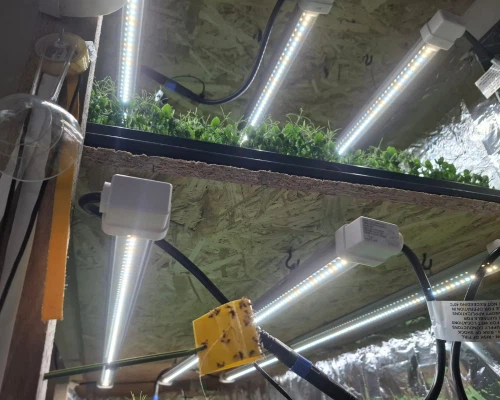
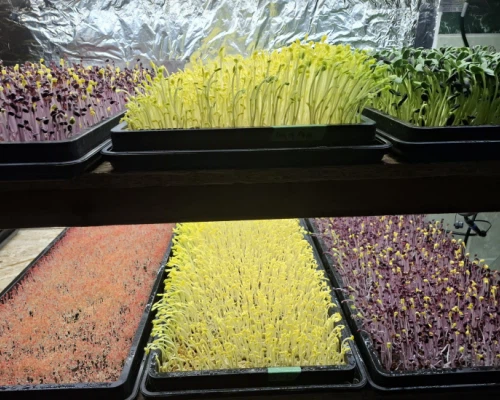
5. Green Light's Future: Dynamic Spectral Control and New Limitations
We are entering a new era in which the blue-green ratio is a real-time variable rather than merely a fixed figure. In order to optimise light distribution, sensor networks with the ability to detect canopy temperature and leaf area index will soon be integrated with algorithms that modify the composition of green light every minute.
Additionally, the next frontier is the synergistic effect of ultraviolet, far-red, and green light. The next stage of precision agriculture will be made possible by an understanding of how green light modifies plant responses to other wavelengths.
In summary, green light is no longer an overlooked orphan in the spectrum of photosynthetically active radiation (PAR). It is an accurate instrument for controlling morphology, breaking through the canopy, and increasing productivity. "Should I use green light?" has given way to "Am I managing my blue-green ratio well enough?" for contemporary growers.
Selecting "full-spectrum" illumination at random is just the beginning; the way to profitability is to actively manipulate spectral proportions.
FAQ
Q: 1. How much green light should there be in plant grow lights?
A: The crop species and growth stage are the only factors that determine the optimal value. Please consult the Table in Section 2.1 for the beginning ranges for various crops.
Q: 2. When producing lettuce, what is the ideal blue-to-green (B:G) ratio?
A: A 1:1 to 2:1 (blue:green) ratio is a great place to start for lettuce in its vegetative growth stage because it strikes a balance between compact growth and canopy penetration.
Q: 3. Will plants get etiolated or thin due to excessive green light?
A: Indeed. An extremely high percentage of green light (or an excessively low blue-to-green ratio) may encourage stem elongation because green light counteracts the growth-inhibiting impact of blue light. Try increasing the ratio of blue light to green light if etiolation happens.
Q: 4. What effects does green light have on the flavour and texture of crops like basil and tomatoes?
A: Reducing the amount of green light can counteract its antagonistic effects on blue and UV signals in later stages of growth, thereby encouraging the synthesis of volatile chemicals and sugars associated with flavour and aroma.
Q: 5. Is the green light produced by white LEDs adequate? Is a second green light chip required?
A: There is usually enough green light (about 20–30%) in standard warm white or full-spectrum LEDs. Instead of introducing this natural green light, you should actively manage it in the majority of commercial horticulture applications.
Q: 6. Should I change the green light as my plants grown under full-spectrum LEDs seem pale green?
A: This probably has nothing to do with green light. Low total light intensity (PPFD) or inadequate nitrogen availability are more likely to be associated with pale plant colour. Check the daylight integral (DLI) and nutrient solution formula before suspecting a green light issue.