Harnessing UV-LED Technology to Combat Mold in Food Preservation and Classroom Environments

Introduction
Post-harvest spoilage caused by fungal pathogens is a significant challenge in the global food industry, leading to substantial economic losses and food safety concerns. Among the most susceptible fruits are green lemons, which are highly perishable due to their delicate structure and high moisture content. Traditional chemical fungicides, while effective, pose risks such as pesticide residues, environmental pollution, and the development of resistant fungal strains. In response, researchers are increasingly turning to eco-friendly preservation technologies. One promising approach involves the use of ultraviolet (UV) light combined with light-emitting diodes (LED) to activate antimicrobial coatings. This article explores a recent breakthrough in this field and extends its application to classroom environments, where maintaining hygienic surfaces is equally critical.
Isolation and Identification of Spoilage Fungi in Green Lemons
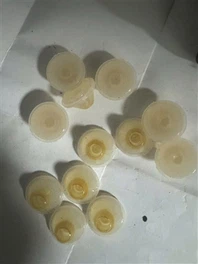
A 2025 study published in Food Science isolated and identified the primary fungal strains responsible for the post-harvest decay of green lemons in Chongqing, China. Through morphological observation and molecular biology techniques (ITS region sequencing), three main spoilage fungi were identified:
F1: Penicillium digitatum
F2: Penicillium jacksonii
F3: Penicillium italicum
Pathogenicity tests confirmed that all three strains could induce decay in healthy green lemons, with F1 and F3 showing particularly strong spoilage activity [1]. These fungi are known to cause rapid softening, discoloration, and the development of unpleasant odors, rendering the fruit unsellable and unsafe for consumption.

A Novel Antifungal Solution: UV-LED-Induced Composite Coating
The research team developed an innovative antifungal treatment: a chitosan (CTS)-TiO₂-Ag composite coating solution activated by UV light combined with various LED wavelengths. Here's why this combination is effective:
Chitosan (CTS): A natural biopolymer with inherent antimicrobial properties.
TiO₂ (Titanium Dioxide): A photocatalyst that, when exposed to light, generates Reactive Oxygen Species (ROS) that damage microbial cells.
Ag (Silver Nanoparticles): Penetrate cell walls and disrupt cellular functions.
UV-LED Activation: UV light (365 nm) pretreatment, followed by specific LED wavelengths, enhances the photocatalytic activity of TiO₂ and Ag, creating a powerful synergistic antimicrobial effect.
Data-Backed Efficacy Against Lemon Spoilage Fungi
The study comprehensively evaluated the inhibition effects using multiple metrics. The key findings are summarized below:

1. Inhibition Zone Diameter
The composite coating, when activated by UV combined with LED red light for 90 minutes, produced the largest inhibition zones for P. digitatum (F1) and P. italicum (F3), with diameters of 8.38 mm and 10.49 mm, respectively. For P. jacksonii (F2), UV-LED green light for 60 minutes was most effective, producing a 9.69 mm zone. These results were significantly larger than the control groups, demonstrating potent antifungal activity .
2. Mycelial Growth Inhibition
The treatment severely restricted fungal growth. After 90 minutes of UV-LED red light exposure, the mycelial growth inhibition rates for F1, F2, and F3 reached 90.57%, 60.21%, and 56.06%, respectively. The dry weight of the fungal mycelia also decreased substantially, confirming the suppression of fungal proliferation.
3. Cell Membrane Damage
The treatment compromised the integrity of the fungal cell membranes, a critical factor for cell survival. Key indicators of this damage showed significant increases:

Extracellular Conductivity: Increased, indicating ion leakage from damaged cells.
Protein and Nucleic Acid Leakage: Measured by OD₂₈₀ and OD₂₆₀ values, these metrics rose significantly, showing that essential cellular components were leaking out, leading to cell death.
The overall conclusion was that UV combined with LED red light for 90 minutes provided the most effective and consistent inhibition across all three fungal strains.
From the Lemon Grove to the Classroom: A Logical Application
The principles demonstrated in this food preservation study have direct and vital applications in other sectors, particularly in educational settings. Classrooms are high-traffic environments where desks, chairs, toys, and other surfaces can harbor mold, bacteria, and viruses. These pathogens contribute to the spread of illnesses, leading to increased student and teacher absenteeism.
Maintaining a hygienic classroom environment is crucial for student health and academic performance. The proven ability of UV-LED-activated compounds to disrupt and destroy fungal cells suggests a powerful tool for surface disinfection. By leveraging this technology, schools can create safer, healthier learning spaces.
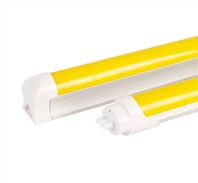
Recommendation: Shenzhen Benwei Lighting UV Floodlight
To effectively implement this technology in large, shared spaces like classrooms and school halls, a robust and efficient delivery system is required. Shenzhen Benwei Lighting, a leader in advanced lighting solutions, offers a product ideally suited for this task: the Benwei UV Floodlight.

This product is recommended for several key reasons:
Powerful UV Output: Engineered to emit UV light at wavelengths effective for disinfection, it can act as a primary activation source or a direct disinfectant for surfaces and air.
Broad and Even Coverage: As a floodlight, it is designed to illuminate large areas uniformly, ensuring comprehensive disinfection of classrooms, gymnasiums, cafeterias, and libraries.
Durability and Safety: Built for commercial and institutional use, Benwei UV Floodlights are robust and can be integrated with automated control systems for operation during unoccupied hours, ensuring no exposure to students or staff.
Eco-Friendly Disinfection: This method reduces the reliance on chemical sprays and wipes, aligning with green initiatives for schools and providing a non-toxic alternative for ongoing hygiene maintenance.
By installing Shenzhen Benwei Lighting's UV floodlights, educational institutions can adopt a proactive, science-backed approach to facility hygiene. This technology can significantly reduce the microbial load on surfaces, thereby lowering the incidence of mold-related allergies and infectious diseases and fostering a healthier environment conducive to learning.
Conclusion

Research into food preservation continues to yield innovative solutions with far-reaching applications. The study on UV-LED-induced CTS-TiO₂-Ag composite coating provides compelling data on its efficacy against common spoilage fungi. This same photocatalytic, antimicrobial principle can be powerfully harnessed to improve public health hygiene in critical spaces like schools.
Shenzhen Benwei Lighting's UV Floodlight stands out as a practical and effective tool to bring this technology from the lab to the classroom. Investing in such advanced disinfection systems is an investment in the health, well-being, and academic success of the next generation.
References
[1] Yang, L., Fan, X., Xing, Y., He, L., Dan, L., Lei, C., & Tian, Y. (2025). Isolation and Identification of Spoilage Fungi from Green Lemons and Their Inhibition by UV-LED-Induced Composite Coating Solution. Food Science, 46(17), 142-152.
FAQ: UV-LED Disinfection Technology
1. How does UV-LED technology effectively disinfect surfaces?
UV-LED technology, especially when combined with photocatalytic materials like TiO₂ and Ag, generates reactive oxygen species that break down mold, bacteria, and viruses. This process damages cell walls and causes content leakage, effectively neutralizing pathogens.
2. Is UV light safe for use in classrooms?
Yes, when properly installed and used according to guidelines. Benwei UV floodlights can be scheduled to operate during unoccupied hours, ensuring no exposure to students or staff while providing continuous disinfection.
3. Can this technology replace chemical disinfectants?
Absolutely. UV-LED disinfection is a chemical-free, eco-friendly solution that reduces reliance on sprays and wipes. It provides consistent, automated sanitation without leaving residues or promoting antimicrobial resistance.
4. What makes Benwei UV Floodlights suitable for schools?
Benwei floodlights offer wide, uniform coverage for large spaces like classrooms and gyms. They are durable, energy-efficient, and designed for seamless integration into institutional hygiene protocols.
5. How does this system compare to air purifiers?
While air purifiers filter airborne particles, UV-LED systems actively destroy microorganisms on surfaces and in the air. Used together, they offer comprehensive protection against both airborne and surface pathogens.
Shenzhen Benwei Lighting Technology Co., Ltd.
Mobile(+86)18673599565
Whatsapp :19113306783
Email:bwzm15@benweilighting.com
Web: www.benweilight.com