How a Small Bulb Unlocks Off‑Season Flowering and Doubles Grower Profits
Walk into any dragon fruit farm in Vietnam, Taiwan, or southern China after sunset, and you will see an astonishing sight: rows of LED bulbs glowing across vast plantations, transforming night into artificial day. At first glance, it seems like a waste of electricity. But for commercial growers, these lights are essential for controlling flowering cycles, enabling off‑season production, and capturing premium prices when supply is tight.
This article examines the science behind dragon fruit supplemental lighting, the photoperiod responses that regulate flowering, the spectral mechanisms that promote bud development and fruit quality, and the practical parameters that professional growers use to design effective lighting systems. Whether you manage a commercial dragon fruit plantation, supply lighting equipment to agricultural distributors, or are evaluating LED solutions for tropical fruit cultivation, understanding these principles will help you select the right tools for the job.

1. The Economic Logic of Lighting Dragon Fruit
In natural conditions, dragon fruit (Hylocereus spp., also called pitaya) is a short‑day plant. It typically flowers from June to November-exactly when many other fruits are also on the market, often driving prices down. During winter and early spring, shorter daylight hours inhibit flowering, leaving growers with limited supply and fewer revenue opportunities.
This is where artificial lighting changes the equation. By supplementing light during the evening or pre‑dawn hours, growers can extend the perceived day length, trick the plant into flowering out of season, and bring product to market when prices are higher.
The global dragon fruit market was valued at approximately USD 15 billion to USD 27 billion in 2024–2025, depending on the report, with projections reaching USD 23–38 billion by 2033 at compound annual growth rates of 4‑7%. For growers competing in this expanding market, off‑season production is not a luxury-it is a strategic necessity. The core tool for achieving year‑round flowering is the LED grow light.
2. Photoperiod Control: The Master Switch for Dragon Fruit Flowering
Dragon fruit is classified as a long‑day plant: it requires extended light exposure to trigger bud initiation. Growers can manipulate two primary photoperiod strategies depending on their production goals.
- Vegetative growth phase (propagation and vegetative maintenance): 12–14 hours of light per day simulates natural long days, encouraging branch and stem development to build a strong structural framework.
- Flowering induction phase (stimulating out‑of‑season blooms): The photoperiod is shortened to 10–12 hours per day, which signals the plant to shift resources from growth to reproduction. This adjustment must be applied consistently for several weeks to convert the plant's internal hormonal balance.
In practice, most commercial operations extend the natural day by adding 3–5 hours of supplemental light in the evening, immediately after sunset, or in the early morning before dawn. The total daily light duration is typically maintained between 12 and 16 hours.
Crucially, the dark period must remain uninterrupted-dragon fruit requires a continuous block of darkness to properly regulate the flowering hormone florigen. Interrupted night lighting is a proven technique, but it demands careful timing rather than random illumination.
3. Spectral Targeting: Why Red and Blue Wavelengths Matter Most
Not all light produces the same effect. The dragon fruit plant contains photoreceptor proteins that absorb specific wavelengths and convert them into biological signals.
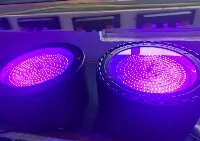
- Red light (approximately 620‑680 nm, with a peak near 660 nm): Deep red wavelengths drive the phytochrome system, which is the primary sensor for day length. Red light strongly promotes flowering, bud formation, and fruit set. One study found that increased duration of red light exposure enhanced dragon fruit seed germination percentage and average plant height.
- Blue light (approximately 450‑470 nm): Blue light regulates cryptochrome and phototropin pathways, controlling stomatal opening, leaf expansion, and chlorophyll synthesis. Research published in 2025 demonstrated that supplemental blue light applied for four hours each night from flowering through fruit ripening significantly increased fruit weight, improved fruit firmness by increasing pectin content, and enhanced antioxidant enzyme activity.
- White light (full spectrum): White LEDs contain a broad range of wavelengths, including red, blue, and green components. Studies have shown that white and blue LEDs demonstrate favorable responses across multiple growth variables, while green and orange wavelengths are less effective under the tested conditions for in vitro propagation.
For practical commercial applications, two spectral ratio recommendations are commonly cited:
- A red:blue ratio of 3:1 (approximately 660 nm red + 450 nm blue) is widely used to promote photosynthesis and flowering.
- Some agricultural authorities recommend a red:blue ratio of 6:1 to 8:1, particularly during flowering and fruiting stages when red wavelengths play a dominant role.
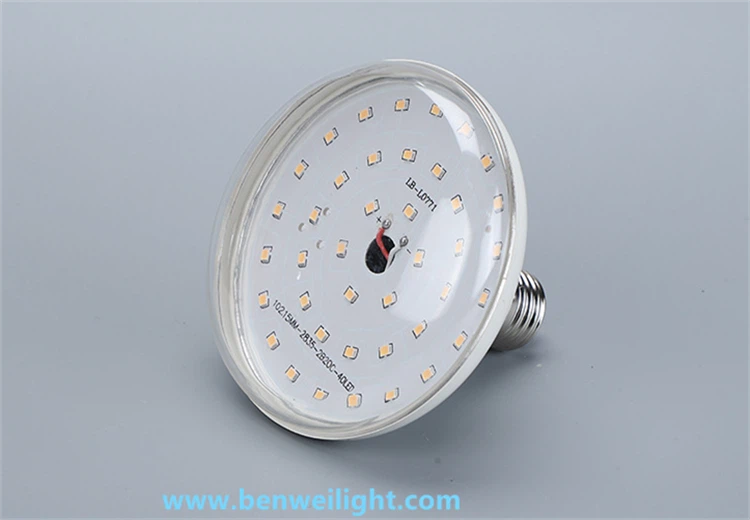
The dragon fruit LED grow light is engineered with a tailored spectrum specifically designed to promote blooming, increase yield, and improve fruit quality. It uses premium LED chips from Samsung, Seoul Semiconductor, Nichia, or equivalents, ensuring high efficiency and reliable performance.
4. Light Intensity, PPFD, and Mounting Strategy
Light intensity at the plant canopy, measured as PPFD (Photosynthetic Photon Flux Density in μmol/m²/s), is the actual parameter that determines how much photosynthetic energy the plant receives. For dragon fruit grown under natural sunlight, 6‑8 hours of direct daily exposure is considered adequate, but supplemental lighting requires careful placement to avoid waste.
Practical installation parameters for dragon fruit LED lights include:
- Mounting height: Lights should be placed approximately 1.0‑1.5 meters above the top of the dragon fruit branches. Lower mounting heights increase PPFD at the canopy but reduce coverage area; higher mounting does the opposite.
- Spacing: In trellis‑grown fields, spacing between lamps is typically 3‑4 meters to ensure uniform coverage across the canopy. One practical guideline recommends approximately 80‑100 lights per acre (about 200‑250 lights per hectare) for effective off‑season flowering induction.
- Nighttime placement: For evening supplementation, lights are typically turned on at dusk and run for 3‑5 hours, often from 18:00 to 22:00 or in the middle of the night to optimize flowering response.
Because LED lights are cold sources, they can be placed closer to plants than traditional HPS lamps without risking heat damage. This allows more precise targeting of light energy onto the canopy rather than wasting it into the surrounding environment.
5. Durability in Tropical Growing Conditions
Dragon fruit is cultivated in tropical and subtropical regions-Vietnam, Thailand, the Philippines, India, southern China, and parts of Latin America. These environments are among the harshest for any electronic device:
- High ambient humidity, often exceeding 80%;
- Frequent rainfall during monsoon seasons;
- Dust and soil particles from field operations;
- Exposure to agricultural chemicals including fertilizers and pesticides.
Standard indoor LED lights are not designed for these conditions. Rain, condensation, and humidity cause moisture ingress, leading to driver failure, corrosion, and premature lamp death.
The Benwei 5W dragon fruit LED grow light is rated IP65, providing complete dust protection and resistance to low‑pressure water jets from any direction. It combines an aluminum heat sink for efficient thermal management with a reinforced plastic housing, and the polycarbonate cover is UV‑resistant, preventing degradation under prolonged sunlight exposure. This durability ensures that the lights continue operating through multiple growing seasons, even under exposed field conditions.

6. Installation and Usage Best Practices
For field installation, growers should follow these practical guidelines:
- Spacing: Install lights at densities of approximately 80‑100 units per acre. This ensures sufficient overlap of coverage to avoid dark spots in the canopy.
- Height: Maintain a consistent distance of approximately 1.0‑1.5 meters from the top of the dragon fruit branches. Adjust upward as the plant grows.
- Timing: Run supplemental lights for 3‑5 hours after dusk or before dawn. Avoid exceeding 14‑16 total hours of light per day, as excessive photoperiods can cause etiolation (leggy, weak growth).
- Seasonal adjustment: During natural long days (summer), lighting hours should be reduced; during short days (winter), they should be increased to maintain consistent flowering cycles.
- Ventilation: Ensure adequate airflow when using supplemental lighting, particularly in protected cultivation structures, to prevent fungal diseases favored by warm, humid conditions.
LED lights produce minimal heat compared to traditional lamps, which reduces fire risk and allows closer placement to plants. However, growers should still provide adequate spacing around each fixture for air circulation and heat dissipation.
7. Buyer's Checklist for Dragon Fruit Grow Lights
For commercial growers or distributors evaluating LED lighting for dragon fruit, the following criteria should be considered:
- Spectrum specificity: Does the fixture have a spectrum tailored for dragon fruit? Broad‑spectrum white lights may look pleasant but are less efficient than targeted red‑blue ratios.
- IP rating for outdoor use: For open‑field cultivation, IP65 or higher is essential. Lights without adequate sealing will fail during the first rainy season.
- Power consumption: Low per‑unit wattage (5‑15W) allows flexible distribution and lower overall energy costs across large fields.
- Lifespan and warranty: A rated lifespan of 20,000 hours or more, backed by a clear warranty policy, indicates confidence in product quality.
- Certifications: CE, RoHS, or other region‑specific certifications ensure safety and regulatory compliance.
- Proven track record: Request case studies or references from growers in similar climates.
8. Summary
The dragon fruit LED grow light is a small, low‑power fixture that, when deployed correctly across a plantation, unlocks one of the most valuable tools in tropical fruit cultivation: control over flowering timing. Through targeted manipulation of photoperiod and spectrum, growers can shift harvest windows, capture off‑season premiums, and improve both fruit quality and yield.
LED technology has made this precision possible at an affordable scale. Unlike traditional high‑pressure sodium or incandescent lamps, which waste energy as heat and require frequent replacement, LED grow lights combine low operating costs, long service life, and weather‑resistant construction-three attributes essential for open‑field agricultural lighting.
✨Contact✨
🙋♀️Harriet
📫Email: bwzm88@benweilighting.com
📞Whatsapp: +8613007285242