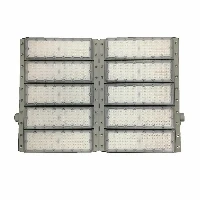
LED stadium lights are becoming increasingly popular as a source of lighting for large sports arenas. But how bright are they, and how do they compare to older lighting technologies?
To answer this question, it is important to understand a few basic concepts related to lighting. One of the most important is the unit of measurement used to describe the amount of light produced by a source. This unit is called a lumen, and it is a measure of the perceived brightness of light.
Another important concept is the efficiency of a lighting system, which refers to the amount of light produced per unit of energy consumed. In general, LED lights are much more efficient than older technologies like incandescent and fluorescent bulbs.
So how do LED stadium lights stack up in terms of brightness and efficiency? The short answer is that they are very bright, and they are also highly efficient.
According to industry standard measurements, a typical LED stadium light might produce anywhere from 20,000 to 100,000 lumens or more. For comparison, a typical household light bulb produces around 800 lumens. This means that even a single LED stadium light can provide a massive amount of illumination for a sports arena, allowing players and spectators alike to see clearly and easily.
What's more, LED stadium lights are also much more efficient than traditional lighting systems. Because they use less energy to produce the same amount of light, they can save a substantial amount of money on electricity bills in the long term. This is especially true for large facilities like sports arenas, which require a lot of lighting to operate effectively.
Overall, the use of LED stadium lights is a smart and effective way to provide bright, efficient lighting for sports arenas and other large facilities. Whether you are a professional athlete or a devoted sports fan, you can benefit from the bright and reliable illumination provided by these cutting-edge lighting systems.