If you've ever sat under a pendant light for a few hours and ended up rubbing your eyes or squinting at your screen, you already know that not all lighting is created equal. Glare is one of the most common - and most overlooked - culprits behind tired, strained eyes at home, in offices, and in retail spaces. Anti-glare pendant lights are designed specifically to solve this problem, but the "how" behind it isn't always obvious. Below, we break down the actual mechanisms that make anti-glare pendant lighting more comfortable to work and live under.
What Causes Eye Strain Under Standard Pendant Lighting
Eye strain from lighting usually comes down to one thing: uncontrolled light rays hitting the eye directly, rather than being spread out evenly. A bare bulb, an exposed LED chip, or a shade with a wide, unshielded opening lets high-intensity light travel straight into your line of sight. The pupil has to keep adjusting to that contrast - bright source, dark surroundings - and that constant micro-adjustment is what leads to fatigue, headaches, and difficulty focusing over time. This effect is measured in lighting design as UGR, or Unified Glare Rating. The higher the UGR value, the more likely a fixture is to cause visual discomfort in a room.
How Anti-Glare Diffusers Soften and Redirect Light
This is where design actually solves the problem. Anti-glare pendant lights typically use one or a combination of the following:
Frosted or opal acrylic diffusers, which scatter light across a wider surface area instead of letting it exit as a single harsh point
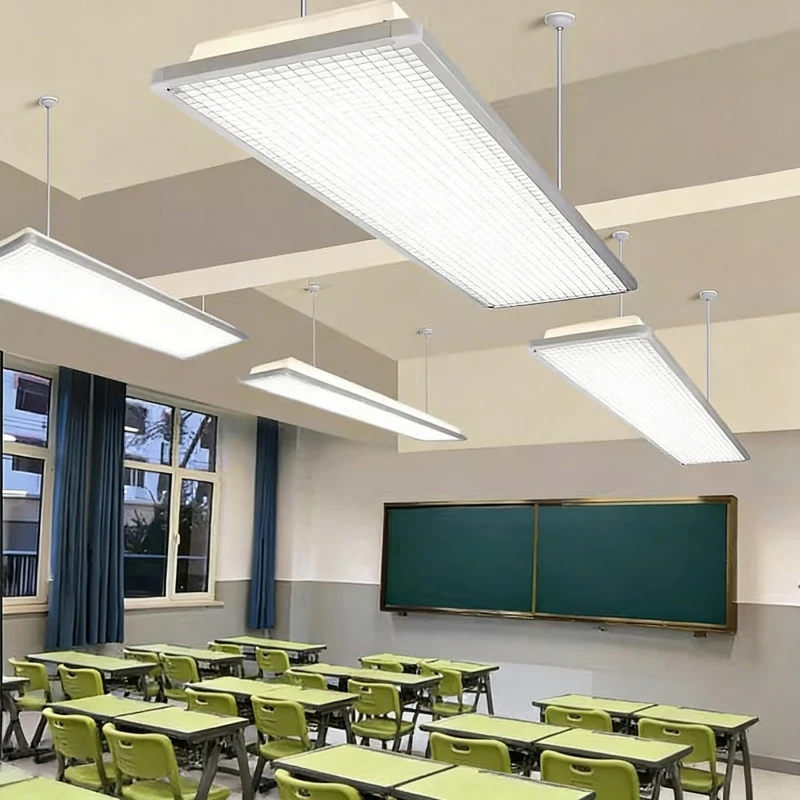
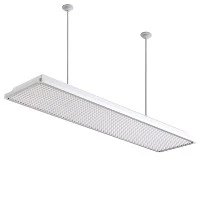
Honeycomb or louvered lenses, which limit the angle at which light can escape, cutting off the direct line-of-sight rays that cause glare
Deep-set or recessed light sources, where the bulb sits further back inside the shade so it's less visible from typical eye level
Matte interior finishes, which reduce the secondary glare caused by light bouncing off shiny or reflective inner surfaces
Together, these features lower the UGR value of the fixture, meaning the light reaching your eyes is more even and less concentrated - even though the total brightness in the room may stay the same.
Color Temperature, CRI, and Their Role in Visual Comfort
Glare isn't only about intensity - the quality of the light itself matters too. Two factors are worth understanding here:
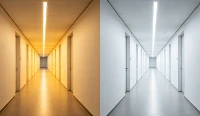
Color temperature (measured in Kelvin): Cooler, bluish light (above 5000K) tends to feel harsher and more fatiguing over long periods, especially in task-heavy settings. Warmer light (2700K–3500K) is generally easier on the eyes for extended exposure, which is why many anti-glare pendants are designed within this range for living and working spaces.
CRI (Color Rendering Index): A higher CRI (90+) means colors appear more natural and true to life. Poor CRI forces the eyes to work harder to interpret contrast and detail, which compounds fatigue even if glare itself is well controlled.
Anti-glare performance and light quality go hand in hand - a well-diffused fixture with poor color temperature or low CRI will still leave users straining, just for a different reason.
Anti-Glare Shades vs. Open or Bare-Bulb Fixtures
It helps to compare the two side by side. An open or bare-bulb pendant exposes the light source directly, produces sharp shadows, and has a high UGR - fine for brief, ambient use, but tiring for spaces where people are seated underneath it for hours. An anti-glare pendant, by contrast, spreads light more evenly across the diffuser surface, softens shadow edges, and keeps UGR low enough for sustained use. The trade-off is usually a slightly lower point-brightness, which is why anti-glare fixtures are often paired with slightly higher-lumen sources to compensate - the goal is even coverage, not just raw output.
Where the Difference Matters Most
Anti-glare pendant lighting tends to matter most in settings where people are under the fixture for long, continuous stretches rather than passing through:
Home offices and study areas, where screen work compounds visual fatigue
Dining and kitchen islands, where the pendant often hangs at close, direct eye level
Reading nooks and living areas used in the evening
Retail counters and hospitality spaces, where staff work under the same light for full shifts
In short-duration or purely decorative applications, the benefit is less noticeable - but anywhere people are working, reading, or eating under the light for extended periods, the reduction in glare has a real, measurable effect on comfort.
Summary
Anti-glare pendant lights reduce eye strain by controlling how and where light exits the fixture - through diffusers, louvers, recessed sources, and matte finishes - rather than by simply dimming the room. Paired with the right color temperature and a high CRI, this results in even, low-UGR illumination that's noticeably easier on the eyes during long periods of use. For spaces where people sit, work, or read directly beneath the fixture, this design difference isn't just a comfort feature - it's a practical one.
Looking for anti-glare pendant lighting solutions for your project or product line? Get in touch with our team - we're happy to share technical specs, UGR/CRI data, and sample options to help you find the right fit.