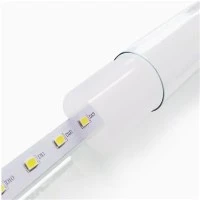
If LED Is a "Cold Light Source," Does That Mean It Doesn't Generate Heat?
In the lighting industry, it's practically common knowledge that "LED is a cold light source." From this, many people jump to a convenient conclusion: LEDs don't generate heat, they don't feel hot to the touch, so thermal design doesn't really matter - just throw a fixture together and it'll be fine. This is actually a widespread but costly misunderstanding.
1. What "Cold" Actually Means
The term "cold light source" was originally coined in contrast to "hot light sources" like incandescent and halogen bulbs. An incandescent bulb produces light by heating a tungsten filament until it glows, and in the process it radiates a large amount of infrared heat - hold your hand near an incandescent bulb and you can clearly feel that "roasting" warmth. That's classic radiant heat.
LEDs work on a completely different principle. Light is generated directly through electroluminescence - electrons and holes recombining at the PN junction - a process that produces almost no infrared radiation. That's why standing under an LED fixture doesn't give you that scorching sensation. This is where the term "cold light source" comes from: it describes minimal radiant heat, not "zero heat generated."
2. Where Does the Electrical Energy Actually Go? The Chip Is Where the Real Heat Builds Up
The key issue is energy conversion efficiency. Mainstream LED chips today typically convert somewhere between 30% and 50% of input electrical energy into light (the exact figure depends on the chip and packaging process). In other words, only part of the electricity going in actually becomes light - the rest doesn't just disappear; it turns into heat, and that heat is generated almost entirely inside the chip itself, building up through conduction at the PN junction.
Put simply:
- An incandescent bulb produces light while radiating heat outward - the heat escapes.
- An LED produces light while heat accumulates internally, right inside the chip.
An LED not radiating infrared heat doesn't mean it isn't producing heat - that heat has simply taken a different form: it shows up as a rising junction temperature. If that heat can't be carried away fast enough, the chip's temperature keeps climbing.
3. When Junction Temperature Gets Out of Control: Lumen Depreciation, Color Shift, and Shortened Lifespan
Junction temperature is the core indicator of how "overheated" an LED chip really is, and its effects on performance are wide-ranging:
3.1 Reduced luminous efficacy LED chips have a pronounced negative temperature coefficient - as junction temperature rises, luminous efficacy drops. At the same drive current, a hotter chip actually produces less light output; more of the electrical energy is converted into "wasted heat" rather than light.
3.2 Faster lumen depreciation Prolonged operation at high junction temperature accelerates the aging of both the chip material and the phosphor coating, causing brightness to decline steadily. Many high-power LED products that "get dimmer the longer they're used" aren't suffering from a failed driver - the real cause is often inadequate thermal management, with the chip sitting at high temperature for extended periods.
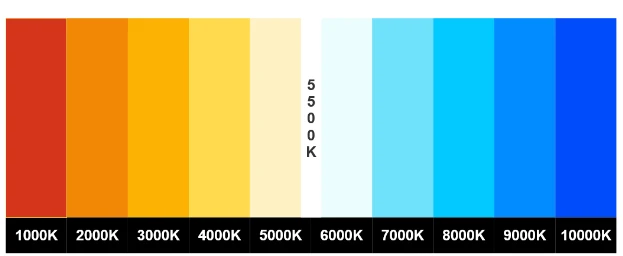
3.3 Color temperature drift Changes in junction temperature also affect phosphor excitation efficiency, causing shifts in color temperature and CRI. Lamps from the same batch, installed in well-ventilated versus poorly-ventilated locations, can end up looking noticeably different in color after extended use.
3.4 Drastically shortened lifespan, or outright failure An LED's rated lifespan (commonly 50,000 hours) is measured under a specific junction temperature condition. Once junction temperature exceeds the design range by a certain margin, lifespan can drop by an order of magnitude. In extreme cases, sustained overheating can directly cause the chip, mounting structure, and encapsulant to age, crack, or even burn out - taking the whole fixture out of service prematurely.
This is also the real reason so many high-power LED products "look fine, then just get dimmer over time" - it's not that the chip has reached the end of its life, it's that heat has "cooked" the chip prematurely.
4. For High-Power LEDs, Thermal Management Isn't Optional - It's Essential
Because heat has nowhere else to go and accumulates entirely through conduction inside the chip, thermal design for high-power LED products has to be taken seriously. Common approaches include:
- Metal-core PCB (MCPCB): Compared to standard FR4 board material, aluminum-based MCPCB has a much higher thermal conductivity, allowing heat generated by the chip to be carried away quickly to the board and then to the external heatsink structure. It's standard practice in high-power LED fixtures.
- Heatsinks: By increasing surface area, heatsinks dissipate heat into the surrounding air through convection. The higher the power, the larger and thicker the heatsink generally needs to be - which is also why high-power fixtures tend to be noticeably heavier and bulkier than low-power ones.
- Thermal paste / thermal pads: These fill the microscopic gaps between the chip, the MCPCB, and the heatsink, reducing contact thermal resistance and allowing heat to conduct more smoothly. It's a detail many people overlook, but it has a real impact on overall thermal performance.
- Structural design and airflow: Some high-power products also incorporate heat-dissipating fins on the housing, internal airflow channels, or even active cooling - all aimed at speeding up the transfer of heat from the chip out into the surrounding air.
The quality of thermal design directly determines whether a product can actually reach its rated lifespan and efficacy figures. Two lamps both rated for "50,000 hours" can end up with actual lifespans that differ several times over, depending on whether the thermal design was done properly or cut corners.
5. The Bottom Line
The statement "LED is a cold light source" isn't wrong - but it describes minimal infrared radiant heat, not "no heat generated at all." In fact, because energy conversion efficiency is limited, a substantial share of the electrical energy that doesn't become light turns into junction heat inside the chip. Without an MCPCB, heatsink, or other thermal structure to carry that heat away in time, the consequences range from reduced efficacy, faster lumen depreciation, and color shift, to - in more serious cases - drastically shortened lifespan or outright failure.
For anyone sourcing or using high-power LED products, this is worth keeping in mind: judging whether an LED fixture is good shouldn't come down to lumen output and price alone. Whether the thermal structure is properly engineered is just as important in determining how long the product will actually last and whether it will hit its rated lifespan.
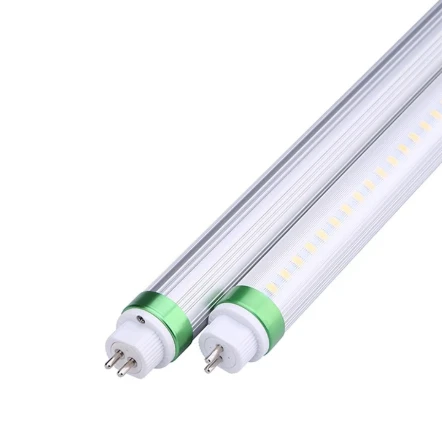
If you're evaluating T5 tubes or other high-power LED products and want to dig into thermal design and lumen-depreciation control in more detail, feel free to reach out anytime.