After years of working with poultry lighting equipment, we've noticed a particularly interesting phenomenon: many farm owners are willing to invest heavily in equipment-fully outfitting their facilities with top-tier ventilation and feeding systems-yet when it comes to lighting, their attitude is often simply, "as long as it provides light, it's good enough." In reality, however, lighting is one of the most overlooked variables affecting laying hen productivity, eggshell quality, and even flock health. In this article, we will explore how lighting-specifically duration, intensity, and spectrum-influences egg-laying performance, and we'll also discuss what to look for when selecting lighting equipment.
The Physiological Mechanism Linking Lighting to Egg Production
Egg-laying behavior is fundamentally controlled by a hormonal regulatory system, and light acts as the "switch" for this system. Chickens possess photoreceptors in the hypothalamus that detect light signals; these signals regulate the release of gonadotropins, thereby influencing follicular development and ovulation rhythms. Simply put, light signals are transmitted to the brain, which then "commands" the ovaries to function.
This explains why disruptions to the lighting schedule-such as a sudden reduction in light duration or inconsistent timing-can easily lead to a drop in laying rates, thinning eggshells, or even a complete halt in production. For laying hens, lighting is not merely about visibility; it serves as a crucial signal for their biological clock.
The Impact of Light Duration on Laying Rates
A common industry practice involves gradually increasing light duration during the brooding and rearing phases, then maintaining a stable 14–16 hours of light per day once the hens enter the laying phase, without arbitrary adjustments. Insufficient light duration delays sexual maturity and slows the onset of laying. Conversely, while suddenly extending light duration might stimulate egg production in the short term, a lack of proper follow-up management can cause stress and compromise the flock's long-term laying capacity.
It is important to emphasize that the consistency of light duration is more critical than the absolute number of hours. Fluctuations in laying rates at many farms can often be traced back to a failure to strictly adhere to the lighting schedule-for instance, providing 16 hours of light one day but dropping to 14 hours the next due to oversight. Such inconsistencies disrupt the flock's endocrine rhythms.
Light Intensity: Brighter Isn't Necessarily Better
Many clients initially misunderstand this point, assuming that higher bulb wattage and a brighter coop will encourage chickens to eat and lay more eggs. In reality, laying hens do not require high light intensity; maintaining a level of around 10–20 lux in the coop is generally sufficient to initiate and sustain normal egg production.
Excessive light intensity can trigger stress-related behaviors such as feather pecking and vent pecking, particularly in high-density housing environments. Conversely, insufficient intensity leads to reduced flock activity and inadequate feed intake, indirectly affecting laying rates and egg weight. Therefore, the goal is "optimal" intensity rather than simply "brighter" light.
The Impact of Light Spectrum and Color Temperature on Flock Behavior
Light of different wavelengths affects chicken behavior in different ways. Research and practical experience show that laying hens are relatively sensitive to red and warm-white light; these spectra help reduce stress and lower the incidence of pecking habits. In contrast, light sources with cooler tones and higher blue-violet content-while energy-efficient-can overstimulate the flock if the spectrum is poorly designed, hindering calm feeding and resting.
This is why professional poultry lighting products specify color temperature and the Color Rendering Index (CRI), rather than simply listing the wattage. When selecting lights, spectral data is actually more important than power ratings.
Common Lighting Mistakes on Poultry Farms
Based on real-world cases we have encountered, several typical issues include:
Using standard household lights instead of specialized poultry lighting, resulting in uneven light distribution and insufficient illumination in coop corners;
Relying on manual switching for lighting schedules without using timers, leading to cumulative timing errors over time;
Neglecting gradual lighting transitions-suddenly switching from dim to bright light can startle the flock and cause stress;
Failing to replace or adjust lights after power output has degraded, leaving the actual illumination level well below standards without the farmer realizing it.
While these issues may seem minor in isolation, their cumulative impact on egg production rates is significant, and the root cause is often difficult to identify immediately.
How to Select the Right Lighting Solution for Laying Hen Houses
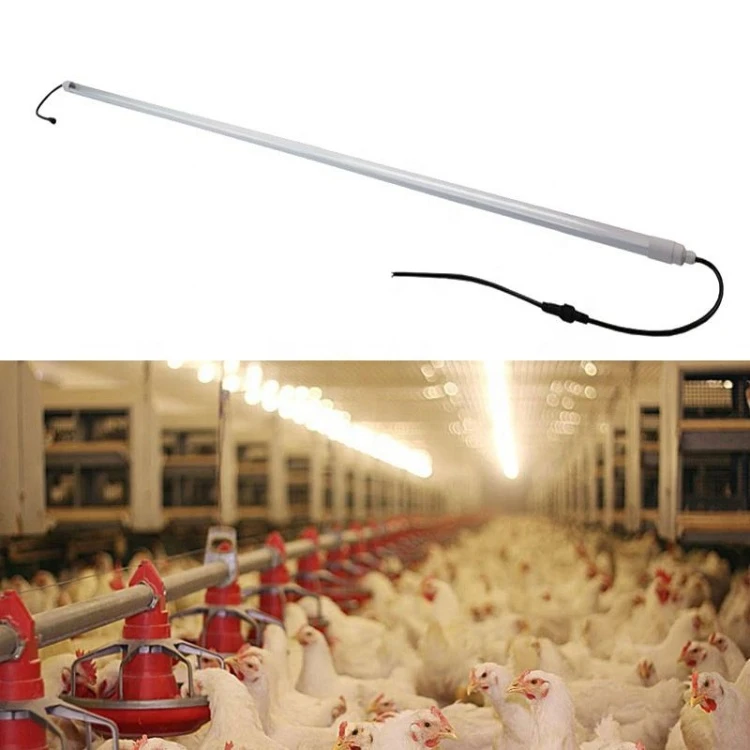
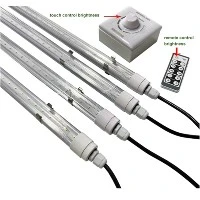
When selecting lighting equipment, consider the following key factors based on the points mentioned above: Does the system support automatic timing control to eliminate human error? Is the light spectrum optimized for poultry behavior rather than simply using generic lighting fixtures? Is the dimming function stable, allowing for gradual light transitions to minimize stress? Finally, consider the fixture's moisture and dust resistance; the environment in a poultry house is unique, and standard fixtures often suffer from reduced lifespan and stability.
In short, a professional poultry lighting solution is not merely about selling a light bulb; it is a comprehensive system that integrates the management of lighting duration, intensity control, and spectral design.
Conclusion
Lighting affects laying hen productivity across three dimensions: duration, intensity, and spectrum. Shortcomings in any of these areas can negatively impact laying rates, eggshell quality, and even flock behavior. Compared to feed and disease prevention, lighting management entails relatively low costs yet exerts an influence throughout the entire laying cycle, making it a factor that deserves serious attention from poultry farms.
If you are currently selecting lighting equipment for a laying hen house or are dissatisfied with the egg production results of your existing lighting setup, please contact our technical team. We can provide tailored lighting solution recommendations and product quotes based on your specific facility conditions-such as house size, stocking density, and existing equipment-and welcome your inquiries at any time.