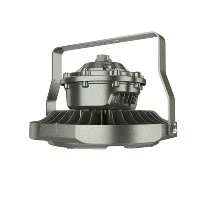
Floodlights are commonly used for large-area outdoor illumination in locations such as factory perimeters, storage yards, and shipping terminals. However, in areas where flammable or explosive risks exist-such as near oil storage tank farms or the loading/unloading zones of chemical plants-standard floodlights are unsuitable; explosion-proof floodlights must be used instead. While the two types may look similar, there are significant differences between them. This article focuses on floodlights to explain the specific distinctions between explosion-proof versions and standard models.
Fundamental Differences in Application Scenarios
Standard floodlights prioritize coverage area and illuminance uniformity; they are typically used in open spaces without specific hazards, such as factory roadways, public squares, and building facades. Explosion-proof floodlights, conversely, are designed specifically for outdoor areas containing explosive gases or dust-such as petrochemical terminals, oil and gas field perimeters, and outdoor storage yards at gas stations.
Even in open-air environments, if there is a risk of combustible gas dispersion, certified explosion-proof fixtures are mandatory. The selection logic mirrors that of indoor explosion-proof lighting, simply adapted for large-scale outdoor illumination.
Differences in Optical Structure and Light Distribution Design
To achieve wider beam angles and higher luminous efficacy, standard floodlights feature relatively open lens and reflector designs; many models utilize adjustable brackets, allowing for on-site adjustments to the illumination range based on specific needs. In contrast, explosion-proof floodlights require a sealed, flameproof housing structure. Their light-transmitting panels typically use thickened tempered glass, and their beam angles are often fixed, preventing the kind of free adjustment or disassembly of optical components found in standard models.
Consequently, the light distribution design must be finalized during manufacturing based on the intended application, meaning that selecting explosion-proof floodlights requires a clearer understanding of installation distances and beam angle requirements beforehand.
Housing Sealing and Explosion-Proof Structure
While standard outdoor floodlights must also be waterproof and dustproof, their structural design is relatively simple; many meet outdoor requirements using a die-cast aluminum housing combined with silicone gaskets. The housing of an explosion-proof floodlight must meet structural requirements for "flameproof" or "increased safety" designs. The mating surfaces of the light body require precision-machined flameproof gaps, and the seal between the glass panel and the housing must undergo specialized testing to ensure that, even if an internal electrical fault occurs, it will not ignite combustible gases in the surrounding environment. While the underlying principles are similar to those of explosion-proof high-bay lights, floodlights-being constantly exposed to the outdoors-demand higher standards for sealing and weather resistance.
Comparison of Outdoor Protection Rating Requirements
Standard floodlights generally require an IP65 rating for outdoor use to ensure protection against rain and dust. In addition to explosion-proof certification, explosion-proof floodlights typically require an IP66 rating or higher. This is because many application scenarios involve harsh environmental conditions, such as high humidity or salt spray corrosion (e.g., at coastal chemical terminals). If a light meets basic explosion-proof standards but lacks an adequate protection rating, the housing seals may degrade over time, creating safety hazards. Therefore, both criteria must be met when selecting explosion-proof floodlights; neither can be compromised.
Differences in Installation Angles and Mounting Methods
Standard floodlights offer relatively flexible installation; many come with universal joint brackets, allowing for on-site adjustments to the tilt angle and horizontal orientation as needed. Due to structural and certification constraints, explosion-proof floodlights generally have a more limited range of angle adjustment. Some models even require the fixed angle to be determined based on site survey data prior to installation; making significant adjustments after installation could compromise the integrity of the explosion-proof seal. Consequently, the planning of installation locations and beam angles for explosion-proof floodlights requires greater precision during the project's early stages to ensure the setup is correct from the start.
Summary
The fundamental difference between explosion-proof floodlights and standard floodlights centers on whether the fixture must operate in an explosive atmosphere. This distinction manifests in several areas: the rigidity of the optical structure, the housing's sealing rating, outdoor protection requirements, and the flexibility of installation angles. When selecting a product, one cannot focus solely on illumination range and brightness; the primary step is to determine whether the site is classified as a hazardous area, as this dictates which type of product is required.
If your outdoor lighting project involves specialized environments-such as chemical plants, oil and gas facilities, or port yards-where explosion-proof ratings and specific protection requirements must be met, please share the site conditions and illumination requirements with us. We can help you select the right explosion-proof floodlighting solution; feel free to send an inquiry at any time.
https://www.benweilight.com/industrial-lighting/led-high-bay-light/4000k-led-bay-lights.html