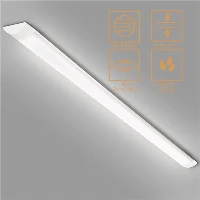
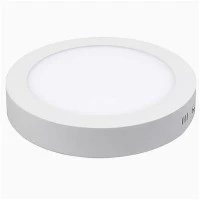
Customers searching for lighting for a variety of uses are increasingly choosing LED downlights. Given that downlights are so adaptable and LED bulbs are so eco-friendly, low-maintenance, and efficient, it is difficult to question why. They can be positioned thoughtfully across the room to provide general lighting or utilized as task lighting to establish focus points (like in the kitchen).
The correct quantity of lights is essential to getting the desired effect. Numerous variables, like the room's size, use, and design, as well as the amount of natural light, will affect the final figure. To determine how many downlights you will need to adequately illuminate the space, you should adhere to a few common guidelines.
Continue reading to find out the specifics!
Make a careful plan
Even if you don't collaborate with a professional designer, it's usually a good idea to get everything down on paper first. Making a plan can give you a much-needed perspective, as it may be difficult to see everything in your mind. In this manner, you will be able to make some adjustments during the project's early phases and prevent a disaster later. It will assist you in deciding whether your concepts are truly worthwhile.
Determine the Main Points
Make sure to incorporate furniture into your self-made space layout so that you can identify all the main spots that require more light than others. You generally want your kitchen countertops to be well-lit, for instance, while the bathroom should have additional lighting near the sink and mirror.
Plan the remaining downlights in the space around the focus points you've chosen to start with.
Assess Your Light Requirements
Lumens are used to measure the light's overall brightness. It's important to distinguish them from watts, which measure the amount of electricity required for a lightbulb to generate light.
Here, the general guideline is to calculate the room's square meters (multiply the length by the breadth) and the lux measurements (one lumen per square meter, or how bright a light is on the surface, that is distant from the light source). The number of lumens required can be obtained by multiplying each one individually. Keep in mind that this is merely a recommendation and could not work for every interior. For instance, adding 10 lumens more per square meter can be a smart idea if the room has dark walls. Additionally, you can have personal preferences that should be taken into account. Go ahead and use bright spaces if that's your preference.
A typical home should have 150 lux of illumination. However, for the best illumination when working or studying, you will need about 500 lux, and for more intricate jobs, you will need at least 750 lux.
Think About the Lights
Naturally, not all downlights are created equal, so it is important to take these factors into account, particularly if you choose to use any unconventional lighting options.
When utilized as part of general lighting, a lamp with a smaller beam angle may become annoying, but it will be ideal for task lighting.
You should focus more on the IP ratings, which indicate how waterproof the light bulbs are, if you intend to install lighting in your bathroom.
Take the ceiling height into account
The general rule of thumb is to divide the ceiling height by two when planning the lighting. For instance, the downlights should be about 1.5 meters apart if your ceiling is 3 meters high. But keep in mind that you shouldn't mindlessly obey any rules. Some areas might not need as much lighting as others, so if you decide to use brighter bulbs, you might want to spread them farther apart. Along with the room's purpose, your interior style is also quite important.
Be Aware of the Edges
Lights placed too near the edges of walls or ceilings can cast shadows, which detracts from the aesthetics of any space. In addition to making an area appear smaller, shadows can produce an uneasy atmosphere. Generally speaking, downlights should be kept at least 0.5 meters from the edges.
It's Better to Have Too Many Than Too Few
It is better to have too many lights than to run the risk of dark regions if you are ever unsure. All you need is a dimmer switch to change the lighting if you find that your room is overlit. You can have both a cozy, romantic ambiance when desired and a well-lit, bright space with dimmers. But keep in mind that many LED downlights might not be compatible with all dimmers, so be sure to speak with an expert first.
Installing Downlights in Various Rooms
Kitchen
When you think of task lighting, the kitchen is most likely the first space that springs to mind. Well-lit workspaces can be achieved by installing more tiny lights or by selecting larger downlights with higher lumen counts.
With ideal lux readings of about 300, task lighting should be positioned about 0.75 meters above the ground.
Living Room and Bedroom
Living rooms and bedrooms are similar in that you will likely want the most varied lighting of any area. Task lighting may be necessary in both areas (for instance, for reading), but you also want to be able to create a cozy, beautiful atmosphere. Dimmers are therefore a common option, particularly for living spaces.
Here, 150 lux would be the ideal reading.
The restroom
When it comes to bathrooms, you probably use them for shaving or applying makeup, therefore the area surrounding the sink and mirror needs to be sufficiently bright. But you presumably enjoy unwinding there as well, particularly if you have a bathtub, so you might want to be able to alter the mood.
Choosing general lighting with 200 lux is the best option.
Regardless of the design, the quantity and positioning of downlights may make or ruin the entire space. Spending time in a poorly lit environment will be uncomfortable, and you probably wouldn't want to avoid any rooms in your own home.
Because of their efficiency and adaptability, LED downlights are a fantastic choice, but don't make any snap selections. You can only get the intended impact and be satisfied if you carefully plan the lighting, taking into account all the variables and circumstances.
Naturally, each room is unique and needs to be handled differently, but you may simplify the lighting selection process by adhering to a few basic guidelines. You can also locate specialized calculators online or get personalized counsel from an expert if you think this is too much.