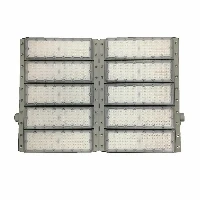
How many types LED sensor lamp classification?
LED sensor lamps can be divided into the following categories according to different sensing methods, installation scenarios and functional characteristics:
1. Classification by sensing method
Infrared sensing (PIR)
Triggered by detecting infrared thermal radiation from the human body, with high sensitivity, suitable for areas with large traffic (such as corridors and stairwells).
Features: Strong anti-interference, but insensitive to stationary objects.
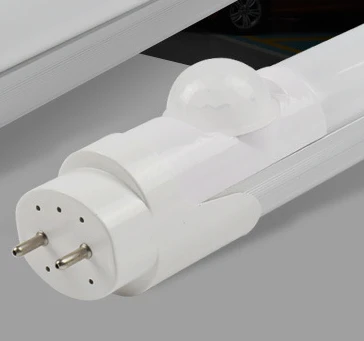
Radar sensing (microwave sensing)
Using the microwave Doppler effect to detect moving objects, with strong penetration (can be triggered by glass and plastic).
Features: High sensitivity, suitable for complex environments (such as toilets and warehouses).
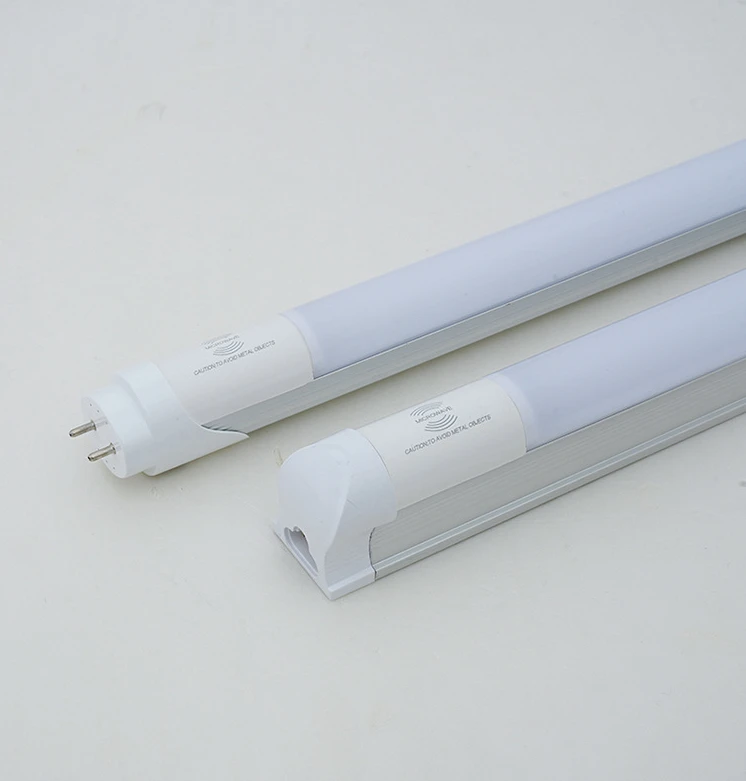
Acoustic and light control sensing
Controlled by sound or ambient light intensity, often with photoresistors (such as lighting when there is sound at night).
Features: Energy saving, but easy to touch by mistake (such as thunderstorms).
Ultrasonic sensing
Detects changes in reflected waves by emitting ultrasonic waves, sensitive to small movements (such as workstation lighting).
Features: Wide coverage, but high cost.
Combined induction (dual-detection type)
Combines two technologies (such as infrared + microwave) to reduce false triggering and improve reliability.
2. Classification by installation scenario
Embedded induction lamp
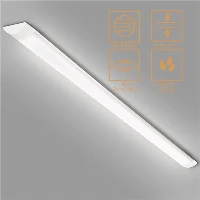
Installed in ceiling or wall groove (such as office, shopping mall).
Ceiling induction lamp
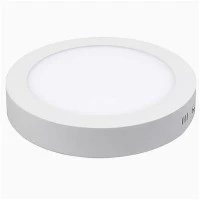
Directly adsorbed on the ceiling (home corridor, basement).
Suspended induction lamp
Suspended by hanging wire or bracket (warehouse, workshop).
Replacement induction lamp
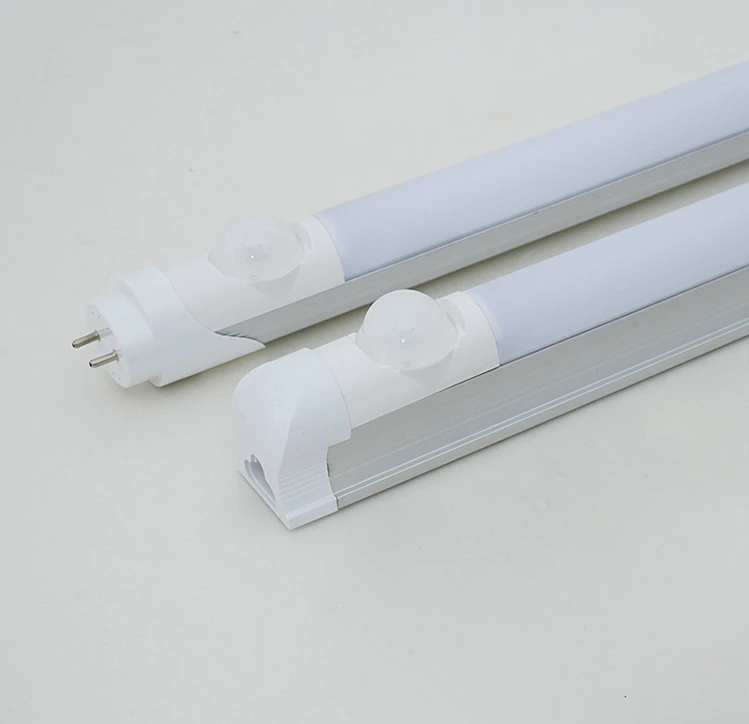
Compatible with traditional fluorescent lamp sizes (such as T8, T5), directly replace the original lamps.
3. Classification by power supply method
Mains power supply
Directly connected to 220V AC, high power and high brightness (mainstream commercial solution).
Battery power supply
Built-in lithium battery or dry battery, no wiring required (emergency lighting, temporary places).
Solar power supply
Equipped with solar panels, environmentally friendly and energy-saving (outdoor street lights, garden lights).
4. Classification by functional characteristics
Human body induction + automatic delay
The light turns on after detecting a person, and the delay turns off (default 30 seconds~5 minutes adjustable).
Photosensitive control
Only starts when the ambient light is dark (avoids false lighting during the day).
Segmented dimming
Slightly bright when no one is around, fully bright when someone is around (such as garage lighting).
Waterproof and dustproof type
IP65 and above protection level (suitable for humid and dusty environments).
5. Special application classification
Emergency induction lamp
With backup power supply, automatically switches after power failure (fire passage, safety exit).
Ultraviolet sterilization induction lamp
Start UV-C sterilization after people leave (hospital, laboratory).
Smart networking model
Supports Wi-Fi/Zigbee, remote control or linkage with smart home.
Selection suggestions
Home use: infrared/radar induction + light control, low power consumption and silent models are preferred.
Commercial places: combined induction (anti-mistouch), high brightness, long life.
Industrial environment: waterproof, dustproof, and strong anti-interference radar induction model.
Match the induction method, installation method and protection level according to actual needs. you can consult sensor LED Lamp on http://www.benweilight.com