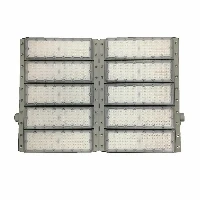
You discover a project or location that has no lighting and realise that you need to provide some illumination. But then you find that grid electricity is likewise not accessible. How do you behave? The answer you're seeking for may be LED floodlights driven by solar energy.
Solar-powered LED floodlights illuminate the desired area without incurring additional expenses for trenching, electricity, or maintenance. Since these lights are grid-free, they may be set almost anywhere as long as sunlight is available. Additionally, the solar panel may be set remotely up to 100' away if the light needs to be installed below a tree or another obstruction to guarantee that it has ample access to the sun.
There are several uses for solar flood lights. These adaptable systems may be created to fit almost any project scope, from general area illumination to boat ramps, signage and billboards, along paths and perimeters, and for general security applications. They are simple to integrate into any project where pushing the light out a distance is required since straight down lighting won't work.
The maintenance of the flood fixtures is no longer necessary thanks to the use of LEDs in them. Today's LED lighting fixtures often last over 20 years and have a rating of 100k hours or higher. Since LEDs are more cost-effective and offer superior illumination, you won't need to buy new lamps or ballasts every few years, which equals cheaper expenditures.
The solar power system is designed to last for more than 25 years. The only maintenance required is a battery swap every five to seven years, but you won't need to ascend 20 feet into the air. With the advent of new designs, it is now possible to remotely attach the battery assembly much lower, making it simpler to do maintenance when necessary. Best of all, a lock may be added to the battery assembly' box to assist keep it safe and secure.
Depending on how much it would cost to trench grid electricity to the spot, the systems can easily save you money both immediately and over the long term. When you include in the cost savings from not having to pay an electricity bill each month for the lights, a single system may occasionally be significantly less expensive to install than grid power alone.