best applications for LED lighting around the home
Where an LED will be utilized in your house is the first factor to take into account when selecting one. LED lights are a fantastic addition to the whole home, however depending on the space, you may want a certain aesthetic or functionality from your bulb. Certain LEDs, like our refreshTM HD LED Bulb, can give a clear, sharp light to a home office, while others, like our relaxTM HD LED Bulb, may offer a warmer light to bedrooms and living spaces. Vintage LED lights give a classic touch with optimal efficiency to match the style of your house. Energy-efficient LED color-changing lights provide an opportunity for you to experiment with your own style. For adaptable ambient lighting, LED strip lights and wireless LED strip lights look well behind TVs, along baseboards, and under cabinets. LEDs may be used to create gorgeous but understated reading lamps, spectacular spotlights for artwork and fireplaces, or flawlessly individualized recessed lights. They may also be used to illuminate a pathway outside or to provide additional illumination in tight spaces. Also, our LED Grow Light offers the rays required to maintain the health of indoor crops and houseplants.
Sizes and forms of LED bulbs
The four main types of LED bulbs are A-shaped, reflectors, ornamental, and speciality. The most prevalent variety of LEDs, A-shape LEDs, are widely utilized in homes. Usually, an A-shaped light bulb comes to mind when you think of a light bulb. You've undoubtedly heard people refer to reflectors as floodlights or spotlights since they are often utilized for outdoor illumination. They have a conical form and provide a more focused beam. The addition of decorative LEDs to wall sconces, chandeliers, or other exposed-bulb fixtures is very gorgeous. They often come in smaller sizes to fit within fixtures, but they may also be found in a wide range of bigger globes or vintage-inspired forms to match any kind of interior design.
Lumens instead of watts
It's critical to comprehend the distinction between a watt and a lumen if you want to use LEDs to replace incandescent or halogen lights. Watts are a unit of measurement for energy use. A greater number of lumens implies a brighter bulb since it is a measure of the quantity of light produced. Lumens per watt, a unit used to represent how much energy is required to create one lumen of light, is used to assess a bulb's efficiency. LEDs are six times more efficient than incandescent lights, which only generate around 15 lumens per watt, as opposed to 75–100 lumens per watt for LEDs.
We'll use the 6:1 ratio to switch an incandescent bulb out for an LED. Thus, to calculate the comparable LED for a 60-watt bulb, just divide the wattage by 6. Here, 60 divided by 6 equals 10. Therefore your old bulb may be successfully replaced with a 10-watt LED.
Cool and warm LEDs
LEDs are equipped with a variety of features, including a mutable tone. The color quality of light is referred to as tone and is quantified in Kelvin (K). From roughly 1000 to 4000K, lower Kelvin light is referred to as "warm light" and has an amber hue. Everything exceeding 7000K has a higher Kelvin temperature and has a more blue hue. The temperature range between 4,000 and 7,000 Kelvin is mostly unremarkable. A warmer tone aids in creating a nice atmosphere in spaces where you'd want to unwind. It would be preferable to have a cooler, clearer light in utility rooms, kitchens, and bathrooms.
Dimmability and compatibility of LED bulbs
The dimmability of LEDs and their compatibility with your dimmer switch are further customization features. Not every dimmer switch is compatible with all LEDs. The manufacturer's specification document or dimmer compatibility sheet that comes with your bulb or switch is the best place to go to be sure your switch and bulbs will operate together. It is preferable to get in touch with the switch or bulb maker directly if you have any queries. They'll have the most up-to-date knowledge about your particular items.
Retrofitting to LED
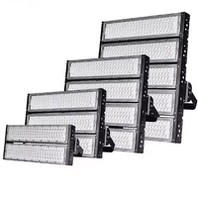
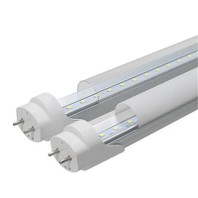
The alteration of an existing fixture to accept an LED is referred to as an LED retrofit. Troffer lights above workstations and cubicles, strip or shop light fixtures used in work spaces, LED tube lights, and outdoor vapor-tight fixtures are all examples of how this is often done. Your surroundings may be made safer and the lighting quality can be improved by retrofitting your fixtures. Retrofitting, however, is not always feasible and might restrict your usage of dimmer switches. Consult a qualified electrician to go through your alternatives if you're thinking of upgrading your fixtures.
LED light bulb life
A decent grade LED bulb should have a lifespan of up to 50,000 hours due to its efficiency. Hence, you won't need to replace your light bulb as often in addition to consuming less energy. GE LED bulbs are also ENERGY STAR certified, which results in lower energy costs, fewer emissions, and incentives on a few goods.
Reusing broken light bulbs
Depending on the sort of light bulb you have, you may be able to recycle it after it burns out. Because of their wire filaments, incandescent and halogen bulbs cannot be recycled. Nonetheless, some cities offer neighborhood-level LED recycling programs. To find out whether your neighborhood recycling facility accepts LEDs, you may call them or look into local initiatives. Fluorescent tube lights should be recycled since they contain mercury, which is bad for the environment.
When taken as a whole, these elements will equip you to choose LED lighting for your house wisely. Most supermarket shops, lighting retailers, and home improvement businesses carry LED bulbs. Visit our website to browse the full range of GE LED products, or call our customer service line for additional details.