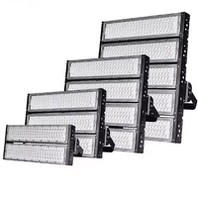
How to choose the best outdoor floodlight
The need of installing the proper lighting in a home's exterior areas has increased due to the darker evenings. While the summer is the ideal time to decorate your yard with solar lights and light strings, you should install a reliable outdoor lighting in the winter for added safety and security.
It might be a little overwhelming to choose the best outdoor lighting or security spotlight because there are so many options available. Finding the ideal one for you should be simpler if you follow these instructions.
Location is crucial
Decide where you're going to place the outdoor floodlight before you even begin shopping for the ideal one. The most crucial question is: What region must the light illuminate? The light's installation height and angle may have a significant impact on how well it illuminates the room of your choice.
It's crucial to consider this early because windows, doors, drainpipes, and gutters might all provide barriers to selecting the ideal placement. Try to estimate the size of the light that will fit in the area once you have chosen the ideal location. It would be useless to purchase a powerful floodlight only to discover that it is too large to fit in the location you have designated for it.
How do you want your outside lighting to turn on?
Floodlights are getting more complex in their activation as lighting technology develops. There are floodlights with motion sensors, which, in addition to the typical on/off button that you can use to manually turn on your light, will turn on when someone (or anything) passes in range of its sensor. An alternative is to use "Dusk to Dawn" floodlights, which turn on automatically when the ambient light reaches a specified level and turn off once the sun rises.
The choice between these solutions essentially comes down to preference. Do you desire a light that you can turn on and off manually? This has the inherent danger of having the light on all day, wasting energy and shortening the life of the fixture. The most energy-efficient lights are those that detect motion since they only turn on when necessary, but because they include a sensor, they could also turn on when nearby neighbors are gardening or when animals pass by. This could be unsettling to some. A happy medium is provided by dusk till dawn lights, which automatically turn on and remain on throughout the night.
Get the right brightness
Perhaps more than any other form of light, floodlights offer a wide variety of brightness outputs. There are floodlights available with outputs ranging from 700 to 20,000 lumens or more (for more information about lumens, see our guide to lumens).
Your decision will mostly be influenced by the size of the area you need to light. For patios and driveways, a low-lumen outdoor floodlight (700-1,500lm) would do; however, for commercial settings such parking lots and small fields, floodlights with a much higher lumen output are required. Although there is no strict rule for choosing floodlights of a given brightness, the following is a general overview that may be useful.
| LED Wattage | Lumens | Typical Use | Area Covered |
| 5W | 400lm | Doorway | 5m x 5m |
| 10W | 750lm | Patio Area | 10m x 10m |
| 20W | 1,500lm | Driveway | 15m x 15m |
| 30W | 2,200lm | Small Garden | 20m x 20m |
| 50W | 4,000lm | Medium Garden | 30m x 30m |
| 100W | 8,000lm | Large Garden | 50m x 50m |
| 150W | 16,000lm | Parking Lot | 75m x 75m |
| 200W | 20,000lm | Car Park | 100m x 100m |
As was already said, positioning and angle have a significant impact on how well your outdoor space is illuminated. If you get things right, the lumen output of your selected floodlight will provide you a little bit more space. On the other hand, if you are aware that the light cannot be put in a perfect location, you may consider this while determining the brightness of the floodlight.
Upgrade to LED floodlights
Halogen light bulbs have traditionally been used in most outdoor floodlights. While they consume 20–30% less energy than older incandescent light bulbs, they are still nowhere near as energy-efficient as LED light bulbs. In this scenario, the longer lifespan of LED light bulbs is their greatest benefit. LED floodlights have a lifespan of up to 30,000 hours, compared to the 2,000 hours that a halogen light bulb can have. This lengthy lifespan not only saves money, but it also spares you from having to deal with the trouble of frequently replacing your floodlight or its light bulb. This is sufficient justification in and of itself to switch to LED floodlights.
Be aware of your neighbours
Make sure your neighbors won't be bothered by the lighting you're putting. The government recommends that artificial light turns into a nuisance when it "injures health or is likely to harm health" or "unreasonably and materially interferes with the use or enjoyment of a house or other property." An illustration would be if artificial light entered a neighbor's bedroom window directly, disrupting their sleep.
Local governments can be contacted to report nuisance lighting, and if they find the light to be a problem, they will investigate the complaint and issue an abatement notice. A little preparation can completely prevent this. Make sure the light is not directed directly onto a neighbor's property and is not too bright (see above). In certain circumstances, it could prevent you from placing the light precisely where you had intended, but in the long run, it will be less troublesome and will help you maintain excellent ties with your neighbors.