HOW TO RETROFIT YOUR BASEBALL FIELD LIGHTING WITH LED STADIUM LIGHTS
Lighting up the baseball field is an essential component of every baseball game that goes on after the sun goes down. The lighting system needs to provide sufficient illumination so that players, officials, and spectators can watch and participate in the game in a manner that is both safe and enjoyable. The installation of LED stadium lights in your existing lighting system for the baseball field can bring a variety of benefits, including increased visibility, enhanced energy efficiency, and reduced expenses for maintenance. The following is a list of the actions that need to be taken in order to replace the lights on your baseball pitch with LED stadium lights.
To begin, you need to have a firm grasp of the lighting requirements for your baseball fields.
Foot-candles are the unit of measurement that are used to determine the lighting requirements for baseball fields. This unit of measurement is used to indicate the quantity of light that is hitting a surface. The following are the criteria that must be met for the illumination of baseball fields:
Outfield: The outfield is the part of a baseball pitch that requires the least amount of lights. It is recommended that the luminance be at least 15-30 foot-candles, with 30 foot-candles being the most frequent value.
Due to the quicker tempo of play, the infield requires a higher amount of illumination than the outfield does. In this regard, the infield is distinguished from the outfield by the term "infield." It is recommended that the luminance be at least 30-50 foot-candles, with 50 foot-candles being the most frequent value.
The area around the pitcher's mound, known as the "pitcher's mound," is the part of the baseball field that requires the most light. It is suggested that the luminaire have a minimum of 75-100 foot-candles, with 100 foot-candles being the most frequent.
Batter's Box: In order to provide the batter with adequate visibility, the batter's box needs to have a significant amount of illumination. It is advised that the luminance be between 50 and 70 foot-candles, with the latter value being the most typical.
The illumination needed in the dugouts and bullpens is far lower than that required in other parts of the field. It is recommended that there be a minimum of 10-15 foot-candles.
It is crucial to note that these suggestions for foot-candles are broad guidelines, and that the actual lighting requirements for a baseball field may vary based on a number of factors, including the size of the field, the level of play, and the type of lighting system that is utilised. Consultation with a qualified lighting designer or engineer can assist you in ensuring that the baseball pitch lighting system you choose satisfies all of the essential specifications for your organization's unique requirements.
The highest quality LED Stadium Lighting fixtures and LED Sports Lights that are currently available.
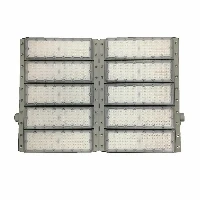
LED stadium lights are high-performance lighting fixtures designed for illuminating vast outdoor areas such as sports fields, stadiums, and arenas. LEDs are a type of light emitting diode (LED). Because of their extreme brightness, long longevity, and low energy consumption, they are an excellent option for lighting applications in both commercial and recreational settings.
LED stadium lights are available in a wide range of sizes and wattages, spanning from 500 watts all the way up to 850 watts, in order to accommodate a wide variety of lighting needs. They are constructed to produce a light that is both bright and consistent throughout a large area, which ensures that every portion of the field is adequately illuminated. Because they consume up to 80% less energy than conventional metal halide or high-pressure sodium lights, consumers may see significant cost savings on their monthly electricity bills as a result of switching to these more energy-efficient options. In addition, they have a long lifespan of up to 100,000 hours, which implies that they require fewer regular replacements and maintenance than other lights.
LED stadium lights are also built to handle tough outside situations. They have a durable, weather-resistant shell that is meant to tolerate exposure to rain, wind, and dust. This makes them ideal for use in outdoor stadiums. They also feature a high CRI, which stands for colour rendering index. This means that the colours they produce are true to life, making them an excellent choice for recording and broadcasting sporting events.
How do you replace the Metal Halide or High-Pressure Sodium (HPS) lights on a baseball pitch with LED Stadium Lights?
Evaluate your existing lighting system Before you start retrofitting the lighting on your baseball field, you need to evaluate your existing lighting system in order to identify the number of fixtures, where those fixtures are located, and the kind of lighting that is being utilised. In addition to this, you need to figure up the lighting requirements for your baseball field based on the dimensions of the field, the intensity of the play, and the minimum and maximum illumination levels that are recommended.
Choose LED stadium lights: After you have evaluated the lighting system that is currently in place, you will need to select LED stadium lights that are appropriate for your baseball field. Because LED lights are available in a wide variety of wattages, colour temperatures, and beam angles, you will need to select lights that give the appropriate level of illumination and coverage for the area you wish to illuminate.
After you have made your selection for the LED stadium lights, the next step is to plan the installation. You should collaborate with an experienced electrician to organise the wiring and make certain that the new lights adhere to all of the electrical and safety criteria. In order to create the finest possible lighting coverage, you should also think about how the lights will be hung and the most effective way to distribute them.
Remove the old fixtures in order to install the new LED stadium lights. In order to install the new LED stadium lights, you will first need to remove the existing fixtures. In order to accomplish this, the outdated wiring may need to be removed, and any necessary adjustments to the electrical system will need to be made.
Put in new fittings as follows: After you have finished removing the older fixtures, you will be able to put up the new LED stadium lights. In this step, the fixtures will need to be mounted, and then they will be wired into the electrical system. To guarantee that the lights are fitted properly, you need to make sure that you follow the installation instructions provided by the manufacturer.
After the new LED stadium lights have been installed, you will need to test the lighting system to confirm that it is functioning appropriately. You should also examine the lighting levels to ensure that they are adequate for your baseball pitch and satisfy the requirements that are specified for it.
It is essential to keep in mind that replacing the lighting on a baseball pitch with LED stadium lights demands a high level of competence and experience. It is recommended to engage with a professional lighting designer or engineer to guarantee the retrofit is done correctly and the new system fits the essential standards for your particular needs. This can be accomplished by working together.
Features:
● Led Stadium Light not only uses ADC12 die-casting aluminum heat sink, but also uses the most advanced finite element heat dissipation technology to control the temperature of lamps to achieve ultra-high lumen maintenance rate.
● Led Stadium Light uses a unique hood design to prevent light from scattering to the sky and eliminate light waste. It also uses laser positioning to accurately illuminate every corner.
● The lens is made of UV-resistant PC material, and a variety of lighting angles can be selected.
Specification:
| Product Name | Led Stadium Light 500-4000W |
| Wattage | 500W-4000W |
| Input voltage | AC100-240V |
| Luminous Efficacy | 170LM/W |
| Color Temperature | 2400K|2700K|3000K|4000K|5000K |
| Beam Angle | 15° | 30° | 40° | 60° |
| Power Factor | >0.9 |