How to solve the light spot of LED tube
The previous LED tubes were all point light sources. The light spot problem we mentioned is its fatal weakness. Whoever breaks through this problem first will truly lead the LED tube into the field of daily lighting.
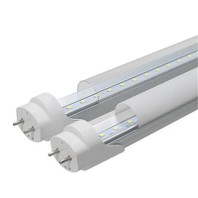
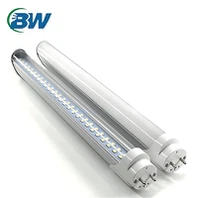
We use optical films to solve some of the problems. Eliminate the unique light spots of LEDs. Since the LED tubes are arranged in two or three rows, there will be gaps between the light emitted by each point light source, so that a light spot is generated within a certain distance; After the optical film is used, the optical film evenly diffuses the incident point light source light and turns it into a divergent light source to emit, so that the light becomes very uniform, which completely solves the spot problem and widens the illumination angle.
The directivity of LED light emission is very strong, the illumination angle is about 120 degrees, and it is easy to produce lighting blind spots; after the optical film is used, due to the unique diffusibility of the optical film, the light irradiation range can be extended to about 180 degrees, which can effectively eliminate Lighting blind zone.
Regarding the spot problem of LED fluorescent tubes, people are concerned about it.If there is a problem, we can only find a solution. Let's understand the cause and solution of the spot problem of LED tubes.
We must consider the spacing, distance to the outer cover, and arrangement of LED tubes to do uniform light, all of which will affect the effect of uniform light. At the same time, the arrangement with large spacing generally uses high brightness, such as 3528, 3014. Generally speaking, a good solution for uniform light products is 3528, or 3014, and 5050 is a very bad solution, except for the uniform light effect. Good, and the light efficiency is low, and the heat dissipation is not as good as the previous two models. 5050 and 3528 have good light decay products. Generally speaking, the 3014 has advantages in terms of heat dissipation, light decay, and luminous efficiency.
The choice of light-expanding tube is particularly important. If the light transmission is too high, it is easy to see the lamp beads. If it is too low, it is not too bright. Now the general light transmission rate is 85%-87%, which is ideal. It is not easy to achieve a balance between rates.
However, the engineer at Langte still has a little doubt. The illuminance and luminous flux produced by the optical film must be lower than that of the mask. Then, whether this effect will work, I don't know. If there is a standard saying that my illuminance can reach XX, then as long as it meets the standard, it doesn't matter what method I use to solve the glare. After time filtering, the most suitable solution will eventually settle down. The key to homogenizing materials is to balance three properties: light transmittance, homogenizing effect on LEDs (reducing light spots), and expanding the illumination angle.
But sometimes customers still prefer 3528 and 5050, which is worthy of our research and discussion.
1 It is because 3014 is technically good, the light effect is good, and the attenuation is good. High cost performance, good heat dissipation. The result of our analysis is that these are actually advantages, and guide customers. If so, tell customers what the actual situation will be and explain them patiently.
2 It is the price that can be sold using the 3014. Why is it that it is sold at the price? I think it is good, the cost is low, and the effect is good. Can fully meet the requirements.
3 The end customer originally wanted to buy a lamp to emit light. In fact, no matter it is a trader, we always provide him with such a lamp. In terms of optics, the effect of 3014 is better than that of 3528,5050, and the price is cheaper. Why? Would you like to use 5050? .
So my conclusion is that because the customer doesn’t understand, he would like 3528 or 5050. If you tell him the above things, he will choose 3014, which is not necessarily true. There is a big risk here and he needs to be more professional. , He also needs to tell his customers professionally, and at the same time be easy to understand. Maybe he still thinks about being fooled? Isn't this one not fooled? There are too many fools in this industry, which are intentional, and there are some mistakes that do not understand, so there will be many similar weird phenomena. It will do no harm to the long-term development of the industry, just like the exaggeration of LEDs now. But in the end, things will return to their true colors.