How Do Phototherapy and Lighting Impact Human Health?
Table of Contents
Introduction: Why Lighting and Human Health Are Deeply Connected
What Is Phototherapy and How Does It Use Light?
Lighting and Human Health: The Science of Circadian Rhythm
How Different Light Wavelengths Affect Health
Phototherapy in Clinical Practice: Conditions and Treatments
Designing Healthy Lighting for Homes, Offices, and Healthcare
Safety, Standards, and Evidence: What You Need to Know
Frequently Asked Questions (FAQ)
Conclusion: Harnessing Light for Better Health
Introduction: Why Lighting and Human Health Are Deeply Connected
Light is not just for vision. It regulates circadian rhythms, mood, and hormone production. Lighting and human health are deeply intertwined, affecting everything from sleep quality to immune function.
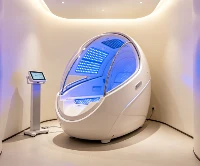
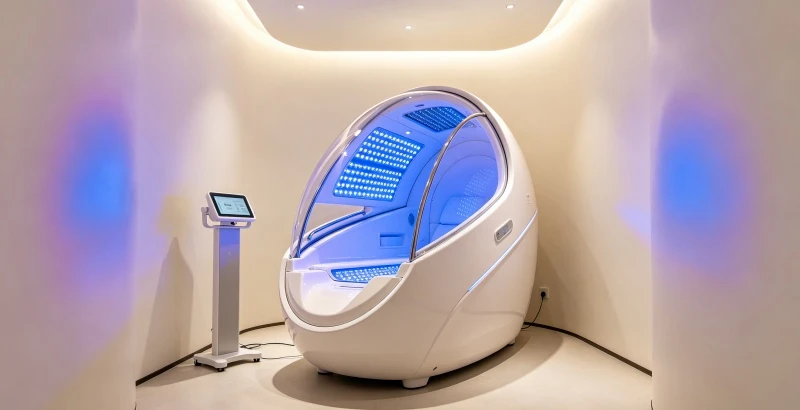
Phototherapy is a medical treatment that uses specific wavelengths of light to treat health conditions. Unlike general illumination, it delivers controlled doses of light to targeted areas of the body.
Poor lighting can contribute to eye strain, sleep disruption, and low mood. This guide explains the science behind phototherapy and how everyday lighting affects human health.
We will cover phototherapy types, circadian effects, lighting design principles, and practical applications. For authoritative health guidance, refer to the World Health Organization's guidance on light and health. For professional phototherapy lighting solutions, explore Benwei's phototherapy lighting solutions.
Safety note: Phototherapy should be administered under medical supervision. Improper use can cause burns or eye damage.
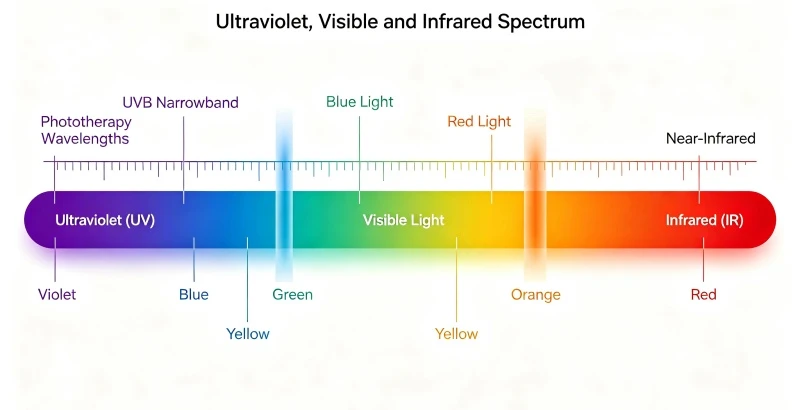
| Light Type | Wavelength | Health Application | Typical Use |
|---|---|---|---|
| UVB | 280–315 nm | Psoriasis, vitiligo | Clinical phototherapy |
| Blue light | 400–500 nm | Neonatal jaundice, alertness | Hospital, SAD therapy |
| Red light | 600–700 nm | Skin healing, pain relief | Dermatology, wellness |
| Near-infrared | 700–1000 nm | Deep tissue repair | Sports medicine, therapy |
What Is Phototherapy and How Does It Use Light?
Phototherapy is the controlled exposure to specific light wavelengths for therapeutic purposes. It is not the same as general illumination; it uses precise wavelengths and doses to trigger biological responses.
Main types include:
UVB phototherapy for psoriasis and vitiligo.
Blue light phototherapy for neonatal jaundice.
Red light therapy for skin healing and pain relief.
Bright light therapy for seasonal affective disorder (SAD).
Dosage is critical. It is calculated as irradiance (mW/cm²) multiplied by exposure time. Too little light may be ineffective; too much can cause burns or eye damage. Always follow medical supervision.
For regulatory guidance, see the FDA guidance on phototherapy devices. For medical research, refer to NIH research on phototherapy. Benwei offers medical-grade phototherapy lights.
| Phototherapy Type | Wavelength | Condition Treated | Session Length |
|---|---|---|---|
| UVB | 280–315 nm | Psoriasis, vitiligo | 2–5 minutes |
| Blue light | 400–500 nm | Neonatal jaundice | 4–8 hours |
| Red light | 600–700 nm | Wound healing, pain | 10–20 minutes |
| Bright light | 10,000 lux | Seasonal affective disorder | 30 minutes |
Lighting and Human Health: The Science of Circadian Rhythm
Lighting and human health are linked through the circadian rhythm-the body's internal 24-hour clock. Light exposure regulates melatonin production, alertness, and sleep.
Blue light in the morning promotes alertness. Blue light at night disrupts sleep by suppressing melatonin. The color temperature and intensity of light play a key role in circadian entrainment.
Circadian disruption is linked to sleep disorders, metabolic issues, and mood disorders. Designing lighting for healthy circadian rhythms is essential.
For standards, see CIE standards for circadian lighting. For professional guidance, refer to IES standards for healthy lighting. Benwei provides circadian-friendly lighting solutions.
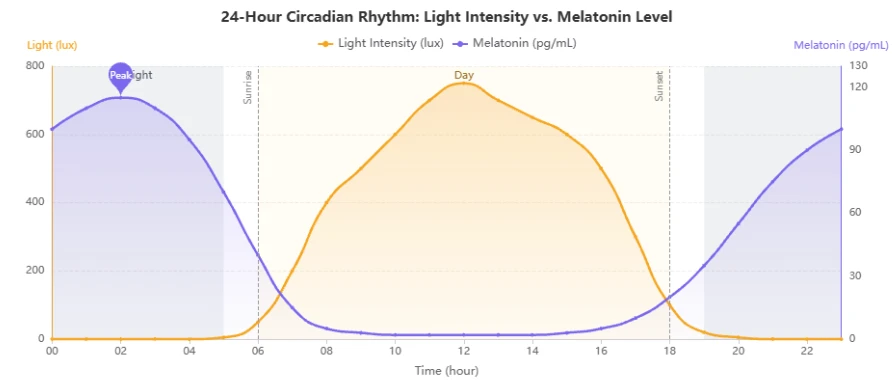
| Time of Day | Recommended Light | Color Temperature | Effect |
|---|---|---|---|
| Morning | Bright, cool | 5000–6500K | Promotes alertness |
| Afternoon | Neutral | 3500–4000K | Maintains focus |
| Evening | Warm, dim | 2700–3000K | Prepares for sleep |
| Night | Minimal | <2700K | Supports melatonin |
How Different Light Wavelengths Affect Health
Different wavelengths have distinct health effects.
UV light: Vitamin D synthesis, psoriasis treatment. Overexposure risks burns and skin cancer.
Blue light: Alertness and mood, but also sleep disruption and eye strain.
Red light: Skin healing, collagen production, pain relief.
Near-infrared: Deep tissue repair, inflammation reduction.
Wavelength-specific dosing is crucial. For research on red light therapy, see research on red light therapy. Benwei offers red light therapy panels.
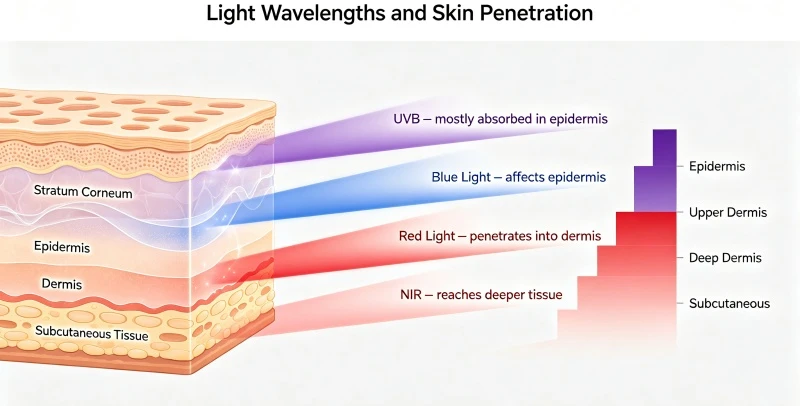
| Wavelength | Color | Penetration Depth | Health Effect |
|---|---|---|---|
| UVB | Invisible | Epidermis | Vitamin D, psoriasis |
| Blue | Blue | Dermis | Alertness, jaundice |
| Red | Red | Dermis | Healing, collagen |
| Near-infrared | Invisible | Subcutaneous |
Deep tissue repair |
Phototherapy in Clinical Practice: Conditions and Treatments
Phototherapy is used for various conditions:
Psoriasis and vitiligo: UVB narrowband phototherapy.
Neonatal jaundice: Blue light phototherapy.
Seasonal affective disorder (SAD): Bright light therapy.
Chronic pain and inflammation: Red and near-infrared therapy.
Skin rejuvenation: Red light and LED therapy.
For dermatology guidelines, see dermatology guidelines for phototherapy. For clinical guidance, refer to NHS phototherapy.
| Condition | Phototherapy Type | Wavelength | Typical Session |
|---|---|---|---|
| Psoriasis | UVB narrowband | 311–313 nm | 2–3 times/week |
| Jaundice | Blue light | 460–490 nm | Continuous |
| SAD | Bright light | 10,000 lux | 30 min/day |
| Chronic pain | Red/NIR | 600–1000 nm | 10–20 min |
Designing Healthy Lighting for Homes, Offices, and Healthcare
Key principles for healthy lighting design include layered lighting, tunable white, glare control, and daylight integration.
Home: Warm dimmable lighting in the evening, bright cool light in the morning.
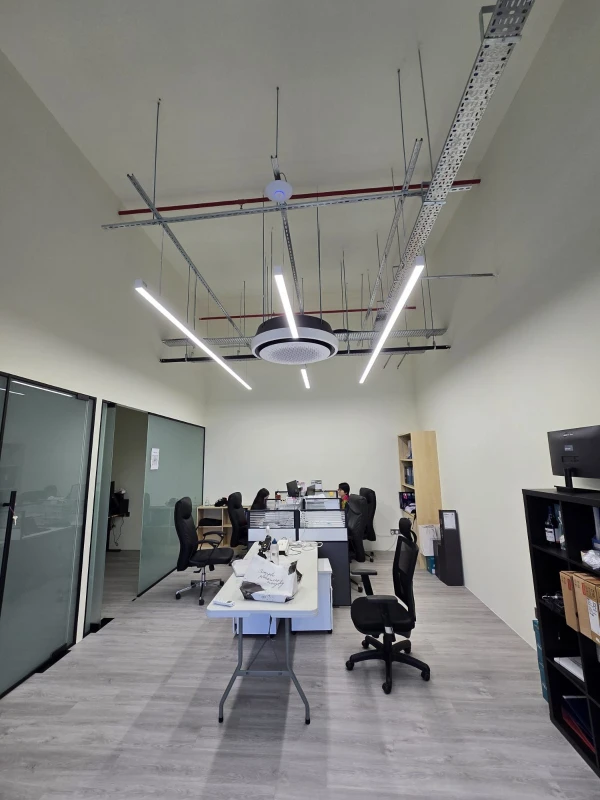
Office: Circadian lighting to improve alertness and reduce fatigue.
Healthcare: Phototherapy rooms and patient rooms with tunable lighting.
Measurement and verification include lux, CCT, and melanopic EDI. For standards, see IES standards for healthy lighting and CIE human centric lighting. Benwei offers human-centric lighting solutions.
| Space | Recommended CCT | Illuminance | Key Feature |
|---|---|---|---|
| Home | 2700–3000K evening | 100–300 lux | Dimmable, warm |
| Office | 3500–5000K day | 300–500 lux | Circadian tuning |
| Healthcare | 3000–5000K | 300–500 lux | Phototherapy zones |
| School | 3500–5000K | 300–500 lux | High CRI, glare control |
Safety, Standards, and Evidence: What You Need to Know
Safety is paramount.
UV phototherapy risks: Burns, skin cancer, eye damage.
Blue light: Eye strain, sleep disruption; use filters and dimming.
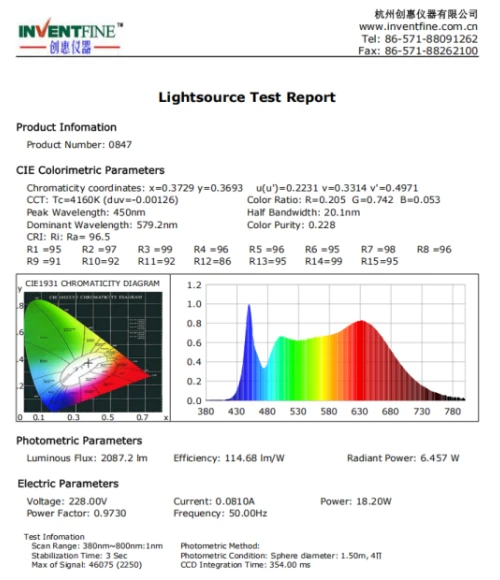
Standards: IEC 62471 (photobiological safety), IES TM-30 (color), CIE S 026 (melanopic).
| Standard | Scope | Key Requirement |
|---|---|---|
| IEC 62471 | Photobiological safety | Limits blue light hazard |
| IES TM-30 | Color metrics | Fidelity and gamut |
| CIE S 026 | Melanopic | Circadian light measurement |

FAQ
What is phototherapy used for?
Phototherapy treats psoriasis, jaundice, SAD, chronic pain, and skin conditions. It uses specific wavelengths under medical supervision.
How does phototherapy differ from light therapy?
Phototherapy is a medical treatment with controlled doses. Light therapy is a broader term that includes wellness applications.
Can phototherapy treat depression?
Bright light therapy is effective for seasonal affective disorder. Consult a professional for other types of depression.
Is blue light bad for your health?
Blue light during the day is beneficial. At night, it disrupts sleep. Use night mode and dim lighting.
What is human-centric lighting?
Lighting designed to support circadian rhythms, visual comfort, and well-being.
How can I improve my sleep with lighting?
Use bright cool light in the morning, dim warm light in the evening, and avoid screens before bed.
Are phototherapy devices safe for home use?
Some are, but only those cleared for home use. Follow instructions and consult a doctor.
What standards should I look for?
Look for IEC 62471, IES TM-30, and CIE S 026 compliance.
Conclusion: Harnessing Light for Better Health
Lighting and human health are inseparable. Phototherapy offers powerful treatments, while everyday lighting shapes our sleep, mood, and productivity.
Recap: Phototherapy types include UVB, blue, red, and bright light. Healthy lighting design uses layered, tunable, and glare-controlled light.
Evidence-based approaches and safety are critical. Benwei can help with phototherapy and healthy lighting solutions. Contact our lighting and health experts or request a lighting design consultation.