In order to illuminate the path to flourishing indoor gardens, grow lamps for plants are available.
In recent years, indoor gardening has transitioned from a casual hobby to a widespread practice. This change has been driven by urbanization, a need for fresh vegetables throughout the year, and a rising appreciation for plant-based design. On the other hand, one of the most difficult aspects of indoor gardening is overcoming the restrictions of natural light, which can be caused by factors like as tiny windows, seasonal fluctuations, or living in a high-rise building. develop lights for plants are specialized lighting systems that are meant to duplicate the energy of the sun. This allows plants to photosynthesize, develop, and flourish even in areas where there is a lack of availability of light. Grow lights have evolved into a vital tool for gardeners of all expertise levels, from those working with little pots of herbs on a kitchen windowsill to those working with large-scale hydroponic production systems. The science behind grow lights, their many varieties, important characteristics, and advantages, as well as how to choose and make good use of them to promote healthy plant development, are all topics that are discussed in this article.
The Reasons Why Plants Require Light and the Science Behind Grow Lamps
Before gaining an appreciation for grow lights, it is necessary to initially comprehend the manner in which plants make use of light. Photosynthesis, which is the process by which plants transform light energy into chemical energy to fuel development, is dependent on particular wavelengths of light, which are referred to as Photosynthetically Active Radiation (PAR). A visible light spectrum that extends from violet to red is included in the range of 400 to 700 nanometers (nm) that is referred to as PAR. With regard to this spectrum, there are two wavelengths that are particularly important:
This wavelength of blue light, which ranges from 400 to 500 nanometers, is responsible for driving vegetative growth, which includes the formation of powerful root systems, healthy leaves, and strong stems. In addition, it controls the opening of stomatal holes, which are the minute pores on leaves that govern gas exchange, as well as the creation of chlorophyll, both of which are essential for the successful process of photosynthesis. In particular, seedlings and young plants are extremely reliant on blue light in order to prevent "stretching," which is a form of development that is characterized by growth that is lanky and feeble.
Red light, which has a wavelength range of 600–700 nanometers, is essential for reproductive growth because it stimulates blooming, fruiting, and seed production. Additionally, it improves the effectiveness of photosynthesis by functioning in conjunction with blue light, particularly during the later stages of a plant's life cycle during which it is most active. For instance, in order to produce blossoms and fruit that can be consumed, tomato plants and other blooming houseplants such as orchids require a significant amount of red light.
Natural sunlight comprises all wavelengths of photon absorption (PAR), as well as non-essential wavelengths such as green light (which plants reflect, giving them their green color) and ultraviolet (UV) light (UV light, when present in modest quantities, can improve plant resistance and nutrient output). Grow lamps are designed to provide the ideal proportion of blue and red light, often known as the complete PAR spectrum, in order to fulfill the unique requirements of a plant. This allows them to fill in the gaps that occur when natural light is insufficient.
Choosing the Appropriate Technology for the Different Types of Grow Lamps for Plants
Grow lights are not all produced equal in the same way. There have been several varieties of grow lamps developed over the years as a result of substantial advancements in lighting technology. Each of these grow lamps has its own set of advantages, limitations, and instances in which they are most suitable for usage. Grow lamps that use light-emitting diodes (LEDs), compact fluorescent lights (CFLs), high-intensity discharge (HID) lamps, and incandescent bulbs are the most prevalent types of lighting alternatives. Each of them is broken down in further depth below:
a. 1. Grow Lamps that use LEDs
LED grow lamps are the most popular option among contemporary indoor gardeners, and there is a perfectly valid explanation for this. For the purpose of emitting light at certain wavelengths, they make use of semiconductor technology, which enables them to be very efficient and adaptable.
Advantages include:
Energy Efficiency: LED grow lights have a lower energy consumption of between 50 and 75 percent compared to HID lamps and incandescent bulbs. A 25W LED grow light, for instance, is capable of producing the same PAR output as a 100W incandescent bulb, which results in a considerable reduction in the amount of money spent on power.
Lifespan: The majority of LED grow lights have a lifespan of 25,000–50,000 hours, which is five to ten times greater than the lifespan of CFLs and HIDs. As a result, there will be fewer replacements and cheaper expenditures over the long run.
LED bulbs, in contrast to high-intensity discharge (HID) lamps, which produce a great deal of heat, remain cool to the touch. Consequently, the risk of leaf burn is eliminated (even when the container is put in close proximity to plants), and the requirement for extra cooling systems is decreased.
Customizable Spectrum: LED grow lights are available in "full-spectrum" (which mimics natural sunshine) or "targeted-spectrum" (which focuses on blue, red, or a mix of the three) choices. Gardeners are able to adjust the light to the specific phases of development of their plants, such as using a blue-heavy spectrum for seedlings and a red-heavy spectrum for blooming plants.
Potential drawbacks:
LED grow lights have a higher starting cost than compact fluorescent light bulbs (CFLs) or incandescent bulbs as they are more expensive to acquire. These costs are often compensated within six to twelve months due to the fact that they save energy and have a long lifespan.
There is a possibility that low-quality LED grow lights may not offer a steady PAR output or will deteriorate rapidly. Selecting brands that have been verified to have a positive PAR rating is of utmost importance.
Ideal Use Cases: Any and all indoor gardening setups, ranging from small herb gardens on windowsills (15W–30W LEDs) to big hydroponic systems (100W–200W LEDs). Herbs, veggies, succulents, and floral plants are only some of the sorts of plants that benefit from their implementation.
2. (CFLs) stands for compact fluorescent lights.
Light-emitting diode (LED) grow lamps are more expensive than compact fluorescent light bulbs (CFL) grow lamps, which use fluorescent technology in a spiral shape. They are readily available and simple to operate, making them an excellent option for those who are just starting out.
Advantages include:
The cost of purchasing a compact fluorescent light bulb (CFL) is relatively low, with basic variants costing as little as ten to twenty dollars.
Similar to LEDs, compact fluorescent lights (CFLs) generate a low amount of heat, which makes them suitable for close proximity to tiny plants.
Easily Obtainable: CFL grow lamps are readily available at the majority of garden stores and online shops. They often come equipped with standard E26/E27 sockets that are compatible with conventional household lamps.
Potential drawbacks:
Light-emitting diodes (CFLs) have a lower energy efficiency than light-emitting diodes (LEDs). For instance, a 65-watt CFL generates less PAR than a 25-watt LED.
Lifespan that is shorter: CFLs normally have a lifespan of 8,000–10,000 hours, which means that they need to be replaced more frequently than LEDs.
Although most compact fluorescent light bulbs (CFL) grow lamps focus on either blue light (for vegetative development) or red light (for flowering), gardeners may need to swap bulbs between different stages of growth due to the limited spectrum of these lamps. Full-spectrum compact fluorescent lights are available, however they are not very common.
The ideal applications for this product are small-scale indoor gardens, which may be used for growing seedlings, herbs, or low-light houseplants like pothos and snake plants. They are not appropriate for crops that require a lot of light, such as tomatoes, or for huge plants.
3. HID Lamps, which stand for high-intensity discharge
These high-intensity discharge (HID) lamps are a popular choice among commercial growers since they are strong lighting systems that generate high levels of PAR. The Metal Halide (MH) lamps and the High-Pressure Sodium (HPS) lamps are the two primary subtypes that they are available in.
Lamps that use metal halide (MH):
Emits a spectrum that is mostly blue, making it an excellent choice for vegetative development (seedlings, leafy greens).
Benefits include a high PAR output and the ability to accommodate huge areas.
Disadvantages include a short lifespan (6,000–10,000 hours), a high energy consumption, and the generation of a substantial amount of heat (which necessitates the use of cooling fans).
Lamps Composed of High-Pressure Sodium (HPS):
The spectrum is characterized by a strong reddish hue, making it ideal for blooming and fruiting plants such as tomatoes, peppers, and cannabis.
The PAR output of this grow lamp type is the highest of any type, making it a good choice for increasing yields.
Disadvantages include being extremely hot (which need adequate ventilation), being ineffective for the development of vegetation, and containing mercury (which necessitates cautious disposal).
Applications that are ideal include commercial hydroponic farms, huge grow tents (100 square feet or more), and crops that produce a high yield. The size, amount of heat they produce, and amount of energy they use make HID lights less ideal for use in residential gardens.
Four. Incandescent Grow Lamps (Grow).
Grow lights that use incandescent bulbs are the most widely used but also the least effective form of grow light. In order to generate light, they function by heating a filament; however, the majority of the energy that they create is squandered as heat rather than as PAR.
Extremely low-cost and simple to locate are two advantages.
The disadvantages include a very low energy efficiency, a short lifespan (1,000–2,000 hours), a high heat output (which increases the danger of leaf burn), and a poor spectrum (which mostly consists of red and infrared light and lacks blue light).
It is not advised for use in the majority of indoor gardening situations. It is possible to use them briefly for plants that require low light, but LEDs or CFLs are far more effective alternatives.
Key Characteristics to Take Into Account When Purchasing a Grow Lamp
When selecting the ideal grow lamp, it is not enough to just select a kind; you must also take into consideration particular characteristics in order to guarantee that the lamp will fulfill the requirements of your plants and your gardening arrangement. The following is a list of the most crucial considerations to get:
a. 1. (Photosynthetic Photon Flux) PAR Output; also known as
The PAR output of a lamp is a measurement of the quantity of light which is emitted within the range of 400–700 nm. This light is represented in micromoles per square meter per second (μmol/m2/s). Due to the fact that it is directly proportional to the amount of energy that plants are able to use for photosynthesis, this is the single most important statistic for cultivation lamps.
Low-light plants, such as pothos and ZZ plants, require a light intensity of 100–200 μmol/m2 per second.
Need between 200 and 400 μmol/m2/s for medium-light plants, such as herbs and succulents.
High-light plants, such as blooming plants and vegetables, require a light intensity of 400–800 μmol/m2 per second.
In order to guarantee that the lamp can provide adequate light for your plants, you should always check the PAR rating that the manufacturer has provided (ideally by having it tested by an independent party). Lumens are a measurement of brightness for human eyes, not for plant photosynthesis, thus you should steer clear of lights that solely specify "lumens."
2. Spectral range
According to what was mentioned previously, plants require different wavelengths of light for their various phases of development. Before purchasing a grow light, you should think about if you require a:
Lamps that focus on blue (vegetative) or red (flowering) light are referred to as targeted spectrum lamps. This method is more cost-effective if you just cultivate plants in a single stage (for example, seedlings) or if you use separate lights for each stage of plant development.
All wavelengths of PAR are emitted by a full-spectrum lamp, in addition to a trace amount of ultraviolet and infrared light. Lamps that cover the full spectrum are the most adaptable since they can sustain plants from the seedling stage all the way to harvest without requiring the bulbs to be changed. Additionally, they simulate the natural sunshine, which is advantageous for plants that are able to flourish in a variety of light settings.
3. Wattage (W)
Although wattage is a measure of the amount of energy that a grow lamp consumes, it is not a direct measurement of the amount of light that is produced (particularly for LEDs). However, the wattage of the bulb might assist you in estimating the area that it will cover:
1–3 square feet may be covered by 15W–30W LEDs, making them perfect for growing seedlings or tiny herbs.
LEDs with 50–100 watts of power may cover from 4 to 8 square feet, making them appropriate for medium-sized plants such as tomatoes or orchids.
For big grow tents or commercial installations, 100W or more LEDs or HIDs may cover an area of more than 10 square feet.
On the other hand, a 25-watt LED grow lamp that has a high PAR output may cover an area of two to three square feet, making it an ideal choice for a windowsill herb plant. In comparison, a 100W HID bulb may cover 10–15 square feet, but it consumes more energy and cooling than a 100W compact fluorescent lamp.
Four. Areas of Coverage
The region that a grow lamp is able to satisfactorily illuminate with an adequate amount of PAR is referred to as its coverage area. For best coverage, the majority of lamps need to be positioned between 12 and 24 inches above the plants. This is dependent on the wattage of the lamp, the PAR output, and the height of the lamp. At all times, make sure to verify the coverage area that is advised by the manufacturer. Lamps that are too large will waste energy, while lamps that are too small may leave plants without enough light.
Five. Controlling the Heat
When it comes to grow lights, heat is a key worry since it has the potential to cause harm to plants or shorten the lifespan of the lamp. Try to find lights that have:
Aluminum Casings: Aluminum emits heat in an effective manner, which helps to keep the lamp at a cool temperature.
Built-in Fans: Light-emitting diode (HID) bulbs and high-wattage LEDs frequently come equipped with fans that circulate air and minimize heat.
Because of their low heat output, light-emitting diodes (LEDs) and compact fluorescent lamps (CFLs) are safer to use in close proximity to plants.
Avoid positioning lamps in close proximity to plants; even low-heat LEDs can cause leaf burn if they are positioned within six inches of seedlings that are particularly fragile.
6. Consistency and longevity of use
Look for models that have the following characteristics: a high-quality grow light should endure for years.
CFLs have a lifespan of 8,000–10,000 hours, whereas HIDs have a lifespan of 6,000–10,000 hours, and LEDs have a lifespan of 25,000–50,000 hours. Incandescents have a lifespan of 1,000–2,000 hours.
Reputable manufacturers typically provide warranties that range from two to five years, which demonstrates their trust in the longevity of their products.
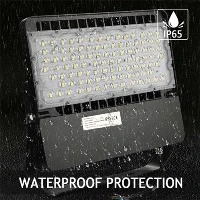
Water Resistance: If you are cultivating plants in a humid environment (for example, in a hydroponic system), select lights that have a waterproof rating of IP65 or above to protect them from being damaged by an excessive amount of moisture.
7. Easy Setup and Operation of the Device
Grow lamps have to be simple to set up and modify, particularly for those who are just starting out. Look for characteristics such as:
Standard Sockets: Compact fluorescent lights (CFLs) and some LEDs make use of E26/E27 sockets, which are compatible with standard home lighting.
Adjustable Height: With lamps that come with telescopic stands or hanging kits, you are able to adjust the height of the light to accommodate the growth of your plants.
Timers: Built-in timers allow you to configure light cycles (for example, flowering plants are able to have 12 hours on and 12 hours off), which ensures that they receive continuous light without the need for any user intervention.
A Guide to Making the Most of Grow Lamps for the Proper and Healthy Growth of Plants
If it is not utilized properly, even the most advanced grow lamp will not produce plants that are healthy. To ensure that you get the most out of your grow light, here are some important pointers:
a. 1. Maintain the Appropriate Light Cycle
Darkness is what initiates activities like root growth and blooming, hence it is essential for plants to have a ratio of light to dark in order to flourish. The optimal light cycle is determined by the stage of development of the plant:
14–18 hours of light per day is required for seedlings and vegetative stages. To produce robust stems and leaves, seedlings require an increased amount of light.
12 hours of light each day is required for the flowering and fruiting stage. When the light cycle is shortened, it sends a signal to plants to transition from vegetative growth to reproductive development.
8–12 hours of light each day is required for low-light plants. Pothos and snake plants are examples of plants that do not require as much light and may be negatively affected by excessive exposure.
This will guarantee that the light cycle is consistent and will prevent you from forgetting to turn the lamp on or off. You may automate the light cycle by using a timer.
2. The Lamp Should Be Positioned Properly
A grow lamp's height is determined by its kind and power, which are as follows:
12–24 inches above plants, LEDs with 15–30 watts of power.
Above plants, LEDs with a power output of 50W or more should be placed 18–30 inches.
Placement of compact fluorescent lamps should be between 6 and 12 inches above the plants.
Due to the high heat output, HIDs should be placed 24–36 inches above the plants.
You should increase the lamp as the plants develop in order to maintain the appropriate distance; this will prevent the leaves from being burned and will guarantee that light reaches all regions of the plant. Make use of several bulbs in order to minimize "dead zones" in big installations, which are areas where there is inadequate light.
3. Follow the Plant's Condition
You should pay attention to the behavior of your plants since they will tell you if the grow light is functioning properly or whether changes are required:
Symptoms of insufficient light include lanky growth (stems that are long and thin), yellowing of the leaves, poor development, and the absence of flowers. If this happens, you should either place the bulb closer to the ground, extend the light cycle, or switch to a lamp with a higher PAR.
Brown, crispy leaf margins (also known as leaf burn), wilting, and stunted development are all symptoms of an excessive amount of light. In the event that this occurs, you should either relocate the bulb further away, decrease the light cycle, or dim the lamp (if it is adjustable).
Four. Take use of natural light whenever it is available.
Grow lights are most effective when used in conjunction with natural light rather than as a replacement for it. If you have access to windows in your indoor garden, you should position the plants so that they are close to them and utilize the grow lamp to either lengthen the light cycle or compensate for days that are cloudy. In order to compensate for the limited amount of natural light, a herb garden that is situated on a window that faces north may require between four and six hours of grow lamp light each day.
Five. See to the Lamp's Upkeep
In order to obtain the longest potential lifespan from your grow lamp:
Dust and debris that are present on the lens of the lamp might cause a reduction in light output of up to thirty percent. Once every two to four weeks, use a gentle cloth to wipe the lens.
Conduct a Regular Inspection: On a regular basis, examine the cord, socket, and casing of the lamp for any indications of wear or damage. Fix any broken components as soon as possible to eliminate any dangers.
HID lights and compact fluorescent lamps (CFLs) contain mercury; instead of tossing them away in the garbage, you should recycle them at a facility that handles electronic waste rather than dumping them away.
How Grow Lamps Will Develop in the Future: Innovations and Trends
As the popularity of indoor gardening continues to rise, there has been a corresponding increase in the use of grow light technology. A few of the most recent developments that are influencing the future of grow lights are as follows:
a. 1. Intelligent Grow Lamps
The integration of smart grow lights with home automation systems, like as Amazon Alexa and Google Home, enables gardeners to manage light cycles, brightness, and spectrum through the use of smartphone applications or voice commands. Some versions also utilize sensors to monitor the health of the plant and automatically modify the light settings. For instance, if a seedling begins to show signs of deterioration, the blue light intensity is increased.
https://www.benweilight.com/lighting-tube-bulb/grow-lamp-for-plants.html
Together, we make it better.
Shenzhen Benwei Lighting Technology Co.,Ltd
Mobile/Whatsapp :(+86)18673599565
Email:http://bwzm15@benweilighting.com
Skype: benweilight88
Web:http://www.benweilight.com
Add:F Building,Yuanfen Industrial Zone,Longhua,Bao'an District,Shenzhen, China