Introduction
Every day, countless industrial facilities, warehouses, ports, and sports arenas operate under suboptimal lighting conditions. From dimly lit corners of a storage facility to the glaring inadequacies of aging metal halide fixtures, the phrase "in the dark" takes on a literal and increasingly costly meaning. The modern industrial landscape demands illumination that is not only powerful but also reliable, energy-efficient, and capable of withstanding the harshest environmental conditions. Yet, many facility managers continue to rely on legacy lighting systems that suffer from rapid lumen depreciation, frequent lamp failures, and exorbitant energy consumption.
The cost of operating in the dark extends far beyond the utility bill. Poor lighting is a direct contributor to workplace accidents, reduces employee morale and productivity, creates security vulnerabilities, and can even result in regulatory non-compliance. Conversely, upgrading to high-performance LED brilliance offers a comprehensive solution to these multifaceted challenges. This paper explores the compelling reasons to abandon outdated lighting technologies and presents a detailed analysis of a state-of-the-art modular LED floodlight designed to elevate any facility from darkness into peak operational performance.
The True Cost of Operating in the Dark
To understand the value of a high-performance lighting upgrade, one must first appreciate the multifaceted costs associated with inadequate illumination. These costs are often hidden, dispersed across various budget lines, and therefore frequently underestimated by decision-makers.
The most immediate and quantifiable cost is energy waste. Legacy lighting technologies such as high-pressure sodium and metal halide fixtures are inherently inefficient. A typical 400-watt metal halide fixture produces approximately 80 to 100 lumens per watt, meaning that a significant portion of the electrical energy consumed is dissipated as heat rather than light. When multiplied across hundreds of fixtures in a large warehouse or port facility, this inefficiency translates into tens of thousands of dollars in wasted electricity annually. Furthermore, aging fixtures experience severe lumen depreciation, losing up to 50 percent of their initial light output after only 10,000 hours of operation, yet continuing to consume the same amount of power.
The second major cost is maintenance. Traditional lamps have a limited operational lifespan, often requiring replacement every 12 to 18 months in continuous operation environments. Each replacement involves not only the cost of the lamp itself but also the labor, equipment, and downtime associated with accessing high-mounted fixtures. In a high-bay warehouse where fixtures are mounted 10 meters or more above the floor, a single lamp replacement may require scissor lifts, safety personnel, and several hours of lost operational time. Across a large facility, these maintenance costs quickly eclipse the initial cost of the lighting equipment itself.
The third, and most critical, cost is safety. Poor lighting is a leading cause of slips, trips, and falls in industrial environments. It impairs the ability of forklift operators to see pedestrians, obscures potential hazards, and contributes to eyestrain and fatigue among workers. In port and shipyard environments, inadequate lighting can lead to catastrophic accidents involving heavy machinery, shipping containers, and vessel operations. Regulatory bodies worldwide increasingly recognize the importance of adequate illumination, mandating minimum lighting levels for various workplace tasks. Failure to comply can result in substantial fines and legal liability. In short, operating in the dark is a risk that no modern facility can afford to take.
Redefining Brilliance: The 150lm/W Advantage
The cornerstone of any high-performance lighting upgrade is luminous efficacy, the measure of how efficiently a light source converts electrical power into visible light. The benchmark for excellence in modern LED floodlighting is 150 lumens per watt (lm/W), a level of efficiency that dramatically outperforms legacy technologies.
This exceptional efficacy is achieved through the integration of premium LED chips, specifically the Philips Lumileds SMD 2835 platform. These chips are renowned for their high thermal conductivity, low light decay, and pure, consistent light color. The SMD 2835 package is engineered to deliver a viewing angle of 120 degrees, ensuring broad and uniform light distribution, and is tested to LM-80 standards, guaranteeing exceptional lumen maintenance over tens of thousands of hours. The use of such high-quality chips is not merely a specification detail; it is the foundation upon which the entire performance of the floodlight is built.
However, generating light efficiently is only half the battle. The optical system must also transmit that light effectively. This floodlight incorporates an advanced Reflector combined with a transparent PC (polycarbonate) mask. This precision-engineered optical system ensures high light transmission, sufficient color rendering, and a comfortable visual experience. The PC mask is manufactured with fine workmanship, allowing the intense light source to project perfectly while minimizing glare and ghosting. The result is a light that is not only incredibly bright but also visually comfortable and highly effective for critical tasks requiring precise color discrimination and visibility.
For facility managers, the 150lm/W rating translates directly into bottom-line savings. To achieve the same level of illumination as a 1000-watt legacy fixture, a 150lm/W LED floodlight requires significantly less power. In many cases, a direct one-to-one replacement can reduce energy consumption by 60 to 70 percent. When this saving is multiplied across a large facility, the return on investment becomes remarkably swift.
Enduring Performance: Lifespan and Thermal Management
A lighting upgrade is only as good as its longevity. In industrial environments, the cost of accessing and replacing fixtures is often higher than the cost of the fixtures themselves. Therefore, the operational lifespan of an LED floodlight is a critical selection criterion.
The floodlight discussed herein boasts an operational lifespan exceeding 50,000 hours. To put this in perspective, a facility operating 24 hours a day, 7 days a week, would achieve over 5.7 years of continuous service before reaching the end of its rated life. In a typical 12-hour-per-day operational setting, this extends beyond 11 years. This extraordinary longevity is not accidental; it is the result of rigorous thermal management.
Heat is the primary enemy of LED performance. Unlike traditional light sources that radiate heat as infrared energy, LEDs conduct heat through their base. If this heat is not effectively dissipated, it causes the LED junction temperature to rise, leading to accelerated lumen depreciation and premature failure. The relationship between junction temperature and lifespan is well-documented. At a junction temperature of 65°C, the L70 lifespan (the point at which light output has declined to 70 percent of its initial value) can reach 90,000 hours. At 105°C, this drops to just 10,000 hours.
To maintain optimal junction temperatures, this floodlight employs a robust die-cast aluminum heat sink with an advanced finned architecture. This design provides a massive surface area for convective heat dissipation, ensuring that heat is rapidly conducted away from the LED chips and efficiently released into the surrounding environment. The modular design of the fixture further enhances thermal performance. Because each LED module has its own independent heat sink and driver compartment, individual modules can be spaced and angled to maximize airflow, and the failure of a single module does not create a thermal cascade that compromises adjacent modules. This meticulous approach to thermal management ensures not only a long lifespan but also a remarkably low rate of light decay, maintaining over 90 percent of initial luminous flux throughout the operational life of the fixture.
Conquering the Harshest Environments: IP65/IP66 and 304 Stainless Steel
High-performance lighting must be engineered to survive. Facilities such as ports, shipyards, foundries, and outdoor warehouses expose lighting equipment to some of the most hostile conditions imaginable: salt-laden air, wind-driven rain, high-pressure washdowns, extreme temperatures, and constant vibration.
To ensure unwavering reliability in these environments, the floodlight is constructed with an IP65/IP66 ingress protection rating. The IP (Ingress Protection) rating is a standardized international classification system. The first digit, 6, signifies a dust-tight enclosure, providing complete protection against the ingress of dust particles. The second digit indicates the level of protection against liquids. An IP65 rating denotes protection against low-pressure water jets from any direction, while an IP66 rating denotes protection against powerful water jets and heavy seas. For port and shipyard applications where routine high-pressure washdowns are common, IP66 is not a luxury; it is a fundamental requirement to prevent water ingress into the driver compartment and LED array. The transparent PC mask plays a crucial role in this protection, sealing the optical chamber while maintaining high light transmission.
Equally important is the mechanical integrity of the fixture. The floodlight utilizes 304 stainless steel fixing screws exclusively. Type 304 stainless steel, containing 18 percent chromium and 8 percent nickel, offers superior resistance to rust, corrosion, and pitting compared to standard carbon steel fasteners. In coastal and humid environments, standard screws quickly corrode, seize, and fail, causing fixtures to become loose, misaligned, or detached-a severe safety hazard. The use of 304 stainless steel ensures that the fixture remains structurally sound and secure for years, even under continuous exposure to the elements. Combined with a rugged anti-corrosion coating on the die-cast aluminum housing, this floodlight is built to withstand the test of time.
Scalable Illumination: The Modular Advantage
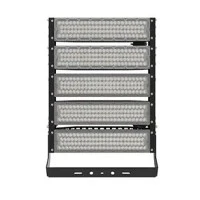
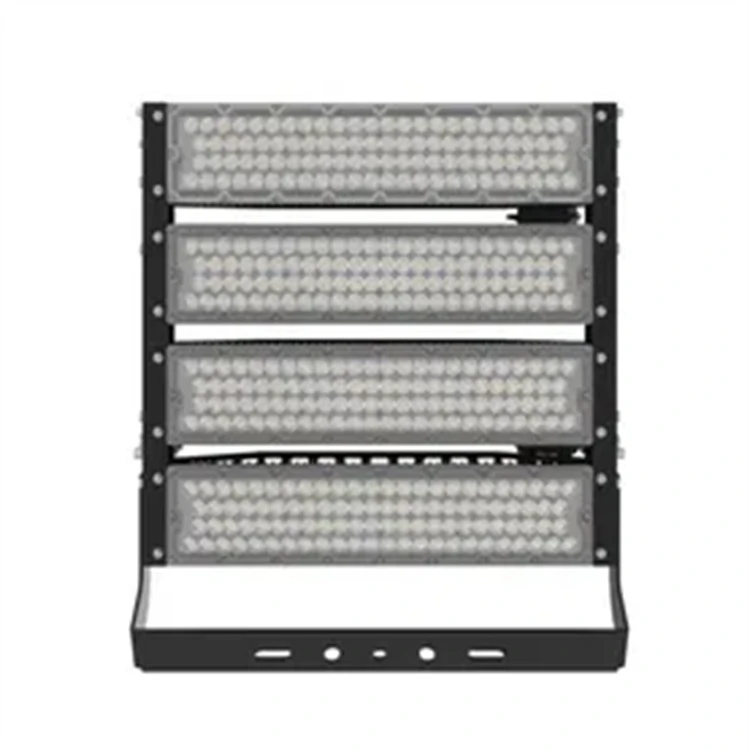
One of the most compelling features of this high-performance LED floodlight is its modular architecture. Rather than offering a single, fixed-wattage fixture, the system is designed to accommodate 2, 3, 4, or 5 individual LED modules, allowing for unprecedented flexibility in system design.
This modularity provides distinct advantages for facility managers. First, it allows for precise tailoring of illumination levels to the specific requirements of different areas within a facility. A loading dock may require a 2-module configuration for adequate visibility, while a large shipping container yard may require a 5-module configuration to meet stringent safety illumination standards. By standardizing on a single fixture platform, procurement is simplified, spare parts inventory is minimized, and the facility benefits from consistent color temperature and optical performance across all zones.
Second, the modular design dramatically simplifies maintenance. In the event of a module failure-whether due to a driver fault, LED degradation, or physical impact-the individual module can be replaced without removing the entire fixture from its mounting bracket. This granular approach to maintenance reduces downtime, lowers labor costs, and ensures that the facility remains fully illuminated with minimal disruption.
The adjustable U-bracket further enhances the versatility of the fixture. Capable of withstanding significant wind loading and vibration, the bracket allows for precise aiming of the light beam. Whether illuminating a vast storage yard, a high-ceilinged manufacturing floor, or a sports stadium, the light can be directed exactly where it is needed, maximizing useful illumination and minimizing light pollution.
The Financial and Operational Return on Investment
Upgrading to high-performance LED brilliance is ultimately a financial decision, and the return on investment (ROI) is compelling. The transition from legacy lighting to a 150lm/W LED system generates savings through multiple channels.
The most immediate savings come from reduced energy consumption. A typical 1000-watt metal halide fixture can be replaced by a 400-watt LED floodlight while achieving superior illumination levels. Assuming an electricity cost of $0.12 per kWh and 4,000 operating hours per year, a single fixture replacement saves approximately $288 annually. In a facility with 100 fixtures, the annual energy savings alone reach $28,800.
Added to this are the maintenance savings. By eliminating lamp replacements and reducing the frequency of fixture servicing, facility managers can reduce maintenance expenditure by 50 to 80 percent. For high-mast installations, the elimination of expensive crane or lift rentals for lamp replacements represents a significant ongoing saving. Over the 50,000-hour lifespan of the LED fixture, the cumulative maintenance savings can easily exceed the initial purchase price of the equipment.
Finally, there is the incalculable value of improved safety and productivity. Better lighting reduces accidents, improves worker morale, enhances security, and ensures compliance with occupational health and safety regulations. The cost of a single serious accident-both in human and financial terms-far exceeds the entire cost of a facility-wide lighting upgrade. When viewed through this lens, the upgrade is not an expense; it is a risk mitigation strategy with a guaranteed positive return.
Conclusion
Operating in the dark is a choice-a choice that carries substantial financial, operational, and human costs. The technology exists today to eliminate those costs entirely. By upgrading to a high-performance LED floodlight system featuring Philips Lumileds SMD 2835 chips, 150lm/W efficacy, IP65/IP66 protection, 304 stainless steel construction, and a versatile modular design, facility managers can transform their operations.
The darkness of inadequate illumination is replaced by the brilliance of precisely controlled, energy-efficient light. The constant drain of energy waste and maintenance is replaced by decades of reliable, low-cost performance. The risks of accidents and non-compliance are replaced by a safe, productive, and compliant working environment. The question is no longer whether to upgrade, but how quickly the transformation can be completed. Step out of the dark and into the brilliance of high-performance LED lighting-your facility, your employees, and your bottom line will thank you.
How To Cooperate With Us?
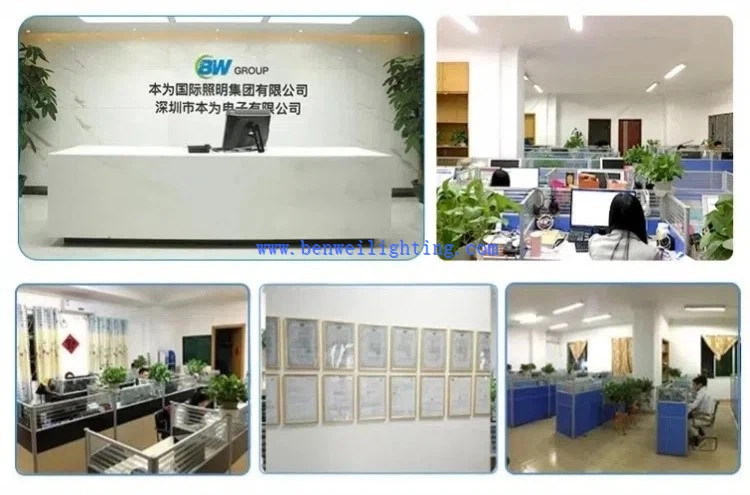
We are happy to have total control over the manufacturing process and the calibre of our products since we have our own facilities. Since we are producers rather than just brokers, we are dedicated to providing our customers with the best pricing. Since we are certain that the price and quality of our products are clear, we invite customers to see our samples first. Our commitment to quality and customer satisfaction drives us to continuously provide top-notch goods.
Our address
3rd Floor, 5th Building, Hebei Industrial Park, Hualian Community, Longhua District, Shenzhen, China