Key Considerations in Selecting High Bay Lights for High Ceiling Spaces
Selecting the optimal high bay lighting for high ceiling spaces involves careful evaluation of multiple factors to ensure efficiency, functionality, and cost-effectiveness. These spaces-including warehouses, manufacturing facilities, gymnasiums, and distribution centers-present unique challenges due to their vertical height, often ranging from 20 to 100 feet, requiring specialized lighting solutions.
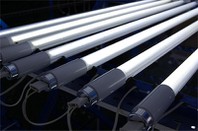
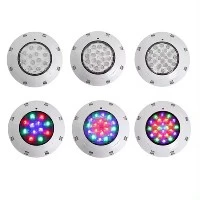
The choice between linear, UFO, and circular high bay lights depends primarily on the space's layout and purpose. Linear high bay lights excel in long, narrow areas like conveyor belts or aisle-based warehouses, providing uniform illumination along their length. Their elongated design allows for consistent light distribution across extended spaces, reducing shadow formation. UFO high bays, named for their compact, circular shape, are ideal for open, large-area applications such as gymnasiums or expansive warehouses. Their centralized light source delivers broad coverage, making them versatile for irregular layouts. Circular high bays offer a middle ground, combining the coverage of UFO models with slightly more directional output, suitable for spaces needing balanced general lighting with focused task areas.
Wattage and lumen output are determined by ceiling height and required illuminance levels. Higher ceilings (over 40 feet) demand higher wattage fixtures (150–300 watts) to overcome light loss over distance, while lower high ceilings (20–40 feet) can function effectively with 100–150 watt units. Lumen output, measuring total light emitted, must align with industry standards-warehouses typically require 20–50 foot-candles, while manufacturing areas may need 50–100 foot-candles. LED technology has revolutionized this aspect, offering higher lumen-per-watt efficiency (130–180 lumens/watt) compared to traditional HID fixtures, reducing energy consumption significantly.
Beam angle selection directly impacts light distribution efficiency. Narrow beam angles (30–60 degrees) work best for very high ceilings, concentrating light to reach the floor without excessive dispersion. Medium angles (60–90 degrees) suit mid-range heights, balancing coverage and intensity. Wide angles (90–120 degrees) are effective for lower high ceilings, ensuring broad coverage without hotspots. Incorrect beam angles lead to either underlit work areas or wasted light on ceilings/walls, increasing energy costs and reducing visibility.
These factors profoundly influence installation complexity and overall costs. Linear high bays often require more complex mounting systems, including track or suspension hardware, increasing labor time and material expenses. Their longer length may necessitate additional structural support, especially in older buildings, adding to installation complexity. UFO and circular models, being compact and lightweight, simplify mounting-typically using hook, chain, or bracket systems-reducing labor costs.
Higher wattage fixtures demand heavier-gauge wiring and potentially upgraded electrical panels to handle increased load, raising material costs and installation time. However, their higher lumen output may reduce the total number of fixtures needed, creating cost savings. Beam angle miscalculations can lead to rework, as incorrect placement requires fixture relocation or replacement, adding unexpected expenses.
Long-term costs are also affected by maintenance requirements. While LED high bays have longer lifespans (50,000–100,000 hours) than HIDs, their initial purchase price is higher. However, lower energy consumption and reduced replacement frequency offset this over time. Fixture type impacts maintenance accessibility-linear models may be harder to access in tight spaces, increasing service costs compared to easily reachable UFO designs.
In summary, optimal high bay lighting selection requires aligning fixture type with space layout, matching wattage/lumen output to height and illuminance needs, and selecting appropriate beam angles for efficient distribution. These choices directly influence installation complexity through mounting requirements and electrical demands, while impacting both upfront and long-term costs. A strategic approach ensures not only adequate illumination but also maximum efficiency and cost-effectiveness for high ceiling environments.