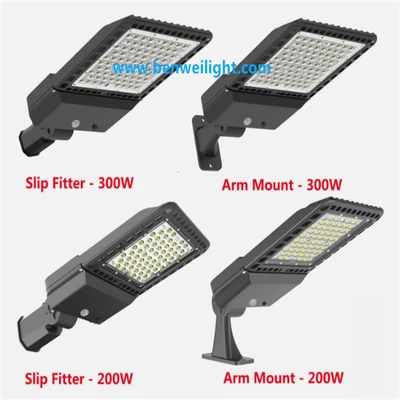
The Enduring Glow: Shoebox Solar Street Lights Through Rain and Shine
Shoebox solar street lights, named for their compact, rectangular shape, are increasingly dotting our landscapes, offering a sustainable and cost-effective lighting solution. Two critical questions arise for anyone considering or relying on them: how long can they illuminate during prolonged rainy periods, and how much sunshine do they need to recharge fully? The answers lie in understanding their core components and the delicate dance between energy capture and consumption.
Weathering the Storm: Runtime on Rainy Days
Unlike grid-powered lights, shoebox solar lights operate entirely on stored energy. Their performance during cloudy or rainy days hinges almost entirely on the capacity of their battery and the efficiency of their LED lights and control systems. There is no single answer, as runtime varies significantly based on:
Battery Capacity: Measured in Watt-hours (Wh), this is the fuel tank. Common capacities for shoebox lights range from 100Wh to 200Wh (or higher for premium models). A larger battery stores more energy.
LED Power Consumption: Measured in Watts (W), this is the rate of fuel consumption. Shoebox lights typically use efficient LEDs drawing between 15W and 30W during full brightness operation.
Lighting Schedule & Dimming: Many modern lights use smart controllers that dim LEDs significantly during late-night hours (e.g., reducing to 30-50% brightness after midnight) or use motion sensors, drastically conserving energy.
Battery Chemistry & Health: Lithium Iron Phosphate (LiFePO4) batteries, now standard in quality lights, offer superior cycle life, better depth of discharge tolerance (often 80%+ usable), and retain capacity better than older lead-acid types. A degraded battery holds less charge.
Controller Efficiency: Energy loss occurs in the circuitry managing charging and discharging. High-quality controllers minimize this "vampire drain."
Prior Charging: How fully charged was the battery before the rain started?
The Rainy Day Estimate:
Basic Calculation: Take the battery capacity (e.g., 150Wh) and divide by the LED power (e.g., 20W). This gives a theoretical maximum runtime at full brightness: 150Wh / 20W = 7.5 hours. However, this is overly simplistic.
Realistic Scenario: Factor in dimming schedules. If the light runs at 20W for 6 hours (sunset to midnight) and then dims to 8W for 6 hours (midnight to sunrise), the average consumption is lower. Using the example above:
Energy used at 20W: 20W * 6h = 120Wh
Energy used at 8W: 8W * 6h = 48Wh
Total Daily Consumption: 168Wh
The Challenge: A 150Wh battery cannot supply 168Wh! This highlights the crucial role of the Autonomy Days specification. Quality solar lights are designed to operate for 3 to 5 consecutive days without significant sunlight, assuming the battery was fully charged initially. They achieve this through:
Prior Full Charge: Starting the rainy period with a 100% full battery.
Aggressive Dimming: Significantly reducing output during low-activity hours.
Efficient Components: Minimizing losses.
Using Usable Capacity: LiFePO4 batteries can safely use most of their rated capacity.
Therefore, on a rainy/cloudy day with minimal solar input, a well-designed shoebox light with a healthy LiFePO4 battery (e.g., 100-200Wh) should typically provide illumination for the entire night (8-12 hours) for 3 to 5 consecutive days, thanks to smart dimming and starting from full charge. Exceeding this autonomy period risks the light dimming dramatically or shutting off before dawn.
Harnessing the Sun: Charging Requirements
Replenishing the battery after use (and rainy periods) requires sufficient sunlight. The key metric here is Peak Sun Hours (PSH). One PSH is equivalent to one hour of sunlight delivering 1,000 Watts per square meter (the standard irradiance used for solar panel ratings).
Factors Influencing Charging:
Solar Panel Wattage: Common shoebox panels range from 30W to 60W. Higher wattage captures more energy faster.
Solar Panel Efficiency: Monocrystalline panels are standard and offer the highest efficiency (~18-22%), converting more sunlight into electricity.
Sunlight Intensity and Angle: Direct, perpendicular sunlight is optimal. Morning/evening sun, haze, or pollution reduce effective irradiance.
Charge Controller Type: Maximum Power Point Tracking (MPPT) controllers are far more efficient (especially in less-than-ideal conditions or with voltage mismatches) than older Pulse Width Modulation (PWM) controllers, extracting 10-30% more energy from the panel.
Battery State of Discharge: Charging a deeply depleted battery takes longer than topping up a partially charged one.
Temperature: Extreme heat can slightly reduce panel efficiency and battery charging acceptance.
Estimating Full Charge Time:
Goal: To replace the energy used the previous night plus any deficit from prior days. For full recharge, we target restoring the battery's full usable capacity (e.g., 150Wh).
Basic Calculation: Battery Capacity (Wh) / Solar Panel Wattage = Minimum Theoretical PSH needed if conditions were perfect (150Wh / 40W panel = 3.75 PSH). However, real-world conditions are rarely perfect.
Realistic Requirements: Factor in inefficiencies (controller, wiring, heat, less-than-ideal sun angle/irradiance). A common rule of thumb is that a solar panel generates its rated wattage for only 4-5 equivalent hours per day, even in sunny locations.
The Answer: To reliably achieve a full charge from a typical nightly discharge level (including dimming), a shoebox solar street light generally requires 4 to 8 Peak Sun Hours.
Ideal Conditions (Clear Sky, Summer, Low Latitude): May achieve full charge with around 4-5 PSH.
Average Conditions (Some Clouds, Seasonal Variation): Typically requires 5-7 PSH.
Suboptimal Conditions (High Latitude, Winter, Frequent Clouds): May require 7-8+ PSH or struggle to fully recharge daily, gradually depleting reserves over time.
Location and season dramatically impact available PSH. Desert regions average 6-8 PSH year-round, while temperate zones might see 3-4 PSH in winter and 5-6 in summer. Tropical regions have high averages but significant rainy seasons.
Conclusion
Shoebox solar street lights embody resilience and efficiency. While they draw their power freely from the sun, their performance is a careful balance. They are engineered not for endless rainy weeks, but for reliability through typical weather patterns, offering 3-5 nights of illumination even when the sun hides, provided they start fully charged. Their thirst for sunshine is modest but essential – 4 to 8 hours of strong, direct sunlight fuels their nightly glow. Understanding these parameters – battery capacity, intelligent dimming, autonomy days, and peak sun hours – is key to deploying these sustainable sentinels effectively, ensuring they continue to light our paths reliably, rain or shine.