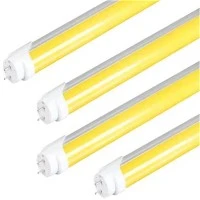
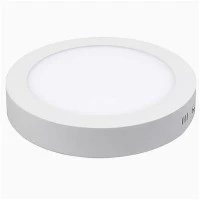
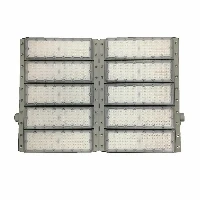
Over the past few years, LED technology has advanced significantly. While energy economy, longevity, and reduced heat generation are all obvious advantages of LEDs, many people are baffled when asked about the colour temperature of LEDs. So much so that our fear of the unknown can prevent us from making the transition. Here, we dispel several myths about LED colour temperatures and provide you with the knowledge you need to choose the right option for your requirements.
Background of Kelvin
In the late 1800s, British scientist William Kelvin noticed a colour shift in a block of carbon that led him to begin measuring the hue of light. Starting with a soft red, moving through various yellow tones, and then reaching a vivid blue at the highest temperature. The scale that measures the colour of the light in proportion to the centigrade degrees that generates the colour was named after Kelvin as a result of this finding.
Correlate Colour Temperature (CCT) The Kelvin scale is used to quantify the colour of light generated by a light source. The CCT of a light determines whether it seems more warmly yellow or coolly blue. A cold white bulb often has a CCT of 4,100K or greater, whereas a warm coloured bulb frequently has a CCT of 3,000K. Contrary to popular belief, the colour released is cooler as the light intensity increases.
A useful benchmark is the incandescent light bulb, which is typically 2800K, whereas direct sunshine is typically 4800K.
Selecting the Proper LED Lighting for FLOS
The best LED light to utilise will rely on your personal preferences and the intended usage of the illuminated area. A warmer natural white light with a temperature of 4000-4500K is appropriate for interiors with wooden elements, while a cooler white light with a temperature of 5500-6000K is best for practical environments like schools and warehouses. Understanding colour temperature and how it affects the atmosphere of the room is crucial.
Lower colour temperatures are frequently needed in restaurants to improve ambience. The colours in the décor must be taken into account in addition to function and mood when choosing the right light quality. Warm white light enhances the brilliance of warm colours, whereas cold white light highlights the vibrancy of blues and greens. The best lighting for a space with a variety of colours is neutral white light (4000–4500K). Understanding the significance of the colour temperature values is an essential first step in choosing the right light quality, which must ultimately be based on function and choice.