LED Bulbs Offer Energy Savings and Durability in Poultry Lighting

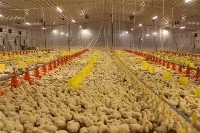
Production of poultry is highly impacted by lighting. Inadequate illumination during brooding or excessive lighting during grow-out might lead to decreased performance and lost revenue. Although they need artificial lighting sources, solid side wall, tunnel-ventilated chicken barns are more energy efficient to run. Depending on the size of the barn and the flock's age at market, the cost of lighting a poultry barn with 60-watt incandescent bulbs may be as high as 30 to 40% of the electricity running cost (US$100 to $250 per flock or barn). Therefore, lighting upgrades should not only benefit the birds but also be cost-effective in terms of energy use.
Incandescent lighting is often replaced by compact fluorescent lamps (CFLs). Despite the fact that this source may reduce lighting costs by as much as 60% when compared to incandescent bulbs, CFL bulbs in poultry barns have a high failure rate owing to the bulbs' susceptibility to power fluctuations. The collection of dirt on the spirals, which lowers bulb lumen output and causes the bulbs to gradually lose light output with time, is a second issue with CFL bulbs (lamp lumen depreciation, LLD). The bulbs must be disposed of using certain protocols since they also contain mercury, which is seen as a concern to the environment. Another energy-efficient light source is cold cathode compact fluorescent bulbs (CCFL), however these are equally vulnerable to power fluctuations, contain mercury, and gradually lose their brightness.
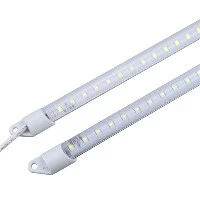
In the last three years, light-emitting diodes (LEDs) have been available for use in the production of poultry. Electrons in LED technology produce light, and these lights are presently successfully employed in broiler, turkey, layer, and breeder production facilities. Bird performance with LED lights is proven to be on par with, if not greater than, performance under conventional light sources when brood lighting is appropriate. The well-designed technologies have had no failures and are still producing 70 to 80 percent of their original light output two years after being installed in broiler barns. LEDs are 80 to 85 percent more efficient than incandescent lights. Poultry farmers interested in LEDs should conduct their research before buying since this technology is developing quickly and new bulbs are coming to market at a fast pace. When choosing any bulb, it's important to grasp the following principles:
Has the bulb undergone testing or been put to the test in a henhouse?
If so, have the findings been made public?
What did the birds do when the lights were on? When using LED lamps, producers have seen that the birds act more subduedly, even when the light intensity is increased from low to full. One explanation might be because LED lighting does not flicker as much as CFL lights do, which can cause the birds to notice it. Poultry have excellent vision and are significantly more sensitive to flashing light than humans.
Exists any information on lamp lumen depreciation (LLD), long-term lumen output, or bulb efficiency? Does independent testing provide the lamps an Energy Star rating? When submitting an application for rebate programs for LEDs, it's important to find out if the Energy Star rating is necessary or whether only certain kinds of lights are accepted.
Have bulbs been cleaned using the standard wash-down techniques for poultry barns? IP65-rated light bulbs are really washdown-rated.
Is the electrical setup suitable for LED lighting?
LED, CFL, and cold cathode lamps are non-linear loads in contrast to conventional incandescent bulbs. Non-linear loads are those in which the relationship between the current and voltage is not linear. In chicken buildings, it is not unusual for lighting circuits to share a neutral conductor. The usage of common neutrals with incandescent lamp circuits makes sense since neutral currents from linear incandescent bulbs cancel one another out. It may lower the price of wiring.
The non-linear LED and CFL loads' neutral currents don't cancel each other out. In actuality, the neutral currents could even combine. When installing non-linear LED and CFL loads on circuits with common neutrals, make sure your neutral current is large enough. Common neutral conductors are not advised for new poultry house construction if non-linear loads will be used. If there are any questions, speak with a certified electrician.