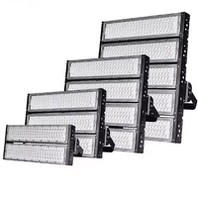
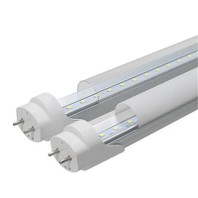
LED drive power is the heart of lamps
LED drive power is the key to LED lamps. It is like a person's heart. To manufacture high-quality LED lamps for lighting, you must abandon constant voltage drive LEDs. Due to the particularity of LED processing and manufacturing, the current and voltage characteristics of LEDs produced by different manufacturers and even the same manufacturer in the same batch of products have large individual differences.
LED is the abbreviation of "LIGHT EMITTING DIODE" in English, and light-emitting diode in Chinese. Because of its environmental protection, long life, high photoelectric efficiency (current laboratory light efficiency has reached 160LM/W), shock resistance and many other advantages, it has been used in various industries in recent years. The application has developed rapidly. Theoretically, the service life of LED is about 100,000 hours. However, in the actual application process, some LED lighting designers have insufficient understanding of LED driving power or improper selection or blind pursuit of low cost. As a result, LED lighting products The lifespan is greatly shortened. The lifespan of poor LED lamps is less than 2000 hours, and some are even lower. As a result, the advantages of LED lamps cannot be fully utilized.
Now take the typical specifications of high-power 1W white light LED as an example, and make a brief description according to the law of LED current and voltage change. Generally, the forward voltage of 1W white light application is about 3.0-3.6V, that is to say, when the standard is called 1W LED When a current of 350 mA flows, the voltage across it may be 3.1V, or 3.2V or 3.5V, or other values. In order to ensure the life of 1WLED, the general LED manufacturer recommends that the lamp factory use a current of 350mA. Drive (Due to packaging process and heat dissipation and other reasons, some manufacturers will recommend users to reduce it to 320 mA or 300 mA from the perspective of guaranteeing life). When the forward current through the two ends of the LED reaches 350 mA, the two LEDs A small increase in the forward voltage of the terminal will greatly increase the forward current of the LED, causing the temperature of the LED to rise in a straight line, thereby accelerating the light decay of the LED, shortening the life of the LED, and even burning the LED in severe cases. Due to the particularity of the voltage and current changes of the LED, strict requirements are placed on the power supply for driving the LED.
Status Quo: Many high-power LED packaging factories now encapsulate many individual LEDs in parallel and in series to produce a single LED of 20W, 30W, 50W, or 100W or even higher power, although these individual LEDs are packaged before packaging. The LEDs are strictly selected and matched, but because the internal number is small, there are dozens of single LEDs, as many as hundreds of single LEDs, so the packaged high-power LED products still have great differences in voltage and current. And compared to a single LED (generally a single white light, green light, blue light operating voltage is 2.7-4V, a single red light, yellow light, orange light operating voltage of 1.7-2.5V) parameter difference is greater!
Some manufacturers, in order to reduce the cost of products, use constant voltage to drive LEDs (the low-end high-power LED lamps produced by some factories use a constant voltage power supply in series with one or several high-power resistors to work; the worst drive power is Using resistors and capacitors to step down the voltage drive method), it also brings a series of problems such as large differences in the brightness of each LED during mass production, the LED can not work in the best state, short life, and severe heat generation.
Judgment skills: If the LED lamp you buy is brighter when the voltage is normal (for example, when the mains is AC220V), but when the voltage is relatively low (for example, when the mains drops to AC190V), you feel that the brightness drops a lot, then you can be sure that you are buying The quality of LED lamps is not good, and the quality of the LED drive power used for this lamp is relatively poor.
Constant current source drive is the best way to drive LEDs. It uses constant current source drive instead of connecting a current-limiting resistor in the output circuit. The current flowing through the LED is not affected by external power supply voltage changes, environmental temperature changes, and discrete LED parameters. In this way, the current can be kept constant and the various excellent characteristics of LED can be fully utilized. For 0.5W or 1W or 3W or more power LEDs, the best driving method is: connect all these high-power LEDs in series instead of parallel; for low-power LEDs, you can use series and parallel methods to drive, but the number of parallel circuits It can't be too much, otherwise the consistency of the product will be greatly compromised.
The LED constant current power supply is used to supply power to the LED lamps. Since the current flowing through the LED is automatically detected and controlled during the working period of the power supply, there is no need to worry about excessive current flowing through the LED at the moment of power-on, and there is no need to worry about the load short-circuiting. Bad power supply. There is another point worthy of attention from LED lighting companies: LED will emit a lot of heat during the working process, which will cause the tube core junction temperature to rise rapidly. The higher the LED power, the greater the heating effect. The increase in the temperature of the LED chip will lead to the performance of the light-emitting device. According to the experimental test, the luminous flux decreases by 3% every time the temperature of the LED itself rises by 5 degrees Celsius. Therefore, the LED lamp must pay attention to the heat dissipation of the LED light source itself, when possible. Try to increase the heat dissipation area of the LED light source itself, and reduce the operating temperature of the LED itself as much as possible. If conditions permit, it is best to separate the power supply part from the light source part. It is not advisable to blindly pursue a small size and ignore the working temperature of the lamp and the power supply. On the surface, the appearance is small and exquisite, but the life span is shorter and the light decay is increased. It is a typical "small loss due to small loss".
Using constant current drive mode, it can avoid current changes caused by the change of the LED forward voltage, and at the same time, the constant current makes the brightness of the LED stable, and it is also convenient for LED lighting manufacturers to ensure product consistency when implementing mass production. Therefore, many manufacturers have Fully aware of the importance of driving power, many LED lamp manufacturers have given up the constant voltage method, and chose a slightly higher cost constant current method to drive LED lamps. Some manufacturers worry that the use of electrolytic capacitors for the power drive board will affect the life of the power supply. It is actually a misunderstanding. For example, if you choose a high-temperature electrolytic capacitor of 105 degrees and a life of 8000 hours, according to the prevailing method of estimating the life of electrolytic capacitors, "every 10 degrees decrease , Life is doubled", then it has a working life of 16,000 hours in a 95 degree environment, 32,000 hours in an 85 degree environment, and 64,000 hours in a 75 degree environment. If the actual working temperature is lower, Then the life span will be longer! From this point of view, as long as the selection of high-quality electrolytic capacitors has no effect on the life of the driving power supply!