Definitions
LED – Short for "Light-Emitting Diode," a type of solid-state lighting that uses semiconductor diodes that emit light when a voltage is applied. This type of light dates back to the early 1960s and has been widely used in electronic and computer equipment since its inception. As technology has improved over the years, the lumen output of LEDs has increased exponentially, and today they outperform almost any other type of commercially available light source.
Lumens - This is a measure of the amount of visible light emitted by a light source. In the past, lamp output was often quantified in wattage rather than lumens. This is due to the linear relationship between wattage and lumen output of traditional incandescent lamps. Because the lumen output of LED lighting varies greatly compared to traditional light sources, comparing lights based on lumen output is now standard.
Wattage – This is a standard measurement of power consumption in the lighting industry and is often used as a ratio to a lamp's lumen output to determine its energy efficiency. Watts are defined as the rate at which success is accomplished when one ampere of current flows through a one volt potential difference. This can be expressed as [1W = 1V * A].
Voltage - This is defined as the potential for energy to move. Voltage is considered to be similar to water pressure because the characteristics of voltage are similar to the characteristics of water flowing through the pump pressurized pipes.
DLC Listed – Acronym for "Design Light Consortium", when a product is listed under this standard, it means that it has been certified to operate at a high level of energy efficiency.
Color Temperature – Used as a way of defining the hue of light, color temperature is measured in Kelvin and ranges from 1,000K to 10,000K. The most common color temperature range in commercial lighting today is 3000K to 6000K, with 5000K being the closest to daylight.
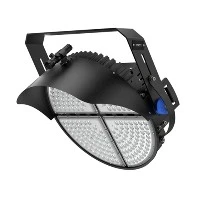
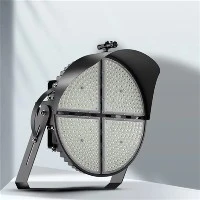
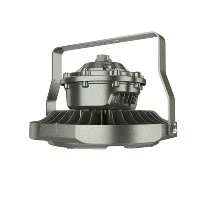
High bays - These are a specific category of lighting fixtures designed to be mounted high to provide vertical clearance for daily operations and to provide a wide range of lighting capabilities. High bay lights have high lumen output and are suitable for industrial and commercial environments.
Color Rendering Index - Also commonly referred to by the acronym "CRI", this is a measurement scale used to determine the accuracy of light and its performance in terms of proper color rendering. This value ranges from zero all the way up to 100, which is the CRI for daylight, considered the perfect light source. The higher the CRI of a light, the more accurately it can illuminate its surroundings.
Selecting Wattage for LED High Bay Lights
High bay lights are available in a range of wattages to accommodate a variety of applications and lighting needs. A light's output was formerly often expressed in watts since performance for certain wattage ranges was very constant across manufacturers. This made it simple for customers to choose new lighting fixtures and to arrange the number and location of lamps in new building.
The performance of different manufacturers varies greatly on the market today, with some offering illumination that is far more efficient than others. Because LED lighting consumes far less energy than conventional lighting, it may be challenging for those who are experienced with metal halide and HID technology to choose the right wattage LED high bay for their application. To aid in the decision-making process, the table below shows typical HID wattage ranges for high bays and how they relate to contemporary LED technology.
Low Wattage (30-90 Watts) - These lights typically lie within the 30 to 90 watt range at the low end of the wattage spectrum. Users who want to light up smaller spaces in the most energy-efficient way possible tend to choose these. Many high bay lights in this wattage range also have the advantage of being plug-and-play with existing outlets, eliminating the need for manual rewiring.
Medium Wattage (100-230 Watts) –The most common high bay lights for commercial and industrial applications , which is in the center of the spectrum. For the majority of applications, lights in this wattage range provide the greatest lumen output and power consumption balance, and they are often used in manufacturing plants, warehouses, and other commercial buildings.
High Powered High Bays (280-360 Watts): At the top of the wattage scale, these lights provide the highest level of lighting while retaining the advantages of LED technology's energy efficiency. Most often used in sports stadiums, arenas, and other buildings with high ceilings that need a lot of light.
Suitable Lumen Rating
To guarantee adequate lighting performance and the most return on your investment, it is essential to choose the appropriate lumen rating for your application. On fact, lumen output has replaced watts as the primary indicator of a light's performance in the market today. Converting to lumens as the main measurement of a light's output might be challenging since the majority of people still conceive of lighting performance in terms of watts. It is crucial to comprehend how lumen ratings translate into actual performance since this will be how the lighting industry gauges performance for the foreseeable future.
Although this varies depending on the manufacturer, with LED lighting the amount of lumens generated is often proportionate to the wattage of the light fixture. To make the purchasing process simpler, we have provided a few typical lumen ranges:
Bottom Lumens (4,000—20,000) – These lights are used largely in situations that call for a high-quality light with great energy efficiency. They are at the low end of the lumen spectrum. These lights are often used for non-critical regions that don't need high lighting or tiny to medium sized spaces in industrial and commercial operations.
Medium Lumens (21,000 — 35, 000) Lights in this category are often utilized for large-scale activities like warehouses and substantial commercial buildings since they are by far the most common brightness range. Due to their blend of excellent illuminating powers and energy efficiency, they are in great demand. Additionally, these lights are often reasonably priced, making them available to a variety of consumers.
High Powered High Bays (40,000—50,000) – These are the most potent lights available and are utilized when maximal lighting is the main goal. These lights still retain the energy-saving advantages of LED technology, but in order to produce their lumen output, they need the most watts of any high bay light. These lights are often utilized in sports arenas, public places, and other settings that call for precise and powerful illumination.
Temperatures of color
It's critical to choose the appropriate color temperature for your application in addition to the appropriate wattage and lumen output. Depending on the lighting's ultimate goal and purpose, this will change. While certain color temperatures are better for promoting relaxation and a good mood, others are better for assuring worker efficiency and attention. To aid in the purchasing process, we have produced a list of the most popular color temperatures now offered in high bay lighting below.
The majority of LED high bays are 5000K - 5000 Kelvin. This color temperature simulates daytime situations by emitting a cold white light. This is perfect for general lighting in factories, warehouses, and other commercial environments that need precise lighting. The most natural of all color temperatures, this one works well with illumination that has a higher CRI.
The natural colored light that 4000K - 4000 Kelvin LED lights provide is typical of workstations. Even though they are often less prevalent than high bay fixtures with a color temperature of 5000K, many electrical contractors and building managers still choose this shade of blue. This is because it has a cozier feel and closely resembles the color temperature of conventional lighting sources like HID and fluorescent lamps. Consequently, 4000K high bays are widely available in the LED lighting industry.
Warm LED light in the 3000K-3000 Kelvin range is generally utilized in homes or restaurants. Since high bay lights are intended for big structures like warehouses and commercial gyms rather than residential or hospitality lighting applications, 3000K LED bulbs are seldom seen in high bay fixtures.


Benwei warehouse led lights:
|
Model |
BW-002-S100W |
BW-002-S150W |
BW-002-S200W |
|
Power(W) |
100W |
150W |
200W |
|
Light Source |
SMD |
||
|
Input Voltage |
AC220-240V/ AC100-305V / 480v 50/60Hz |
||
|
Material |
Aluminum+PC |
||
|
Beam Angle |
60°/90°/120° |
||
|
IP Rating |
IP65 |
||
|
CCT |
3000K / 4000K / 6000K |
||
|
CRI |
Ra>80 |
||