Q1: What long-standing lighting requirements do sports venues have?
A: Sports venues have long required powerful, high-performance lighting. Such lighting is not just for ensuring visibility, but also for enhancing game quality, guaranteeing athlete and spectator safety, and delivering the optimal viewing experience for both broadcast audiences and on-site spectators.
Q2: How has lighting technology evolved for sports venues over time?
A: Lighting technology has undergone dramatic changes. It has transitioned from conventional metal halide lamps to cutting-edge LED lighting solutions.
Q3: What trend have you observed in the lighting of modern stadiums and sports fields?
A: LED stadium lighting is quickly replacing metal halide bulbs in many contemporary stadiums and sports fields.
Q4: Is the popularity of LED stadium lighting just a passing fad? Why or why not?
A: No, it is not a fad. The reason behind this trend is that LEDs offer practical advantages in three key aspects: performance, cost-effectiveness, and environmental impact.
Q5: What is the purpose of this article?
A: The purpose of this article is to clarify the differences between LED sports lights and traditional metal halide lights. This will help readers decide which lighting option is best suited for their sports facility or lighting upgrade project.
Q6: What is the significance of understanding the differences between these two lighting technologies?
A: Understanding the distinctions between the two lighting technologies can help those considering upgrading their sports facility lighting make the most informed decision.
Describe LED Stadium Lighting
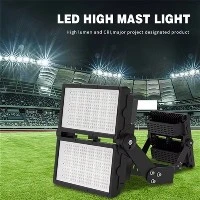
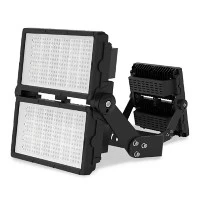
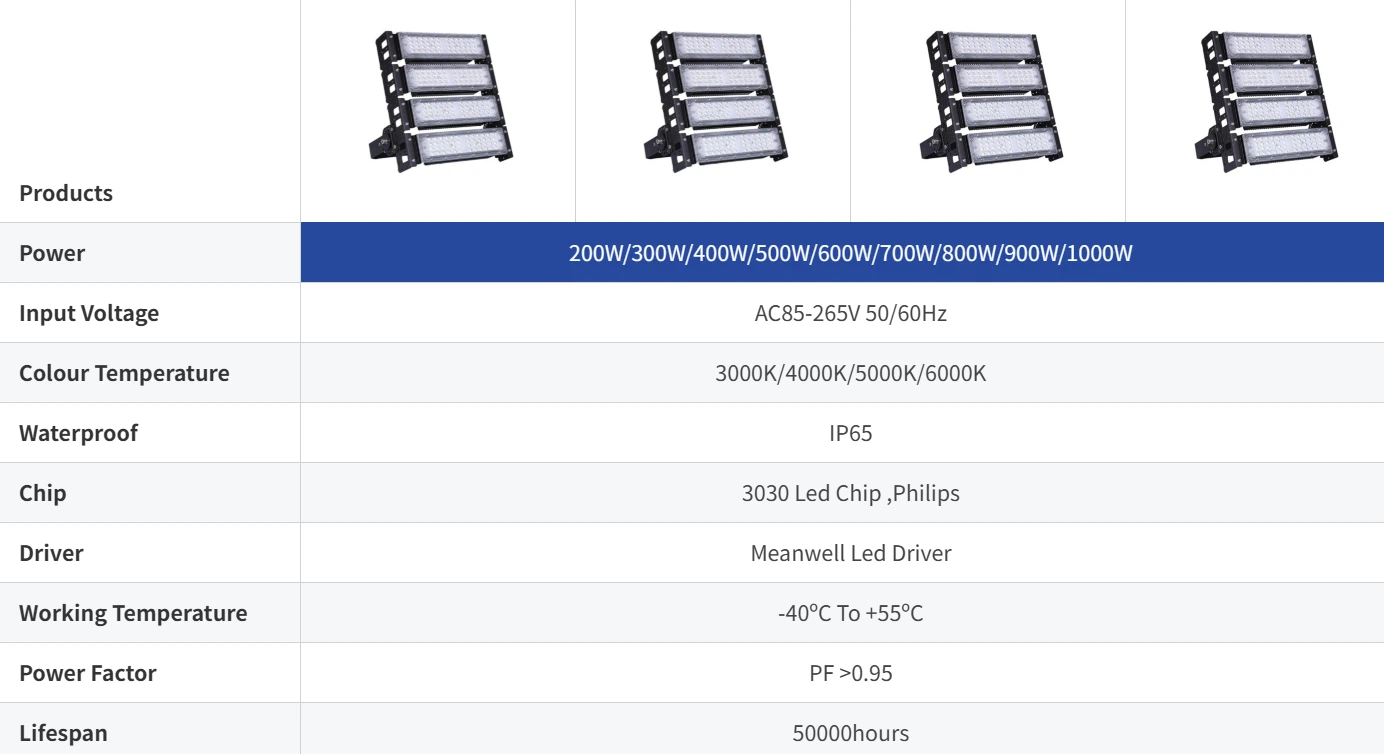
Light-emitting diodes (LEDs) are the fundamental component of LED stadium lighting, which produces intense, bright illumination with remarkable energy efficiency. LEDs use the flow of electrons in a semiconductor material to produce light, as opposed to more traditional lighting systems that use gas or filaments. This increases their durability and gives them great control over brightness, colour temperature, and direction.
Important characteristics of LED sports lights
Instant-On Capability: LEDs are perfect for events with short turnaround times since they illuminate instantly, unlike metal halide lights that take minutes to attain maximum brightness.
Energy Efficiency: LED lights use up to 60–70% less energy than metal halide lamps, which drastically lowers power expenses.
Long Lifespan: LED stadium lights have an average lifespan of 50,000–100,000 hours, which reduces maintenance and replacement expenses.
Durability & Weather Resistance: Because LEDs are made of sturdy materials, they can withstand wetness, high temperatures, and vibrations.
Customisable Lighting: Cutting-edge LED systems enable accurate beam adjustment, minimising glare and light spillage while guaranteeing consistent illumination throughout the field.
Practically speaking, LED sports lights are found in a variety of locations, including school football fields, tennis courts, professional stadiums, indoor arenas, and even skate parks. Their instant-on capability is a significant advantage that you will value as a user. Your pitch is fully illuminated with a simple flick of the switch, eliminating the need to wait for the lights to warm up.
Metal Halide Sports Lighting: What Is It?
Metal halide (MH) lighting were the preferred option for stadiums prior to the widespread use of LEDs. An electric arc is passed through a mixture of gases, such as metal halides and mercury, to create light in these high-intensity discharge (HID) lamps.
Important Features of Metal Halide Lighting
High Brightness: Large sporting stadiums can benefit from the powerful illumination provided by metal halide lamps.
Warm-Up Time: In contrast to LED lights, MH lights require five to ten minutes to attain their maximum brightness. If they are switched off, they may require even more time to restart.
Shorter Lifespan: Usually lasting between 10,000 and 20,000 hours, they need to be replaced frequently, which raises long-term expenses.
Energy Consumption: They use more energy and produce more heat than LEDs, making them less efficient.
Sensitivity to Power Outages: Metal halide lights may turn off and take some time to relight if there is a brief power outage.
In the past, metal halide lights were commended for their high brightness and somewhat accurate colour rendering, which improved visibility for both athletes and spectators, even during nighttime games. Some older facilities still have these, especially those without complete lighting upgrades.
Even while metal halide systems were crucial to the creation of sports lighting, they are rapidly being supplanted by LED systems, particularly as more venues place a higher priority on energy-efficient stadium lighting and contemporary controls.

Principal Distinctions Between Metal Halide and LED Sports Lights
There are more distinctions between LED sports lights and conventional metal halide (MH) lighting than just brightness. To assist you in selecting the best option for your stadium or sports complex, we have broken down the important aspects below.
Illumination and Lumen Production
LED sports lights provide a high brightness output and provide steady, flicker-free illumination. They provide superior colour rendering (CRI >80), which is essential for player visibility and high-definition broadcasts.
Metal Halide Lights: Despite their brightness, metal halide lights gradually lose their brightness due to lumen depreciation. As the bulbs get older, colour accuracy also decreases.
Energy-Saving LED Sports Lights: For the same or better brightness, LEDs typically consume up to 70% less energy than metal halide fixtures. If you're trying to cut expenses or reach energy-saving targets, that's a huge victory.
Halide lights made of metal: The energy hunger of metal halide systems is well known, and a large portion of that energy is lost as heat instead of light.
Lifespan and Sturdiness
Depending on the quality and usage, LED sports lights can last between 50,000 and 100,000 hours.
Metal Halide Lights: They usually last between 10,000 and 20,000 hours, need to have their bulbs and ballasts changed frequently, and lose light output long before they completely burn out.
Quick On/Off vs Warm-Up Duration
The frustration of waiting for metal halide lights to warm up-which can take anywhere from 10 to 20 minutes to achieve full brightness-is surely familiar to you. The converse is true with LEDs: complete brightness is attained instantaneously, allowing you to better plan events and eliminate any delays before to games or unplanned blackouts during events.
Omnidirectional vs. Directional Lighting
The ability of LEDs to precisely focus light where it is needed is another sometimes disregarded benefit. Omnidirectional light from metal halide lights frequently necessitates reflectors and results in glare and light spill.
In contrast, highly directional illumination produced by LEDs increases coverage, saves energy, and prevents needless glare from blinding neighbours and spectators.
Effects on the Environment
LEDs are the obvious choice if sustainability is important to you. Unlike metal halide bulbs, which contain mercury that needs to be disposed of carefully, they don't contain any dangerous materials.
Additionally, LEDs inherently produce a smaller carbon footprint because of their decreased energy usage, assisting sports venues in transitioning to greener operations.
Intelligent Control Systems
LED Sports Lights: LED systems work flawlessly with smart lighting features like motion sensors, wireless dimming, scheduling, and even Bluetooth or app-based remote controls.
Metal Halide Lights: These lights are far less versatile. The majority feel antiquated in today's digital stadia since they can only do simple on/off switching and lack integration with smart technologies.
LED sports lights that are easy to maintain and save money over time
Although the initial cost of LED sports lighting is higher, the long-term benefits more than offset this. You'll rapidly recoup your investment with less energy consumption, less upkeep, and fewer replacements.
Metal Halide Lights: Although metal halide systems may initially appear more cost-effective, they have higher energy bills, longer downtime, and frequent bulb and ballast replacements-all of which add up quickly over time.
Compared to conventional metal halide lights, LED stadium lighting provides a more intelligent, hygienic, and economical option if you're looking for efficiency, performance, and future-ready illumination.
When to Switch to LED Sports Lighting
At some point, your current lighting system just isn't good enough for running a sports facility, whether it's a big stadium or a neighbourhood community field. How do you determine when it's time to convert to LED sports lighting if you're still utilising outdated metal halide lights? These are the warning indicators:
Inconsistent or flickering lighting: Inadequate sight detracts from the gaming and viewing experience.
Exorbitant energy costs: LEDs reduce expenses by up to 70% while metal halide lamps squander electricity.
Regular bulb replacements: LEDs' long lifespan will save you money and time if you need to replace bulbs frequently.
Inadequate broadcast lighting: New LED lights improve TV coverage by improving colour accuracy.
It's not necessary to throw everything out in order to upgrade. You can look into a retrofit option if your current setup is still intact, keeping the mounts or poles in place while swapping out the old lighting for LED sports lights. A completely new installation might produce superior results for older facilities or significant modifications, particularly when combining smart control systems.
Due to energy savings and lower maintenance, most venues recoup their investment in LED lighting in two to five years. Thereafter, it's all savings.
We strongly advise looking into Revolve LED if you're prepared to move forward. Their selection of high-performance LED stadium lights provides long-lasting, cost-effective solutions for all facility sizes and budgets.
Making the switch to LED sports lighting is a wise investment, not just a fad. LEDs are superior to metal halide in every aspect, including improved visibility, reduced energy costs, and low maintenance requirements. Making the conversion to LED guarantees long-term savings and better illumination quality, regardless of whether you oversee a local sports pitch or a professional stadium.