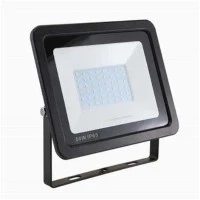
LED Stadium Light: Specifications, Standards, and Selection Guide

Abstract
This technical document provides a comprehensive analysis of LED stadium light systems for professional and collegiate sports facilities. It details critical performance specifications, relevant illumination standards, and a systematic framework for product selection and project planning. The content is structured to support facility managers, engineers, and procurement officials in making informed decisions based on objective data and industry best practices.
Technical Specifications and Performance Metrics for LED Stadium Lights
Selecting an appropriate LED stadium light requires evaluation of several key photometric and electrical parameters. The primary specifications determine the system's capability to meet illumination standards.
Luminous Flux and Efficacy: Luminous flux, measured in lumens (lm), defines the total visible light output of a fixture. LED stadium light efficacy, expressed in lumens per watt (lm/W), indicates energy efficiency. Commercial-grade fixtures for large venues typically deliver 130-160 lm/W. A 1500 W fixture with 130 lm/W efficacy produces approximately 195,000 lumens.
Optical Distribution (Beam Angle): Beam angle, often classified by NEMA (National Electrical Manufacturers Association) types, dictates light spread. Narrow beams (NEMA 2-3) project light over long distances, suitable for lighting center fields from perimeter poles. Wide beams (NEMA 4-5) provide broad, close-range coverage. Asymmetric distributions are standard for perimeter-mounted systems to maximize field coverage and minimize spill light.
Ingress Protection (IP) and Corrosion Resistance: Stadium fixtures are rated using the IP (Ingress Protection) code. An IP65 rating or higher is mandatory for outdoor exposure, ensuring protection against dust ingress and water jets from any direction. Fixtures in coastal regions require specific corrosion-resistant materials and coatings, such as ASTM B117 salt spray test compliance for 1000+ hours.

Table 1: Key Performance Specifications for High-Power LED Stadium Lights
|
Specification |
Typical Range |
Importance/Standard |
|---|---|---|
|
Power (Watts) |
500W – 2000W |
Determines total system luminous output. |
|
Luminous Efficacy |
130–160 lm/W |
Higher efficacy reduces energy consumption and operational cost. |
|
Correlated Color Temperature (CCT) |
4000K – 5700K |
5000K-5700K is standard for professional TV broadcasts (IES RP-6). |
|
Color Rendering Index (CRI) |
Ra ≥ 80, R9 > 0 |
CRI>80 and a positive R9 value ensure accurate color reproduction for players and cameras. |
|
Beam Angle (NEMA) |
Type II to Type V |
It determines the pattern of light throw and field coverage. Selected via photometric study. |
|
Ingress Protection |
IP65, IP66 |
For outdoor sports lighting, a minimum of IP65 is required. |
|
Operating Ambient Temperature |
-40°C to +50°C |
Ensures reliable operation in all climatic conditions. |
|
Lifetime (L70/B50) |
50,000–100,000 hours |
Time until lumen output depreciates to 70% of initial for 50% of fixtures. |
|
Total Harmonic Distortion (THD) |
< 20% |
Ensures power quality and compliance with electrical grid standards. |
|
Surge Protection |
≥ 10 kV |
Protects against lightning-induced voltage surges. |
Compliance with Illumination Standards for Sports
A professional LED stadium lighting design must comply with published standards that define illuminance levels, uniformity, and glare control. The Illuminating Engineering Society (IES) RP-6 series is the foundational document in North America.
IES Classification and Illuminance Levels: Facilities are classified (Class I-IV) based on the level of play and spectator capacity. For horizontal (Eh) and vertical (Ev) planes, each class has target-maintained illuminance values. These values are measured in footcandles (fc) or lux. For example, IES Class I for professional football requires an average horizontal illuminance of 100 fc for the playing field, while Class IV for training requires only 20 fc.
Uniformity and Glare Metrics: Uniformity ratios (U1 = E_min / E_avg; U2 = E_min / E_max) ensure even light distribution, critical for player safety and consistent broadcast quality. IES Class I typically requires U2 > 0.7. Glare is evaluated using metrics like Unified Glare Rating (UGR) or Glare Rating (GR), with lower values indicating better visual comfort. A GR value below 50 is commonly specified for player-facing installations.

Design Methodology and Case Study: A Class II Baseball Field
A photometric analysis is a non-negotiable step for any professional installation. This simulation predicts performance before installation.
Project Scope: This case involves a collegiate (Class II) baseball field with dimensions of 330 ft (foul lines) x 400 ft (center field). The design goal was to meet IES RP-6 standards for competitive collegiate play and regional TV broadcast.
Design Solution and Results:
Fixture: 1,200W asymmetric LED floodlights (150 lm/W efficacy).
Layout: Eight (8) poles at 90 ft mounting height.
Photometric Output: The simulation confirmed compliance.
Table 2: Photometric Results Summary for Collegiate Baseball Field
| Metric | IES Class II Target | Achieved Value |
| Average Horizontal Illuminance (Infield) | 50 fc | 52.3 fc |
| Average Horizontal Illuminance (Outfield) | 30 fc | 32.1 fc |
| Uniformity (U2) - Horizontal | > 0.60 | 0.71 |
| Average Vertical Illuminance (Main Camera) | 50 fc | 54.8 fc |
| Glare Rating (GR) | < 50 | 45 |
| Total Connected Power | N/A | 76.8 kW |
| System Luminous Efficacy | N/A | 142 lm/W (system) |
Integration, Controls, and Lifecycle Considerations
Modern LED stadium lighting systems are integrated platforms.
Control Systems: Fixtures with 0-10V or DALI dimming interfaces enable scene control (e.g., practice, game, broadcast, maintenance). Networked lighting control systems allow for scheduling, energy monitoring, and remote management, contributing to operational savings.
Thermal Management and Lifetime: Performance longevity depends on effective thermal management. High-quality fixtures use die-cast aluminum housings with integrated heat sinks to maintain junction temperatures within safe limits, ensuring stable light output and color over the declared L70/B50 lifetime.
Glossary of Technical Terms
Luminous Flux: The quantity of visible light emitted by a source, measured in lumens (lm).
Luminous Efficacy: The ratio of luminous flux (lm) to electrical power input (W), measured in lm/W.
NEMA Beam Type: A classification system (1-7) describing the light spread pattern of a floodlight.
Correlated Color Temperature (CCT): The perceived "warmth" or "coolness" of white light, measured in Kelvins (K).
Color Rendering Index (CRI): A measure (Ra 0-100) of a light source's ability to reveal object colors faithfully compared to a natural reference.
L70 lifetime refers to the number of operating hours required for a population of fixtures to reach 70% of their initial light output.
Industry Challenges and Solutions
Challenge: Achieving Vertical Illuminance for HDTV Broadcast.
Vertical illuminance is crucial for camera clarity but is more difficult to achieve than horizontal light. A standard perimeter pole layout may be insufficient.
Solution: A mixed-layout design incorporating supplementary fixtures mounted on lower eaves or fascia focused specifically on filling vertical planes. This aspect must be modeled in a detailed photometric study.
Challenge: Balancing High Illuminance with Energy Consumption and Glare.
Meeting high lux/footcandle targets for Class I facilities can lead to excessive energy use and glare for players and spectators if not designed correctly.
Solution: Utilize fixtures with high efficacy (>150 lm/W) and precise asymmetric optics. Employ a higher number of lower-wattage fixtures strategically aimed, rather than fewer high-wattage fixtures, to improve uniformity and reduce peak glare intensity.
References and Authority Sources
Illuminating Engineering Society. *ANSI/IES RP-6-22: Sports and Recreational Area Lighting*. New York: IES, 2022.
National Collegiate Athletic Association. NCAA Sports Lighting Guidelines. Indianapolis: NCAA, 2023.
International Commission on Illumination (CIE). CIE 150:2017 Guide on the Limitation of the Effects of Obtrusive Light from Outdoor Lighting Installations. Vienna: CIE, 2017.
DesignLights Consortium. Technical Requirements for Outdoor Sports Lighting. https://www.designlights.org/
U.S. Department of Energy. Energy Savings Forecast of Solid-State Lighting in General Illumination Applications. 2023.
Our service:
1. Your inquiry related to our products or prices will be replied to in 24 hours.
2. Well-trained and experienced staff to answer all your inquiries in fluent English.
3. OEM & ODM: We can help you to design and put into production.
4. Distributorships are offered for your unique design and some of our current models.
5. Protection of your sales area, ideas of design, and all your private information.
https://www.benweilight.com/lighting-tube-bulb/a-100w-outdoor-lighting-fixture-with.html