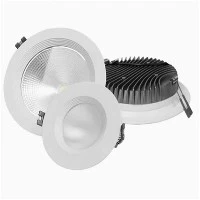
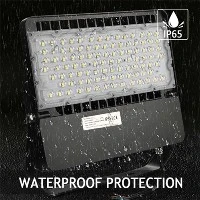
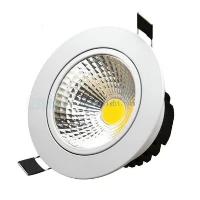
Introduction: The Evolution and Challenge of Recessed Lighting
The Ubiquity of the Downlight
Recessed lighting, commonly known as downlights, has become the backbone of modern interior illumination. From luxury retail environments and hospitality spaces to high-end residential homes and corporate offices, downlights provide clean, unobtrusive ambient and task lighting. The global shift from incandescent and halogen to LED technology has yielded massive energy savings. However, the market is saturated with varying levels of LED quality, and a critical problem has emerged: premature failure and rapid light degradation.
The Lifespan Illusion
Many manufacturers advertise an LED lifespan of 50,000 hours. In reality, the semiconductor chip itself may last that long, but the luminaire often does not. Standard Surface Mounted Device (SMD) LEDs, especially those in poorly designed housings, suffer from severe thermal degradation. This leads to lumen depreciation (the light dims significantly over time) and catastrophic color shift (the light turns blue, green, or sickly yellow).
The Thesis: COB as the Definitive Solution
To guarantee a longer service life in recessed lighting, the architecture of the light source must be fundamentally robust. This paper argues that COB (Chip-on-Board) technology is the future of recessed lighting. By combining a single, high-density light matrix with advanced thermal management systems-such as our die-cast aluminum radiator-COB downlights overcome the limitations of older LED technologies, ensuring a prolonged, stable, and highly efficient operational life.
The Technological Superiority of COB Architecture
To understand why COB chips last longer and perform better, one must compare their internal structure to that of traditional SMD (Surface Mounted Device) LEDs.
Anatomy of an SMD Array
Multiple Point Sources
SMD LEDs consist of individual, packaged diodes soldered onto a printed circuit board. A typical SMD downlight might use an array of 12 to 30 small diodes to achieve the desired brightness.
The "Multi-Shadow" Effect
Because SMD arrays rely on multiple distinct point sources, they often create a chaotic "multi-shadow" effect. If you hold your hand under an SMD light, you will see multiple, overlapping shadows. This causes visual fatigue and reduces the aesthetic quality of the space.
Thermal Bottlenecks
In an SMD array, heat is generated at multiple individual points. If the PCB material is of low quality or the thermal pad is inadequate, the heat cannot escape efficiently, causing localized hot spots that degrade the adjacent chips.
The COB Advantage
Monolithic Construction
COB technology flips the script. Instead of individual packaged diodes, multiple LED chips (dies) are mounted directly onto a single ceramic or metal-core substrate. This entire cluster is then covered with a single, continuous layer of phosphor.
Optical Uniformity
Because a COB acts as a single, high-density light source, it emits a remarkably smooth, uniform beam with no multi-shadow effect. When paired with our high-transparency lampshade and deep anti-glare cup, the COB chip delivers a buttery-smooth, visually comfortable light that is highly sought after in premium architectural lighting.
Concentrated Heat Management
Because the heat in a COB chip is generated in a single, centralized location, it is far easier to manage. The thermal energy can be efficiently wicked away by a dedicated heat sink positioned directly behind the substrate, eliminating the scattered thermal bottlenecks found in SMD arrays.
The Thermodynamics of Longevity: Why Heat is the Enemy
The service life of any LED downlight is dictated by one critical metric: Junction Temperature (Tj).
Understanding Junction Temperature
The 10°C Rule
The Junction Temperature (Tj) is the temperature at the actual light-emitting semiconductor junction inside the LED. For every 10°C increase in Tj above the optimal operating temperature, the expected lifespan of the LED is typically halved.
Thermal Runaway
When heat accumulates, it creates a vicious cycle known as thermal runaway. As the temperature rises, the LED's internal resistance decreases, causing more current to flow, which in turn generates even more heat. This rapid accumulation leads to the degradation of the silicone encapsulant and the phosphor coating.
The COB and Die-Cast Aluminum Synergy
Direct Thermal Bridging
Our downlights feature a high-performance die-cast aluminum radiator. The base plate of this radiator is engineered to sit perfectly flush against the thermal pad of the COB substrate. This direct thermal bridge ensures that the intense heat generated at the center of the COB chip is immediately wicked away.
Maximizing Surface Area
As illustrated in our engineering diagrams, the die-cast radiator features a dense array of vertical fins. This geometry maximizes the surface area exposed to the ambient air, facilitating rapid convective heat transfer. The "chimney effect" draws cool air in from below and exhausts heat upward, keeping the COB chip operating at optimal temperatures.
The Result: Longer Service Life
By maintaining a low junction temperature, the chemical integrity of the COB chip is preserved. This prevents lumen depreciation and ensures that the light output remains stable for 50,000 hours or more. In commercial settings, this drastically reduces the frequency of costly fixture replacements and maintenance call-backs.
Preserving Optical and Color Integrity Over Time
A longer service life is not just about the light staying on; it is about the light staying beautiful and accurate.
The Threat of Phosphor Degradation
The Chemistry of High CRI
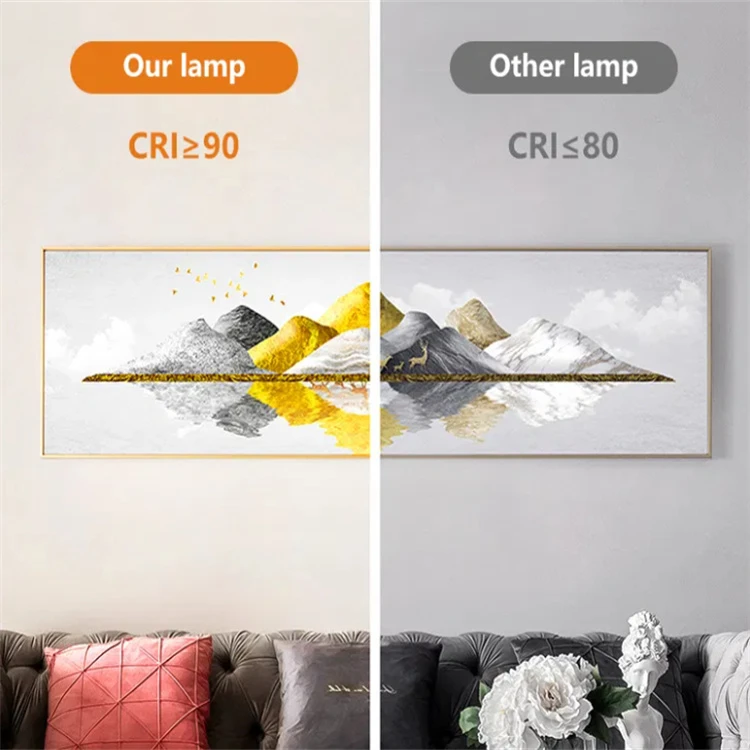
Our downlights feature a premium CRI≥90 COB chip. This high color rendering is achieved through a specific phosphor blend that mimics natural sunlight, providing flawless color fidelity. However, this phosphor layer is extremely sensitive to heat.
Color Shift
Prolonged exposure to high junction temperatures causes the phosphor to degrade, leading to a visible color shift. A warm 3000K light might turn into a harsh, greenish hue. By managing the heat effectively with the die-cast radiator, the COB chip maintains its CRI≥90 rating and its precise color temperature over its entire lifespan.
The Role of the High Transparency Lampshade
Anti-Yellowing Properties
The optical integrity of the fixture is also protected. Cheap plastic lampshades degrade under heat and UV exposure, turning yellow and absorbing specific light wavelengths. Our high transparency lampshades are manufactured from advanced optical polymers with UV stabilizers. They resist yellowing and embrittlement, ensuring that the full, rich spectrum emitted by the COB chip passes through unadulterated.
Consistent Visual Comfort
This synergy between the COB chip and the high-transparency lampshade guarantees that the visual comfort and aesthetic appeal of the lighting design remain intact decade after decade.
Structural and Installation Advantages of COB Fixtures
The robust nature of COB downlights extends to their structural design and installation hardware, further contributing to their long service life.
Compact Form Factors
Architectural Integration
Because a COB chip packs a high lumen output into a single, small light source, the overall fixture can be more compact. This allows for a deeper set-back of the light source, creating a low Unified Glare Rating (UGR) without compromising on light output. The flush-mount design of our downlights integrates seamlessly into the ceiling architecture.
Customizable Aesthetics
The compact nature of the COB light engine allows for maximum flexibility in aesthetic customization. Our downlights feature customizable lamp cups (trims). Available in standard white, sleek black, or custom metallic finishes, the trim ring complements the clean optical design, allowing designers to blend the fixture into the ceiling or create a bold architectural feature.
Secure Installation Hardware
Strong Electroplate Springs
A high-quality fixture must be easy and safe to install and maintain. Our downlights utilize heavy-duty electroplated springs to ensure a secure, long-lasting grip on ceiling drywall. Unlike flimsy stamped metal housings that can warp under heat, the robust die-cast body of our fixtures maintains its shape, ensuring the springs never lose their tension.
Protective Plastic Sleeves
Crucially, these springs are fitted with protective plastic sleeves. This thoughtful design detail prevents the metal springs from crushing the drywall during installation and protects the installer's hands from sharp metal edges. It reflects a design philosophy that prioritizes safety and durability from the internal chip to the ceiling surface.
The Commercial ROI: Why COB is the Future for B2B Buyers
For contractors, distributors, and facility managers, the technical superiority of COB technology translates into undeniable commercial value.
Drastically Reduced Maintenance Costs
The Cost of a Single Replacement
In a commercial setting-such as a shopping mall, hotel, or office complex-the cost of replacing a single downlight involves the cost of the unit, the labor cost of an electrician, the cost of scaffolding or a scissor lift, and the potential loss of revenue due to disruption. By maximizing the lifespan of the fixture through superior heat dissipation, you reduce maintenance cycles to once a decade or more.
Sustained Energy Efficiency
As LEDs degrade, their forward voltage can increase, leading to a drop in luminous efficacy (lumens per watt). By maintaining optimal thermal conditions, the COB fixture operates at peak efficiency for a much longer portion of its life.
Factory Direct and OEM/ODM Flexibility
Tailored Solutions
Through our comprehensive OEM/ODM support, we work directly with lighting designers and distributors to tailor the thermal solution. We can modify the fin density, the thickness of the thermal mass, and the physical dimensions of the die-cast radiator to perfectly match the specific wattage and form factor required by your project.
Competitive Pricing, Good Quality
By managing the entire manufacturing process-from the die-casting of the aluminum radiator to the assembly of the COB chip-we eliminate intermediary markups. Our factory-direct model delivers a competitive price, good quality commercial downlight that is engineered to outlast and outperform generic market alternatives.
Conclusion: The Smart Choice for Long-Term Projects
The longevity of recessed lighting is a direct function of its thermal management and the architecture of its light source. Standard SMD fixtures often suffer from premature failure, color shift, and lumen depreciation due to inadequate heat dissipation.
How To Cooperate With Us?
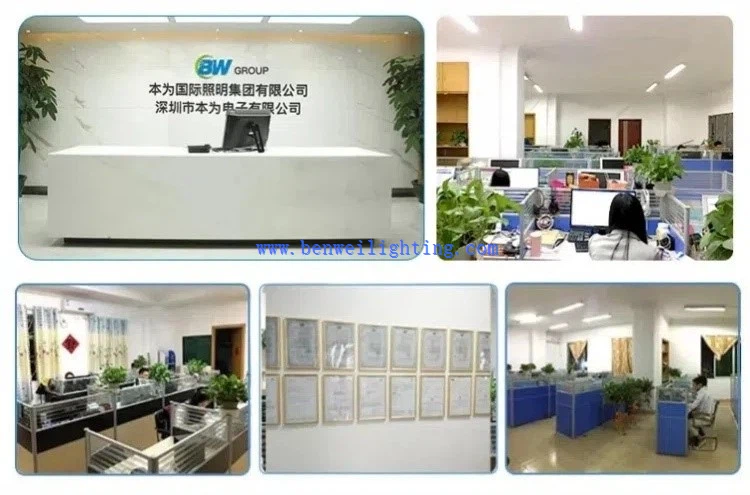
We are happy to have total control over the manufacturing process and the calibre of our products since we have our own facilities. Since we are producers rather than just brokers, we are dedicated to providing our customers with the best pricing. Since we are certain that the price and quality of our products are clear, we invite customers to see our samples first. Our commitment to quality and customer satisfaction drives us to continuously provide top-notch goods.
Our address
3rd Floor, 5th Building, Hebei Industrial Park, Hualian Community, Longhua District, Shenzhen, China