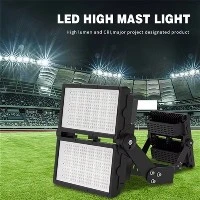
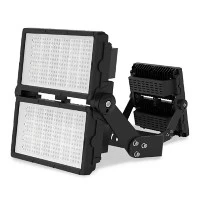
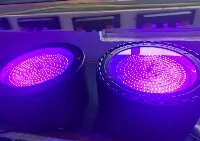
Multi-band, multi-power ultraviolet LED lamps with wavelengths of 230 nm, 260 nm, 280 nm, 365 nm, 395 nm, 310 nm, and 340 nm.

I. Introduction to Ultraviolet Lamps
Ultraviolet disinfection utilizes the absorption of ultraviolet energy with wavelengths between 200 and 280 nm by pathogenic microorganisms. This leads to changes in the genetic material (DNA) of the harmful microorganisms, stopping them from dividing and reproducing, which effectively kills them. Ultraviolet germicidal lamps are a product of this disinfection method. An ultraviolet germicidal lamp is a low-pressure mercury vapor discharge lamp using quartz glass or other ultraviolet-transmitting glass. The discharge produces ultraviolet radiation with a predominantly 235.7 nm wavelength. When the radiation intensity reaches a certain dose, it can kill bacteria and viruses. Due to their low cost, environmental friendliness, and high efficiency, ultraviolet germicidal lamps are widely used in medical and health care, food safety, and disease prevention. The sterilization effect of ultraviolet light is closely related to its irradiation intensity. Tests have shown that the brightness of two ultraviolet lamps with shiny aluminum reflectors is much stronger than that of two regular portable ultraviolet lamps; the brightness of the former is over three times greater than the latter. Within the same irradiation time, the natural elimination rate of the reflector-equipped ultraviolet lamps is significantly higher than that of the ordinary ultraviolet lamps (P<0.05).
II. Core Applications (By Field division)

Ultraviolet radiation has multiple wavelengths, commonly including 230 nm, 260 nm, 280 nm, 365 nm, 395 nm, 310 nm, and 340 nm. The International Commission on Illumination (CIE) classifies ultraviolet radiation into three bands: UVA (315–400 nm), UVB (280–315 nm), and UVC (0–280 nm). Theoretically, ultraviolet radiation with wavelengths below 240 nm is absorbed by oxygen in the air to form ozone. However, ultraviolet radiation in the 100-200 nm range (also known as vacuum ultraviolet, or VUV) is the main factor in ozone formation. Therefore, UVC is usually understood to be in the 200-280 nm wavelength range. We often refer to ultraviolet radiation with wavelengths of 200-350 nm as deep ultraviolet radiation, 300-400 nm as near ultraviolet radiation, and 200-230 nm as far ultraviolet radiation. Different wavelengths of ultraviolet radiation have different uses. Let's list some of the uses of these wavelengths below.
1. Medical Field
In the medical field, ultraviolet lamps are mainly used in operating rooms to prevent the growth of harmful bacteria during surgery, which could harm patients. They are also used in the treatment of certain diseases. Chinese researchers conducted an experimental study, first dividing the ultraviolet (UV) wavelength into three groups: long-wave (320-400 nm), medium-wave (275-320 nm), and short-wave (180-275 nm). Generally, 253.7 nm is considered the representative wavelength for germicidal UV radiation. The 253.7 nm UV radiation produced by low-pressure mercury gas lamps is 5-10 times stronger than that produced by high-pressure mercury gas lamps. Low-pressure gas lamps come in two types: hot cathode and cold cathode. The former emits 95% of its UV radiation at a wavelength of 253.7 nm and with higher intensity.
Therefore, for disinfection purposes, hot cathode low-pressure mercury gas lamps should be selected. Furthermore, the quality of the lamp glass also affects the emitted UV radiation; lamps made of quartz are preferable. Generally, newly manufactured 30W ultraviolet lamps should produce an ultraviolet intensity of 253.7 nm or higher to be considered qualified for skin phototherapy support. 310 nm (50-100 W) ultraviolet phototherapy support is used for skin diseases such as psoriasis. In medical applications, commonly used equipment includes suspended ultraviolet lamp holders, air sterilizers, and mobile disinfection carts. Under unoccupied indoor conditions, the suitable temperature range for ultraviolet disinfection is 20℃~40℃, with a relative humidity below 70%. When using suspended ultraviolet lamp holders, the number of ultraviolet disinfection lamps (30W ultraviolet lamps, illuminance > 70 μW/cm² at 1 m) installed indoors should be no less than 1.5 W per cubic meter on average, and the irradiation time should be no less than 30 minutes.
2. Industrial Applications
Ultraviolet light is sometimes used in curing applications, with wavelengths of 380 nm and 417 nm sometimes employed to cure inks and varnishes. Doping mercury lamps with iron or gallium metal halides can achieve the desired spectral lines. Adding metal halides alters the lamp's radiation spectrum; when a metal halide is added to the lamp, the spectrum of that metal is altered, reducing the mercury's spectral line and illuminance. These mercury lamps with metal halide doping are also called metal halide lamps. These lamps require a specialized ballast, and their starting voltage is several hundred volts higher than that of standard medium-pressure mercury lamps, varying with the lamp's lifespan and the number of times it is switched on and off. They are also used in printers and for curing and sterilizing various high-end shoes.
3. Chemical Field
Applications of 340nm (100-300 W) Simulated UV Irradiation Accelerated Aging Test
The 340 nm wavelength highly matches the mid-wave ultraviolet spectrum that causes aging in outdoor sunlight. Combined with adjustable power from 100 to 300 W, it can quickly simulate long-term outdoor exposure environments. This test can evaluate the weather resistance stability of outdoor materials such as plastics, coatings, building materials, and automotive exterior parts, detecting aging phenomena such as yellowing, cracking, and chalking. It helps companies optimize UV-resistant formulations and select high-quality materials. It can also extrapolate the actual service life of products through aging data, meeting compliance verification requirements of industry standards such as ISO and ASTM. Furthermore, it can be used for root cause aging failure tracing and is adaptable to the UV intensity simulation needs of different climate zones.
Applications of 230nm (50-100 W) Ultraviolet Spectrophotometric Analysis
The 230 nm wavelength is suitable for detecting the characteristic absorption of chemical substances containing conjugated double bonds and aromatic structures, as it falls within the near-ultraviolet to vacuum ultraviolet transition region. The 50-100W moderate power output balances detection sensitivity and sample stability. This analysis enables qualitative identification and precise quantification of target substances, used for the concentration detection of pollutants in environmental water samples, food additives, and active pharmaceutical ingredients. It can also screen the purity and trace impurities of chemical raw materials and pharmaceutical reagents. Simultaneously, it can track the progress of chemical reactions in real time, serving as a low-cost, rapid screening method, providing preliminary screening data for precise detection using chromatography and mass spectrometry, improving detection efficiency, and reducing detection costs in industrial production and scientific research.


4. Biopharmaceutical Field
Ultraviolet light with wavelengths between 200 and 280 nm irradiates microorganisms, disrupting the molecular bonds of DNA (deoxyribonucleic acid) or RNA in their cells. This causes them to lose their ability to produce proteins and reproduce. Since bacteria and viruses generally have short lifespans, those unable to reproduce die, thus achieving sterilization and disinfection. This method is called ultraviolet disinfection. Ultraviolet disinfection is widely used in the three major areas of "water, surface, and air" disinfection. UV disinfection is a physical process, very environmentally friendly, and not a chemical disinfectant. In pharmaceutical processes, the ultraviolet absorption detection of protein samples at 280 nm (50-100 W) does not involve the generation, handling, transportation, or storage of toxic, harmful, or corrosive chemicals. Compared with chemical sterilization methods, it has the advantages of low operating costs and rapid sterilization. Especially in drinking water disinfection, no chemicals need to be added to the water, there is no secondary pollution, and it does not change the water's odor, taste, or pH value. In addition, UVC can kill chlorine-resistant pathogens such as Cryptosporidium, Giardia lamblia, Legionella, and Acinetobacter hemolyticus. As a core component of ultraviolet (UV) sterilization technology, the technical characteristics and current standards of various UV radiation sources deserve our research and understanding.
Applications of 230nm (50-100 W) UV Spectrophotometric Analysis
The 230 nm band is part of the near-UV to vacuum UV range and is good for detecting chemical substances that have double bonds and aromatic structures. The mild power of 50-100 W balances detection sensitivity and sample stability. This analysis can achieve qualitative identification and precise quantification of target substances, used for the concentration detection of pollutants in environmental water samples, food additives, and active ingredients in pharmaceuticals. It can also screen the purity and trace impurities of chemical raw materials and pharmaceutical reagents. Simultaneously, it can track the progress of chemical reactions in real time, serving as a low-cost, rapid screening method, providing a preliminary screening basis for precise detection by chromatography and mass spectrometry, improving detection efficiency, and reducing detection costs in industrial production and scientific research.
III. Safety and Operational Precautions
Ultraviolet light is a low-energy electromagnetic wave widely used in medical, public health, food, and pharmaceutical industries due to its effective sterilization properties. However, mastering the correct use of ultraviolet lamps to ensure their sterilization effect, extend lamp life, and avoid accidental injury is essential for every operator. This article discusses several years of experience.
1. The Principle of Ultraviolet Disinfection
Ultraviolet light irradiation causes photolysis and denaturation of bacterial proteins, destroying and killing the bacteria's amino acids, nucleic acids, and enzymes. Simultaneously, when ultraviolet light passes through the air, it ionizes oxygen to produce ozone, enhancing the sterilization effect.
2. Ultraviolet Disinfection Methods
Ultraviolet light is primarily used for air and object surface disinfection, with a wavelength of 2513 Å. For air disinfection, the effective distance should not exceed 2 meters, and the irradiation time should be 30-60 minutes. For disinfection of objects, the effective distance should be 25-10 cm, and the irradiation time should be 20-30 minutes. Timing should begin 5-7 minutes after the lamp has been on (the lamp needs a certain preheating time to allow oxygen in the air to ionize and produce ozone).
3. Ultraviolet Disinfection Measures
3.1 Since we use ultraviolet irradiation for air disinfection, it is essential to ensure the lamps are intact and used correctly. Regular monitoring of the lamps is also necessary. Lamps with an intensity below 70 uw/cm² should be replaced immediately. The lamps should be kept clean. The lamp surface should be lightly wiped with an alcohol swab every 1-2 weeks to remove dust and grease, reducing factors that affect ultraviolet penetration.
3.2 Handle UV lamps with care. Turning them on immediately after turning them off will shorten their lifespan. Allow them to cool for 3-4 minutes before turning them on again. They can be used continuously for 4 hours, but good ventilation and heat dissipation are essential to maintain their lifespan.
3.3 Keep the treatment room clean and dry at all times. Wipe the treatment room daily with a dedicated cloth soaked in disinfectant. Mop the floor with a dedicated mop.
3.4 Standardize the daily monitoring and registration of UV lamps. Registration must be done separately for each room and each lamp. The registration book should include the lamp's activation date, daily disinfection time, cumulative time, the executor's signature, and intensity monitoring records. Careful recording is required after disinfection to ensure consistency between execution and records.
3.5 For newly activated UV lamps, use a UV intensity indicator card or intensity monitor to first determine the lamp's intensity, ensuring it is above 100 uw/cm². After replacing the lamp, the cumulative usage time is reset. Once the lamp has been used for 1000 hours, contact the hospital's infection control personnel immediately to monitor the lamp's irradiation intensity. If the intensity is within acceptable limits, continue using the lamp; otherwise, replace it immediately to ensure the UV lamp achieves its disinfection effect.
3. 6. When disinfecting the air, open all cabinet doors and drawers to ensure full exposure of all spaces in the treatment room to UV irradiation, eliminating any blind spots in disinfection.
3.7 Strengthen management and supervision of departments such as outpatient clinics and laboratories. It is recommended to install timer switches for UV lamps in outpatient departments to prevent wasted power and shortened lamp life due to oversight.
3.8 Staff should make work arrangements before ultraviolet disinfection to avoid moving around in the room during the disinfection process, which would affect the disinfection effect and subject them to unnecessary exposure. Monitoring nurses must wear protective goggles and protective clothing when monitoring the intensity of the lamps, as there are many lamps. In wards equipped with ultraviolet lamps, the switches for the ultraviolet lamps must be separate from those for ordinary lamps or clearly marked. When admitting patients, patients and their families should be informed that ultraviolet lamps should not be turned on arbitrarily to avoid adverse consequences.
IV. Purchasing Guide
When selecting UV lamps of different wavelengths, the core consideration should be matching the wavelength, power, and quality parameters to the intended use scenario, balancing practicality and safety. First, clarify the wavelength compatibility requirements: The UVC band (200-280 nm, such as 254 nm) is primarily for sterilization and disinfection, suitable for medical, water treatment, and food processing; prioritize ozone-free models that meet sterilization dosage standards. UVA band (320-400 nm, such as 340 nm and 365 nm): 340 nm is suitable for accelerated aging testing of materials, while 365 nm is used for curing and fluorescence detection. The 230 nm isostatic ultraviolet band is for spectrophotometric analysis of chemical substances.
Simultaneously, pay attention to key parameters: wavelength accuracy must match the application scenario (e.g., analytical applications require accuracy to ±2 nm), and power should be selected according to needs (100-300 W for aging testing, 50-100 W for spectrophotometric analysis), avoiding blindly pursuing high power. Prioritize products with safety features (delayed start, human body detection) and CE/RoHS certifications. For industrial applications, compliance with ISO and ASTM standards is essential. Quality and after-sales service are also crucial. For lamp life, LED or amalgam lamps (over 20,000 hours) are preferred. Industrial-grade products require confirmed power adjustability and stability. Choose brands with reliable after-sales support to ensure suitability for various needs such as testing, disinfection, and industrial production.
[1] Department of Science and Technology Standards, Ministry of Ecology and Environment of the People's Republic of China. Technical Requirements for Environmental Protection Products: Ultraviolet Disinfection Devices: HJ2522-2012 [S]. Beijing: China Quality Inspection Press, 2012.
[2] National Technical Committee on Standardization of Lighting Appliances (SAC/TC 224). Ultraviolet Germicidal Lamp: GB/T19258-2012 [S]. Beijing: China Standards Press, 2012.
[3] Ministry of Industry and Information Technology of the People's Republic of China. Cleanroom Design Code: GB50073-2013 [S]. Beijing: China Standards Press, 2013.
[4] Guangdong Provincial Bureau of Quality and Technical Supervision. High-Intensity Low-Pressure Ultraviolet Germicidal Lamp: DB44/T1357-2014 [S]. Guangzhou: Guangdong Provincial Institute of Standardization, 2014.
Multi-band ultraviolet lamps cover nm/230 nm. Available in various specifications, suitable for aging tests and spectrophotometric analysis, precise and efficient, and of reliable quality, welcome to purchase!

Multi-band UV lamps covering 340 nm/230 nm and other specifications are suitable for aging tests and spectrophotometric analysis. Precise, efficient, and reliable, welcome to purchase!
https://www.benweilight.com/lighting-tube-bulb/led-stadium-lights-and-arena-light-600w-83900.html