A photocell light sensor is a small electronic device that contains a resistor, electrodes, and a transparent cover over the face. It uses light to control the flow of electrical current. Although photocells come in a few different varieties, they’re all powered by the same semiconductor technology that controls the electric current.
How Does a Photocell Work?
Semiconductors are considered the brains of modern electronics. They’re an essential piece that facilitates the advancement of communication, computing, healthcare, military, transportation, clean energy, and more. Semiconductors don’t usually conduct electricity, but if they’re exposed to enough light, an electric current is generated.
Types and Uses
Photocells are regularly used to control parking lot lights, street lights, and illuminated business signs. A wide range of photocells are available, but we’ll discuss those most relevant to indoor and outdoor lighting.
Plug-in photocells are compatible with a standard outlet and command a pass-through plug. They’re the simplest way to control the operation of a single lamp.
Lamp base photocells screw into a light bulb socket, transforming virtually any light fixture (lamps, permanent fixtures indoors and outdoors) into an automatic lighting system. This is an excellent photocell sensor for outdoor lights on your home connected to a light switch.
Line-voltage photocells command an entire electrical circuit. This type of photocell is the perfect solution for managing security or landscape lighting. If you combine the sensors for outdoor lighting with timers controlling indoor lighting, you can ward off intruders by creating the illusion that someone is home.
The Dusk to Dawn Light Sensor
The most common use of photocells is for dusk to dawn lighting, which turns landscape or general exterior lighting on at sunset and off at sunrise. This requires line-voltage photocells. An added perk of using a photocell sensor for dusk to dawn lighting is that you don’t need a timer. They automatically adjust to natural light, including seasonal changes in light.
Pros and Cons
Photocell light sensors are mostly beneficial. In fact, there are very few downsides.
The advantages include:
Low cost
Long life
Reliable and wide sensing range
Quick response time
The disadvantages are:
Transparent cover gets dirty over time, decreasing sensor sensitivity
Lights that offer a longer lifespan cost significantly more
Lack of additional controls
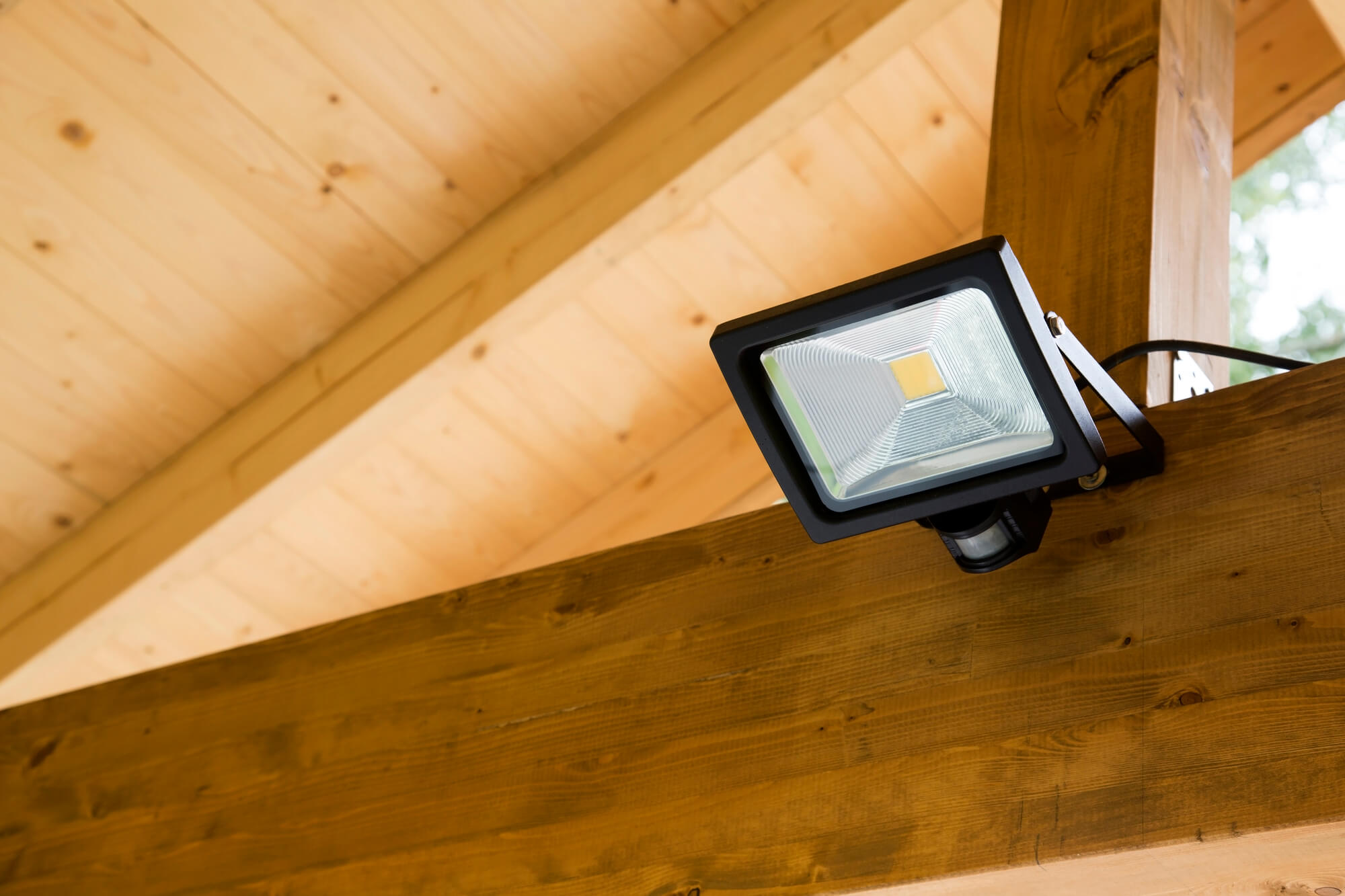
Movement and Motion Sensors
Photocells and motion sensors differ in the way they trigger lights to turn on. Photocells detect changes in light levels and react accordingly. Motion sensors respond to any physical movement within their range. Motion sensors can work one of two ways:
Active sensors emit light or ultrasonic sound. They’re activated when one of those signals reflects a movement to the sensor. Depending on the motion sensor’s range, it may be able to detect motion around corners.
Passive sensors operate by infrared detection. They sense the infrared energy emitted by warm objects like animals or people and are triggered when these warm spots move.
Controls and Uses
Motion sensor lights are prevalent in many different settings. From commercial to residential, you’ve undoubtedly seen them countless times. Motion sensors are used to supplement security systems, to create a hands-free lighting solution (i.e. when you walk in the door with your arms too full to turn on the lights), as an energy-efficient lighting option in commercial buildings, and more. An essential consideration for motion sensors is how you might set the controls to fit your needs. There are usually two forms of motion sensor light controls available:
Sensitivity control lets the user set the degree of motion required to trigger the sensor. This matters because you want a person coming into the room to trigger the lights, not a bug.
Time delay control lets the user decide how long the lights stay on after the sensor is triggered, and no further motion is detected.
Some motion sensors include a control to set the range of the area they detect, so you can cover your driveway and sidewalk but avoid movement from tree branches and streets.
Pros and Cons
Motion sensors for lights were created to make life easier. Since they were designed to be helpful, the advantages outweigh the disadvantages. Let’s explore each side.
The pros of motion sensor lights include:
Energy-efficiency
Simple installation
Convenience
Controls
Lifespan
The cons include:
Temperature sensitivity
False triggers
High-quality lights that offer a longer lifespan cost significantly more
LED Compatibility
LED lights are popular because they’re so cost- and energy-efficient. While LED bulbs can be used with photocells, they run at such a low voltage that they require a different photocell type than a conventional bulb. If you’re interested in further cost-savings, energy-efficiency, and other benefits, motion sensors can also work with LED lights, but only LED lamps specifically.