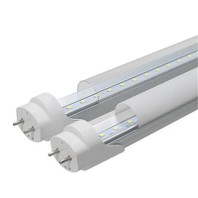
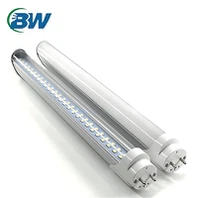
Fluorescent tube lights were the most popular option for illuminating indoor commercial environments for a long time. They have a respectable lifespan and produce high-quality light. However, for a number of financial and ecological reasons, LED tube lights have grown in popularity over time.
Advantages of Using LED Lighting in Place of Fluorescent Tube Lighting
Let's examine the advantages of LED tube lighting:
Increased efficiency: Compared to fluorescent lights, LED tube lights are around 30% more efficient. Because of their remarkable 80–90% effectiveness, they are among the most energy-efficient lights. It indicates that light rather than heat is produced by the great bulk of the power. Eighty percent of the energy used by incandescent light bulbs is converted to heat. Their effectiveness rate is barely 20% as a result. LED tubes can be used throughout your house or apartment, and you will see a return on your investment as soon as a year has passed.
Less costly to operate: LED tubes can reduce your energy costs by up to 65%. For instance, an LED bulb may generate the same amount of light with as little as 5 watts of power as a filament bulb, which requires 40 watts. You will therefore observe a change in your electricity expenses after a month of employing LED lights.
Lifespan: Compared to a typical fluorescent tube, which has a lifespan of 10,000–12,000 hours, an LED tube light can last up to 30,000 hours. By doing this, you can avoid spending as much money on repairs or maintenance for the lights. When used properly (six to eight hours each day), an LED tube can last up to ten years. Additionally, unlike halogens and incandescents, they do not burn out with time. Additionally, they function the same way and do not lose brightness with use.
High-quality lighting: LEDs emit light with a range of color temperatures, including one that resembles fluorescents but doesn't flicker. Filters or gels must be used while employing incandescents in order to achieve a variety of tints or colors. Unfortunately, after a while, some have a tendency to wane or even burn out. With LED tubes, you may have a variety of color temperatures instantaneously.
Eco-friendly LED tubes don't contain mercury like their fluorescent cousins do. This indicates that they don't require special disposal and are simple to recycle. Additionally, compared to incandescent and fluorescent lights, LED tubes emit very less greenhouse gas. To be precise, they generate 80% fewer greenhouse gases while producing the same luminosity, which is crucial for those looking for ways to rescue the planet.
Directional Lighting: Unlike fluorescent tubes, which emit light in multiple directions, LED tubes provide directional light with a beam angle of 240 degrees. This indicates that some light is lost in the ceiling and other superfluous areas, such the fixtures.
Advice on Changing to LED Lighting
Even while LED tubes might cost more up front than fluorescent tubes, there could be significant discounts in the long run. Take the starter out of your fixture and swap it out for the LED starter if your ballast is a traditional magnetic one. The LED tubes come with an LED starter. You will need to rewire and bypass the electronic ballast if you already have one, but you won't need a starter. We suggest that you seek assistance from a qualified electrician. We advise you to select a 2FT, 4FT, or 5FT LED tube that is specifically made to work with electronic ballasts without requiring rewiring in order to avoid this process.